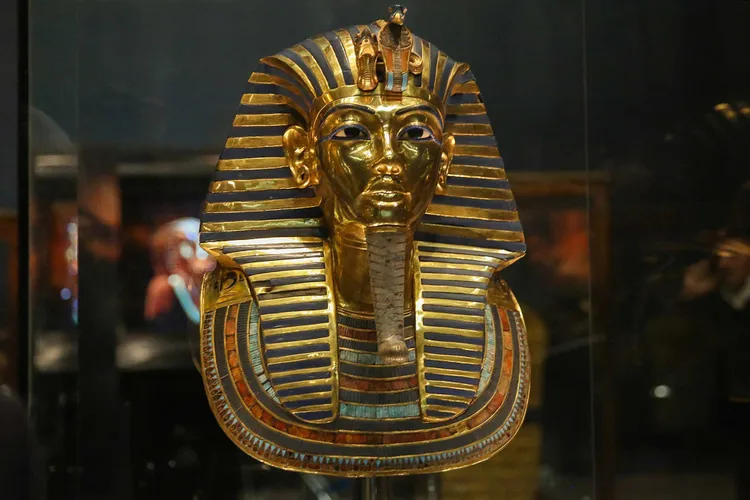

The tomb of Egypt’s famed pharaoh Tutankhamun — better known as King Tut — is facing serious structural risks, but a new scientific study offers hope for its preservation.
A 2025 study in the peer-reviewed journal NPJ Heritage Science, led by Seyed Hemeda, head of the Architectural Conservation Department at the University of Cairo, found that the tomb “has been subjected to long-term impacts from both flash flooding and major [earthquake] faults.”
Hemeda described the site as one of the most poorly preserved in the Valley of the Kings — the vast royal burial ground on the west bank of the Nile near Luxor, Egypt. According to his research, “severe cracks” in the tomb’s ceiling have allowed rainwater to “seep in,” weakening its structural integrity. The moisture has also raised humidity levels, promoting fungal growth that damages the ancient murals adorning the tomb’s interior. These issues have created “significant difficulties” for restoration teams working to conserve the artwork.
:max_bytes(150000):strip_icc():focal(999x0:1001x2):format(webp)/king-tut-102725-1-a9fe805035904e11b88cc9d04ec32667.jpg)
To counter the ongoing decay, Hemeda and his team have introduced experimental 3D geotechnical modeling to pinpoint the areas most vulnerable to further cracking and flooding. This approach, he explained, provides valuable insights “for the stability analysis of other similarly complex underground structures.”
The study’s results could guide preservation efforts aimed at safeguarding the tomb — and the priceless art within — for future generations.
King Tut’s resting place remained largely unknown until its discovery in 1922 by British archaeologist Howard Carter, as noted by National Geographic. Inside, Carter found thousands of artifacts, a sarcophagus containing the young ruler’s mummy, and the now-iconic gold headdress. It took nearly a decade for his team to catalog every item.
:max_bytes(150000):strip_icc():focal(999x0:1001x2):format(webp)/king-tut-102725-2-2a392626847245fb8d9654cad6c6a401.jpg)
Tutankhamun, born around 1341 B.C., ascended the throne at just nine years old and ruled Egypt for about ten years until his death at 19. Long-standing theories of foul play have since been challenged; Live Science reports that DNA analyses suggest the young pharaoh likely died from complications of malaria combined with a bone disorder.
Today, the tomb that once sealed the “boy king” from time itself faces new threats from the natural world — and modern science is racing to keep his legacy intact.