
A quick refuel in Minneapolis has become something much bigger than a viral clip — it’s now a case study in how politics can collide with the everyday mechanics of transportation.
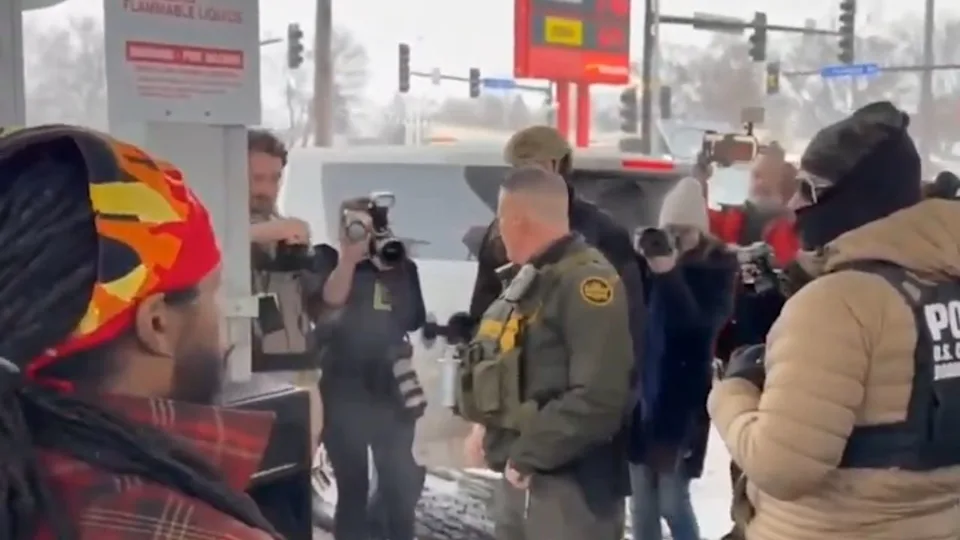
The moment happened at a Speedway gas station, where Border Patrol agents tried to refuel government vehicles during official operations. In widely shared video footage, a man identifying himself as the store’s manager refused to sell them fuel, saying he did not support ICE and claiming others at the store felt the same. The agents were told to leave without completing the purchase.
Within hours, the reaction split along familiar lines. Critics argued the station turned a routine commercial service into a political statement. Supporters called it protest. But beyond the political arguments, the incident has put a spotlight on a larger question that matters to drivers, fleets, and fuel retailers: should access to fuel ever become conditional?

Why Fuel Stations Sit in a Different Category
A gas station isn’t just another storefront. It’s part of the country’s operating system — relied on by private drivers, commercial fleets, emergency responders, and government agencies alike. That’s what makes fuel different from most other products.
Refusing fuel isn’t the same as refusing a snack or a coffee. When a vehicle can’t refuel, it can’t function. And when that vehicle belongs to law enforcement or emergency services, the stakes can rise quickly.
That’s why many in the industry view fuel retail as carrying an informal expectation of neutrality. Fleet fuel cards, supply agreements, and institutional contracts are built around predictability and access — not ideology.
Once a station is seen as picking and choosing who gets served based on politics or occupation, it raises a basic reliability concern. For national brands, that concern can spread fast, because one location’s decision can become the face of the entire chain online.
Brand Blowback and Franchise Risk
The response was immediate. Boycott calls surfaced quickly, and critics warned the brand could alienate everyday customers who see fuel access as something that shouldn’t depend on anyone’s worldview. Others pointed out the franchise reality: even if corporate leadership never endorsed the action, public perception rarely makes that distinction in the heat of a viral moment.
For retailers, this is the nightmare scenario — not because a single transaction was lost, but because a fuel station’s reputation is built on consistency. Drivers don’t want uncertainty at the pump.
The Safety Angle Fuel Companies Can’t Ignore
There’s also a practical safety concern. Federal agents — like many other frontline workers — refuel during active deployments, long shifts, or travel between jurisdictions. If vehicles are forced to detour to find fuel, it introduces delays and unpredictability.
In a dense metro, that might be mostly inconvenient. In remote areas or tense situations, it can turn into a real operational hazard.
Just as important: the people stuck in the middle are often frontline workers. Clerks and managers rarely receive training for politically charged confrontations — especially with armed federal officers — yet they now operate in an environment where a single interaction can explode nationally within minutes.
That reality may push fuel chains to tighten internal guidance. Clear, standardized policies on serving government vehicles, emergency fleets, and law enforcement could become more common, especially for brands trying to prevent franchise-level decisions from triggering national backlash.
Some in the industry argue that neutrality requirements — similar to expectations placed on essential service providers — could eventually show up in franchise agreements or operating manuals.
Is Refueling Becoming a Culture-War Battleground?
No matter where someone stands on ICE or immigration enforcement, this incident lands in a broader place: whether access to fuel remains a shared baseline in public life or becomes another arena for ideological gatekeeping.
Transportation runs on predictability. When service turns conditional, the ripple effect can touch everyone — drivers, delivery services, rideshare fleets, long-haul trucking, and the supply chains behind them.
And that’s what makes the bigger question hard to ignore: if a government vehicle can be turned away today, who gets turned away tomorrow?
With cars already wrapped up in major national debates — electrification, emissions, affordability — the idea that even refueling could become politicized may be the most volatile development yet.