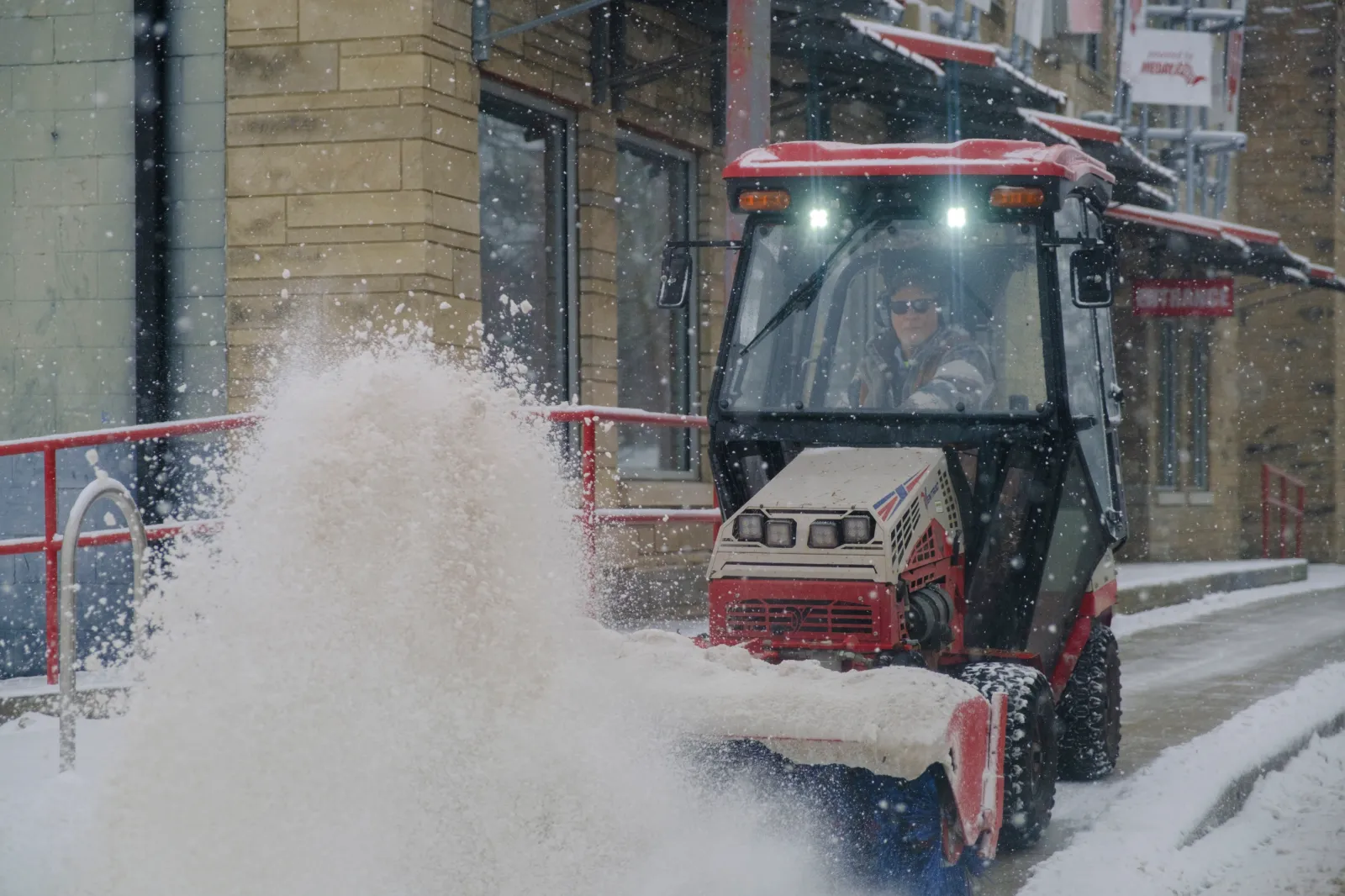

Forecasters say several states across the Midwest and Plains could see snow squalls continuing into Friday night.
“Snow squalls with heavy snow rates and strong winds are expected to create hazardous travel conditions over portions of the Plains and Midwest tonight through Friday night,” the National Weather Service (NWS) Weather Prediction Center (WPC) said in a Thursday update.
The WPC said squalls are expected to develop along and behind an Arctic cold front over the northern and central Plains by Friday morning, with the potential to push into the Midwest later in the day. The greatest risk is expected behind the front, where strong winds are forecast across west-central parts of the Dakotas and Nebraska through Friday afternoon.
The agency warned the Plains could face an “extremely dangerous combination” of heavy snow rates and damaging winds, creating near-zero visibility and rapidly deteriorating road conditions.
Even outside of the strongest squalls, the WPC said gusty winds and reduced visibility could still be a major concern across the Midwest. Because squalls can form and move quickly, conditions may shift from manageable to dangerous in minutes — especially for drivers caught on open roads.
“If you encounter a snow squall while driving and cannot safely exit the roadway, reduce speed, turn on your lights and hazards, and avoid slamming on the brakes,” the agency advised.
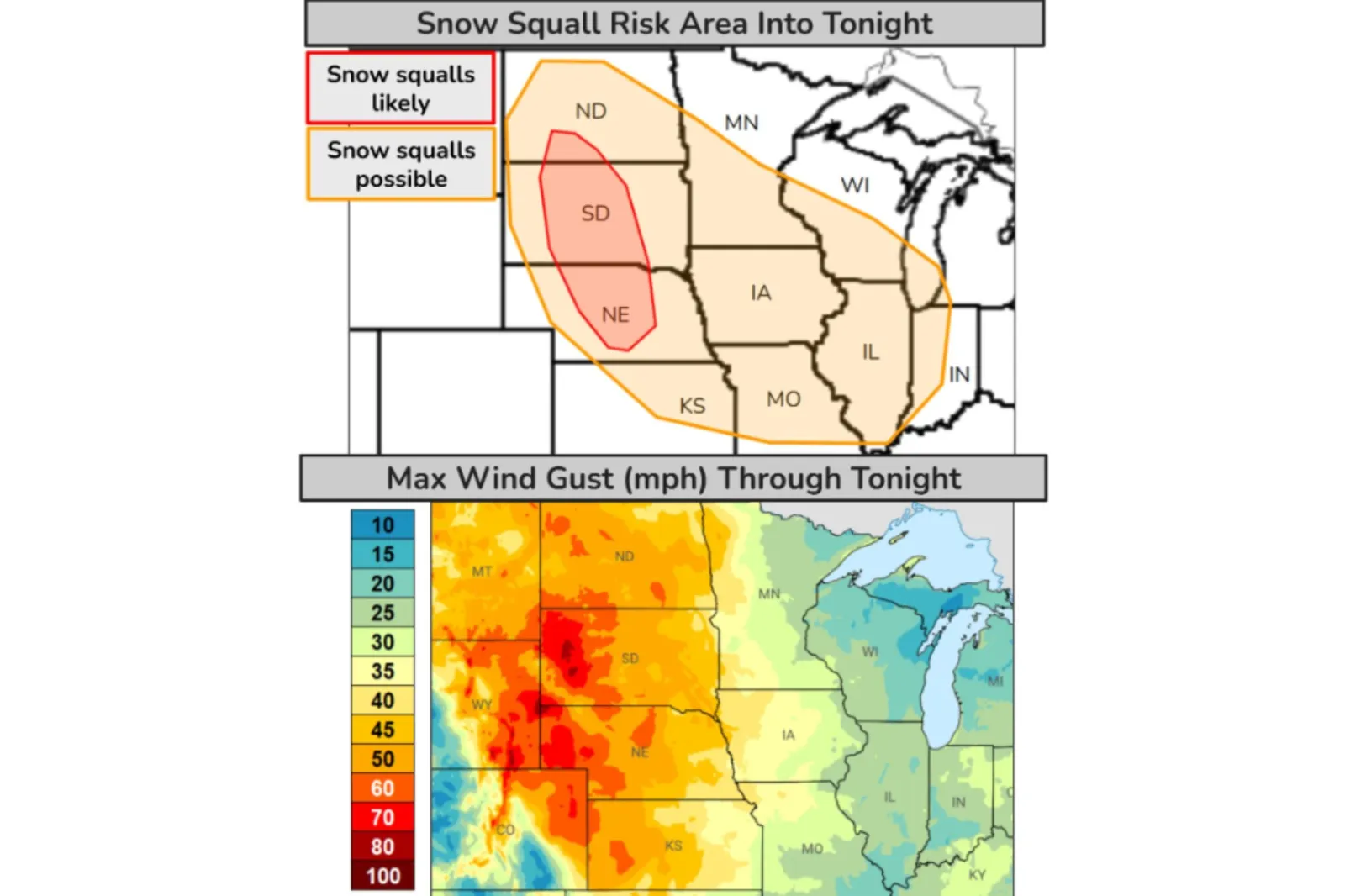
A WPC forecast map showed snow squalls were considered “likely” in parts of the Dakotas and Nebraska, and “possible” across portions of Kansas, Missouri, Minnesota, Iowa, Wisconsin, Illinois and Indiana.
Strong winds could also be an issue even where snow squalls don’t fully develop. The WPC said gusts over 70 mph are possible across the northern and central High Plains, which could make travel risky — particularly for high-profile vehicles — and may trigger scattered power outages. Any outages could become more dangerous as sub-zero wind chills spread in behind the Arctic front.
The NWS describes snow squalls as a major winter hazard often tied to strong cold fronts. They typically last less than an hour, but can bring a sudden burst of heavy snow, a rapid temperature drop and near-instant whiteout conditions. Roads can turn slick quickly, and visibility can collapse with little warning.
While snow totals in squalls are often under an inch, the mix of strong wind, plunging temperatures and abrupt visibility loss can make driving conditions extremely hazardous — even for a short stretch of time.