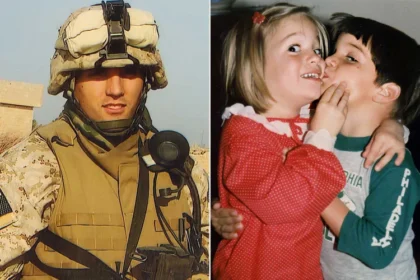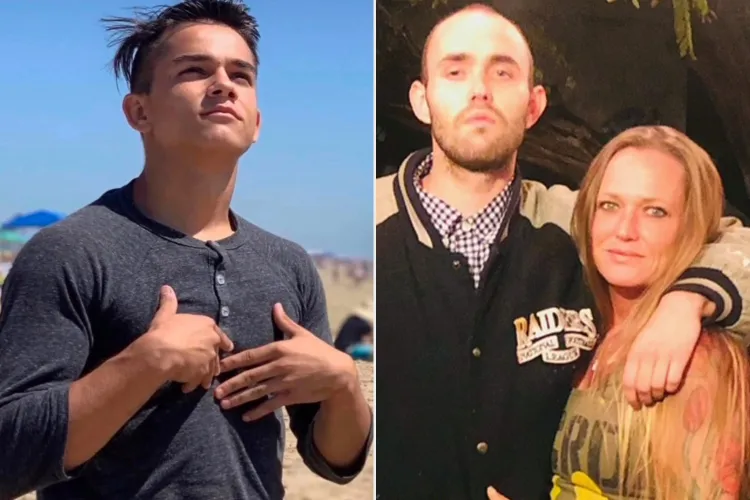

The first year Shana Chappell lost her son, she says, didn’t feel real.
“A haze,” she says. “A pain I had never known.”
Her son, Kareem Nikoui — a Marine lance corporal — was killed by a suicide bomber in Afghanistan in August 2021. He was stationed at the Abbey Gate entrance to Kabul’s international airport, helping secure evacuations during the U.S. withdrawal from the country’s longest war.
Nikoui was one of 13 U.S. service members who died that day, along with many civilians. He was 20 years old.
“Every day my slate was wiped clean because I was trying to make sense of losing my son,” Chappell, now 53, says more than four years later.
She remembers those early months as a mix of guilt that she couldn’t protect him, anger at the U.S. government for what she believed had placed him in danger, and worry for her four other children, who were grieving their brother.
She was especially concerned about Nikoui’s older brother, Dakota Halverson — a young man, she says, who lived with challenges related to autism and substance use.
The two brothers had been extremely close. Before Kareem deployed, he had urged Dakota to turn things around — to stop drinking and using drugs. Dakota did, she says. He found a job and even his own place.
But within a year of Kareem’s death, Chappell says her older son began asking questions that frightened her. He asked about suicide and whether it was condemned in the Bible. He asked if he could be buried beside Kareem. He asked whether she would get a tattoo for him someday, like she had in Kareem’s memory.
:max_bytes(150000):strip_icc():focal(712x604:714x606):format(webp)/Kareem-011226-610e79aa5ac543e69b64d5c7abcf3f48.jpg)
Looking back, she says those moments haunt her.
Two weeks before the first anniversary of Kareem’s death, Dakota — then 28 — died by suicide.
“I don’t really remember anything from the first year because of the shock,” Chappell says. But when that shock faded, she says the grief hit even harder.
“I was on my knees. I wouldn’t wish this pain on anybody, not even my worst enemy — and I don’t even have a worst enemy.”
She describes feeling depleted and overwhelmed, sometimes unable to get out of bed. “At the very beginning there’s rage,” she says. “I was just off my rocker.”
In the early period after the bombing, Chappell used social media to express her anger at the Biden administration, and she also shared support for Donald Trump. Later, she says, her feelings shifted again — especially as Trump’s campaign used the anniversary of the airport attack to criticize former President Joe Biden and position the remarks as support for military families.
“I was at one point very political, very far right,” Chappell says, “but now I’m in the middle.” She adds that she regrets some of what she said during that time.
:max_bytes(150000):strip_icc():focal(662x467:664x469):format(webp)/Shaelynn-Shyler-Shana-Dakota-011226-5b269778e43c4d21bc5d266c4a3942ce.jpg)
“I felt like Trump and Congress disrespected me and my son,” she says. “I didn’t want Kareem used politically… Kareem didn’t lean right and he didn’t lean left. You were making people dislike my son because they think he’s a Trump supporter and he’s not.”
Congressional hearings related to the Abbey Gate attack began in March 2023, after initial Defense Department investigations in late 2021.
In August 2023, family members of those who died were invited to a roundtable discussion about the aftermath of the attack. Chappell says she didn’t attend due to health issues — including atrial fibrillation, an irregular heartbeat — and because the overall attention had become too much.
“Reporters would be contacting me and I’d go ahead and do the interviews,” she says. “But slowly in the second year I started declining them because I realized the people who were asking to interview me didn’t care about me or my family.”
Over time, she says, she changed the way she lives. She’s no longer glued to the news, and she has largely stepped back from social media.
She also reconnected with one of Kareem’s friends, Tadeo Guerra. The two married and moved to Riverside County, outside Los Angeles.
It’s about a 25-minute drive from the cemetery where Kareem and Dakota are buried, and Chappell says she visits their graves several times a week.
“I kiss each one of their pictures and tell them hi and talk about my day,” she says. “I talk about their siblings and the things I think they’d find funny. It calms my nerves.”
:max_bytes(150000):strip_icc():focal(843x267:845x269):format(webp)/gravesite-011226-42a5397a236b404495d563eec0e67727.jpg)
Of her marriage, she says, “We stay private.” But she adds that Guerra, 25, was one of Kareem’s “Marine Corps brothers” — and he was at Abbey Gate the day of the bombing.
“He’s very kind and has helped me through so much and he’s been here when I’ve needed him most,” she says.
She says Guerra helped carry wounded Marines to get medical care and suffered hearing loss from the blast. Even with those memories, she says, he has shown her patience and steadiness during her hardest days.
She knows she will never fully recover from losing her sons. But, she says, her husband helped her accept something she struggled to believe for a long time: that continuing to live is not a betrayal.
“He has taught me I’m allowed to live,” she says.
Chappell’s other children live nearby, and she says her six grandchildren bring her a kind of comfort she didn’t expect to feel again.
“There’s something about getting a hug and being around them and playing with them,” she says. “It brings me some type of peace.”