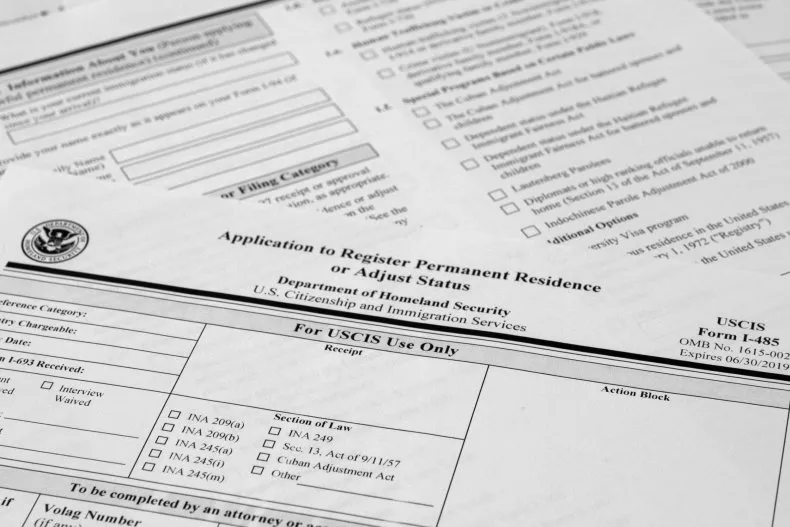

A U.S. Navy veteran now working for Intel is enduring an agonizing wait to reunite with his wife and 7-year-old daughter, as prolonged delays in processing his spouse’s green card application keep them separated.
Russell John Campbell, 57, a veteran and longtime Intel Corp. communications professional, is living alone in Oregon while his wife, Wasithee Campbell, and daughter remain in Thailand. Their reunion has been stalled by a growing backlog at U.S. Citizenship and Immigration Services (USCIS).
Campbell has already been waiting nearly five months for an update, but the process could stretch out another year.
“It is just unconscionable for the U.S. government to treat a citizen and veteran this way,” Campbell told Newsweek. “They just don’t care, and they are quite clear in saying so. It is disgusting and vile. This is not what I swore an oath to defend. This is just evil to keep a family apart like this for no reason.”
Newsweek has contacted USCIS for comment.
Why It Matters
The case comes as USCIS struggles with record backlogs, with 11.3 million pending applications. Immigration courts are also overwhelmed, carrying a backlog of more than 3.7 million cases, according to Syracuse University’s Transactional Records Access Clearinghouse. Asylum-seekers often wait years for decisions.
What To Know
Campbell served as an Aviation Electronics Technician at NAS North Island in San Diego from 1985 to 1989. He later moved to Thailand in 2010 for an Intel position managing corporate and government affairs across the Asia-Pacific region.
He married his wife in April 2012 on the island of Koh Chang, Thailand. Their daughter, born in 2018, is a U.S. citizen with a passport and Social Security number.
Wasithee first obtained a U.S. tourist visa in 2015 and visited the United States several times for business and family trips. She was granted a green card in 2019, but it was later canceled after the family relocated to Thailand for Campbell’s career.
In March 2025, Campbell returned to the U.S. to work as Intel’s Global Content Strategy Manager, moving to Hillsboro, Oregon. Days later, he filed a new I-130 petition for his wife’s green card. USCIS told him the process could take up to 17 months. Two humanitarian expedite requests—citing financial hardship, medical issues, and the impact on their U.S. citizen child—were either denied or ignored.
He has also written to Rep. Suzanne Bonamici and Sen. Jeff Merkley but has yet to receive a response.
Wasithee suffers from abdominal ulcers and kidney stones, medical conditions that could be treated under Campbell’s U.S. health insurance. In Thailand, the costs are prohibitive, and she lacks family nearby to help care for their daughter during recovery.
Meanwhile, their young daughter faces delayed school enrollment in Oregon and nightly emotional strain from being apart from her father.
“My daughter is my life,” Campbell said. “I have an empty home, next to a park, waiting for my daughter to come play and make friends.”
With no clear timeline beyond “up to 17 months,” Campbell says planning for housing, school, and medical care is nearly impossible.
“Time passes, and we don’t get it back,” he said. “Being apart from her is the greatest pain I’ve ever known, because it is just so senseless.”
Campbell and his family have followed every requirement in the immigration process. Their story highlights the painful reality faced by many American citizens and veterans whose families are caught in long and uncertain immigration backlogs.