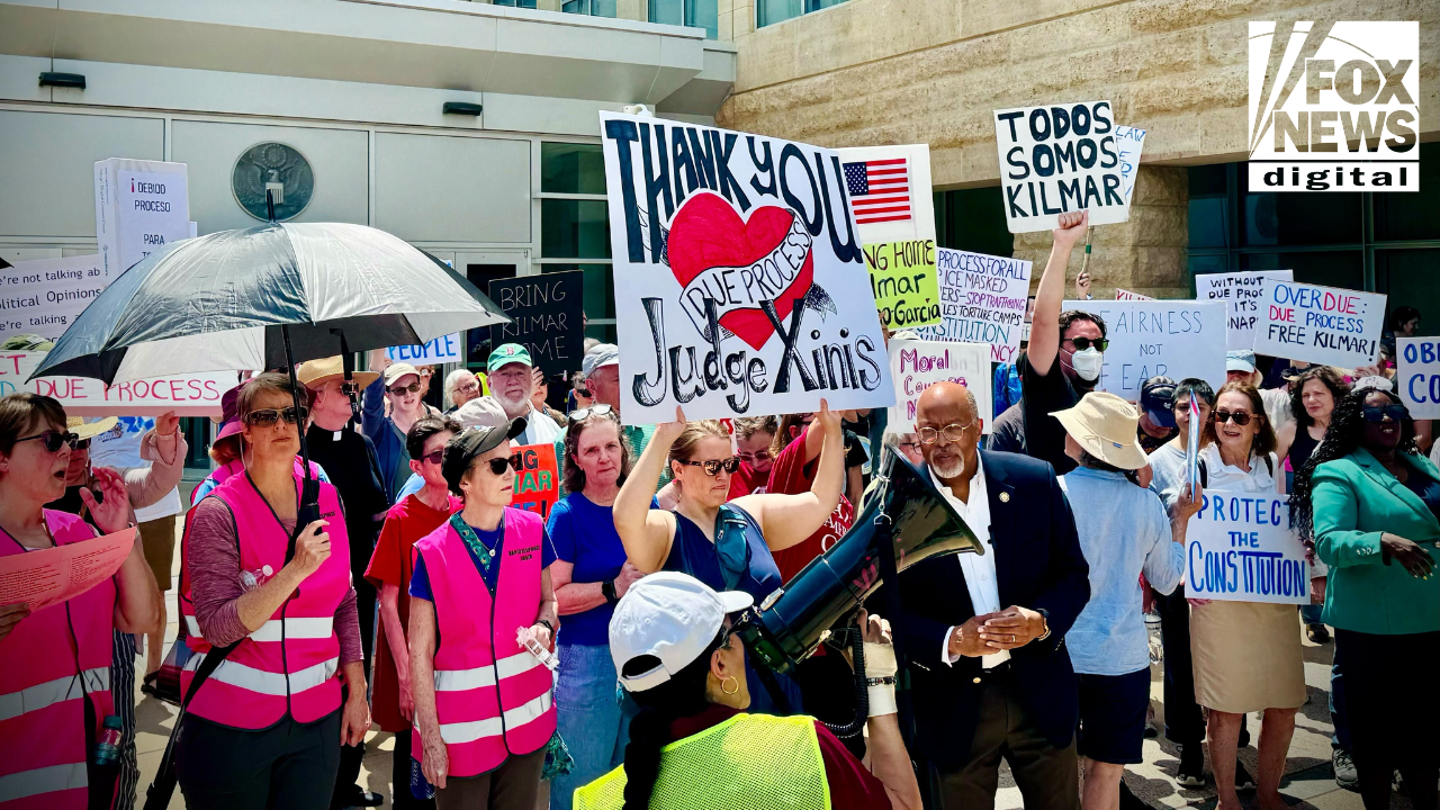

A federal judge appointed by President Obama will hear arguments Monday in a high-profile immigration case involving Salvadoran migrant Kilmar Abrego Garcia—an increasingly contentious legal battle now spanning two federal courtrooms and testing the limits of President Donald Trump’s deportation policies.
U.S. District Judge Paula Xinis, who previously rebuked the Trump administration for violating court orders, has called the hearing to review motions filed by both the Justice Department and Abrego Garcia’s attorneys. At issue: whether the civil case should be dismissed and whether the Biden-era protections on deportations still apply under Trump’s second term.
Abrego Garcia, who was wrongfully deported to El Salvador in March despite a court order blocking his removal, returned to the U.S. three months later—only to be arrested again on unrelated federal charges in Tennessee tied to a 2022 traffic stop. His legal team now fears he could be deported to a third country without warning.
Deportation Dispute Turns National
The civil suit was filed after the Trump administration forcibly removed Abrego Garcia from the U.S., prompting Judge Xinis to order his return. The Supreme Court upheld that ruling, though it took months—and multiple court battles—before immigration officials complied.
Now back in U.S. custody, Abrego Garcia is fighting on two fronts: one in Tennessee, where he faces criminal charges, and one in Maryland, where Judge Xinis is weighing whether the Trump administration acted unlawfully in deporting him.
Ahead of Monday’s hearing, Xinis signaled she will focus primarily on the Justice Department’s motion to dismiss the civil case and the plaintiffs’ request to block any further deportation attempts.
His lawyers have argued that Trump officials may now be considering sending him to a third country like Libya or Eritrea—nations known for severe human rights abuses. “Defendants have repeatedly stated their intent to remove Mr. Abrego Garcia to a third country,” the legal team wrote in a recent filing, citing fears of torture or persecution.
Torture Allegations and Political Tensions
Further complicating the matter are new claims that Abrego Garcia was tortured during his time in El Salvador’s notorious CECOT prison. In a filing last week, he said he was physically assaulted and subjected to psychological abuse, reigniting outrage among immigrant rights advocates.
The Trump administration’s handling of Abrego Garcia’s case has already drawn international scrutiny. In April, activists protested outside El Salvador’s U.N. mission in New York, demanding accountability for U.S. deportations carried out under the Alien Enemies Act—a controversial law Trump revived in his second term.
Criminal Case Raises New Legal Questions
Meanwhile, a federal judge in Tennessee recently ordered Trump administration officials to refrain from making public statements that could prejudice Abrego Garcia’s criminal case. His attorneys accuse senior figures in the Department of Justice and Department of Homeland Security of launching a media campaign that has “far outpaced” their ability to present actual evidence in court.
“These inflammatory extrajudicial comments threaten Mr. Abrego Garcia’s right to a fair trial,” his legal team wrote, warning it could jeopardize jury selection.
Judge Xinis’s History with the Case
Judge Xinis has already shown frustration with how the Trump administration has handled the case. In a May hearing, she clashed with DOJ lawyers over missed deadlines and incomplete disclosures, even threatening contempt proceedings. At one point, she blasted the administration for attempting to invoke the “state secrets” privilege through a footnote referencing a different case—a move she sharply criticized as “beating a frustrated and dead horse.”
What Comes Next
It’s unclear how Judge Xinis will rule, but Monday’s hearing could prove pivotal in determining whether Abrego Garcia remains in the U.S. or is deported again—possibly to a country where he claims he would face grave danger.
With criminal proceedings still underway in Tennessee and the civil case hanging in the balance, Abrego Garcia’s fate may ultimately test the legal limits of Trump’s second-term immigration strategy—and whether the courts will push back.