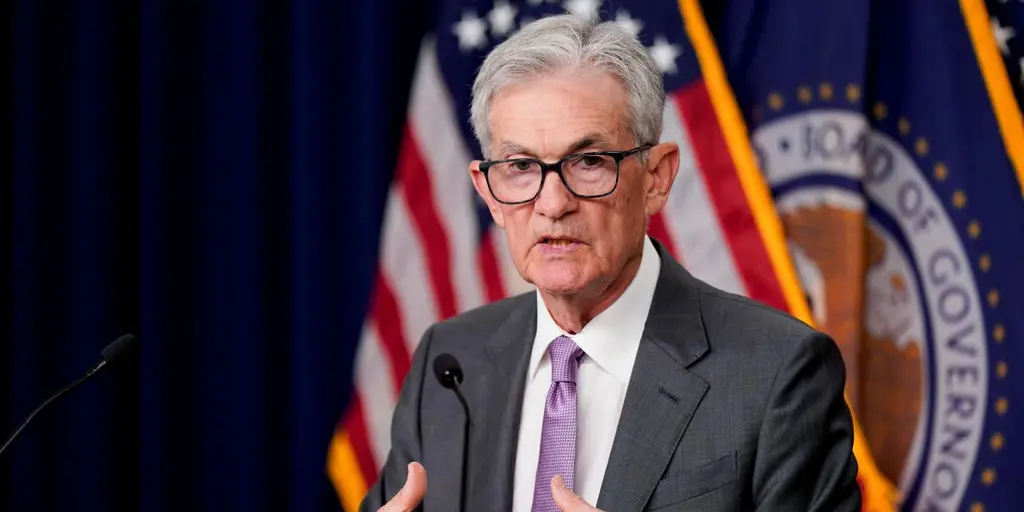

When Federal Reserve Chair Jerome Powell delivers his final speech at Jackson Hole, Wyo., investors will be closely watching for hints about a potential interest rate cut next month.
However, Powell’s address is expected to tackle two broader issues that will shape the Fed’s direction well beyond his tenure, defining a significant part of his legacy.
His widely anticipated Friday morning speech comes amid ongoing debate about the state of the economy and the timing of potential rate cuts.
In interviews with Yahoo Finance on Thursday, Kansas City Fed President Jeffrey Schmid and Cleveland Fed President Beth Hammack expressed caution about reducing interest rates immediately, citing recent inflation data.
“There’s a lot of data we’re going to get between now and September, and I walk into every meeting with an open mind about what the right thing to do is,” Hammack said. “But with the data I have right now, and with the information I have, if the meeting was tomorrow, I would not see a case for reducing interest rates.”
Schmid and Hammack’s colleagues at the Federal Reserve Board, Michelle Bowman and Chris Waller, have been more vocal about the need for cuts. As of early Friday, investors were assigning roughly a 69% probability of a 0.25% Fed rate reduction on Sept. 17.
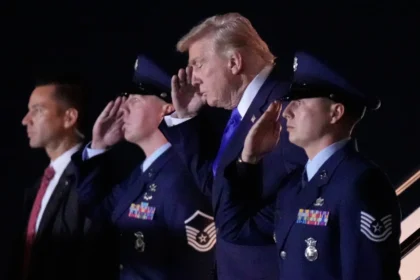
The debate over the Fed’s next move, however, is just part of the backdrop. President Trump has applied pressure on the central bank, calling for Fed Governor Lisa Cook to resign amid a controversy involving two mortgage loans. The Financial Times reported Thursday that the Department of Justice sent Powell a letter urging Cook’s removal.
Trump, who has nicknamed Powell “Too Late” for not cutting rates sooner this year, has frequently commented on Fed policy, advocating for lower interest rates than the current 4.25%-4.50% benchmark range. Treasury Secretary Scott Bessent also suggested earlier this month that the Fed should consider a 0.50% cut in September.
“I think that having an independent central bank has been an institutional arrangement that has served the public well,” Powell said last month. “And as long as it serves the public well, it should continue and be respected.”
Read more: How jobs, inflation, and the Fed are all related
Powell is also expected to announce updates to the Fed’s policy framework review, which defines its strategy and commitment to achieving stable prices and maximum employment.
The Fed is likely to abandon its so-called average inflation targeting, a policy introduced pre-pandemic to manage historically low inflation. Under that framework, periods of below-2% inflation were offset by allowing inflation to exceed 2% later, with the aim of averaging 2% over time. With recent inflation volatility, the Fed is expected to shift toward a straightforward 2% target.
Powell first signaled this change in a May speech.
“In our discussions so far, participants have indicated that they thought it would be appropriate to reconsider the language around shortfalls,” Powell said. “And at our meeting last week, we had a similar take on average inflation targeting.”
The Fed’s monetary policy framework, first created in 2012 and revised every five years, has influenced its actions and expectations. For example, the 2020 update arguably tempered rate hikes even as inflation surged in 2021.
“While the adoption of the new framework in 2020 was not the primary factor behind the Fed’s delay and the substantial inflation overshoot, it contributed to this outcome,” said Matt Luzzetti, chief U.S. economist for Deutsche Bank.
Luzzetti anticipates that Powell’s speech will signal a return to a more preemptive approach to monetary policy, taking into account supply shocks and maintaining a balanced view of inflation and employment.
James Fishback, CEO of hedge fund Azoria, suggested Powell should recognize the “tragic mistake” of average inflation targeting.
Powell noted in May that inflation could become more volatile than during the 2010s, and that the U.S. may face more frequent and persistent supply shocks.
“The economic environment has changed significantly since 2020, and our review will reflect our assessment of those changes,” he said.
Powell is also expected to outline improvements to the Fed’s communications, particularly around forecasts and uncertainty. Investors will be watching for updates to the quarterly Summary of Economic Projections, including the FOMC’s “dot plot,” which shows each member’s interest rate expectations.