
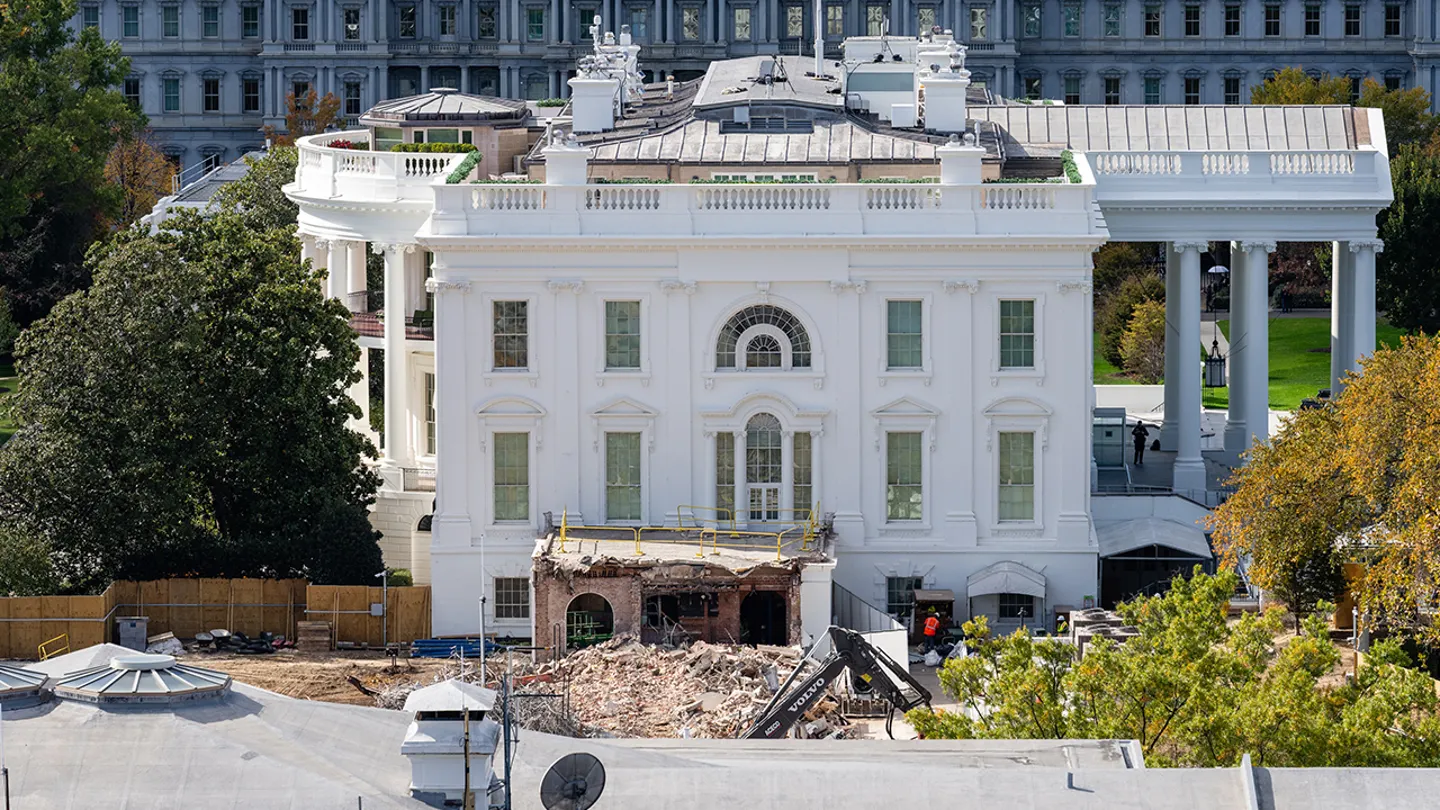

A national historic preservation group has sued the Trump administration in an effort to pause construction of a planned White House ballroom, arguing that parts of the complex were demolished and work began without the independent reviews, public input, and approvals typically required for major federal projects. (AP News)
The lawsuit—filed by the National Trust for Historic Preservation in federal court in Washington, D.C.—contends that “no president is legally allowed to tear down portions of the White House without any review whatsoever,” and that building a new ballroom on public property must include a chance for the public to weigh in. (AP News)
What’s being built—and what’s already been torn down
The White House ballroom project, as described in court filings and public statements, is planned as a large addition intended to host major events without relying on temporary tents on the South Lawn. The administration has described the project as roughly 90,000 square feet and designed to accommodate about 1,000 guests, with cost estimates reported around $300 million (and in some accounts higher), funded by private donors. (AP News)
Critics’ alarm intensified after demolition work in October removed much of the East Wing area tied to the project site, raising questions about what oversight—if any—occurred before changes were made to one of the country’s most symbolically and historically significant buildings. (AP News)
The Trust’s claims: review, public comment, and Congress
In its complaint, the National Trust argues the project should not proceed until it undergoes a standard federal review process and is presented for scrutiny by key oversight bodies—including the National Capital Planning Commission and the Commission of Fine Arts—and, where required, Congress. (AP News)
The group also points to environmental review requirements, arguing the project moved forward without the type of assessment typically expected under laws such as the National Environmental Policy Act. (ABC News)
Defendants named in the lawsuit include the president and multiple federal entities involved in the White House grounds and construction process, such as the National Park Service, the Department of the Interior, and the General Services Administration. (CBS News)
The administration’s defense: presidential authority and “national security”
The administration has countered that the president has the legal authority to modify and modernize the executive residence, pointing to a long history of additions and renovations at the White House over more than two centuries. (AP News)
In court filings, administration lawyers also argued that some challenges are procedurally premature because final designs are still being developed, and that complaints about the East Wing demolition are effectively “moot” because the demolition cannot be undone. (AP News)
Separately, the administration framed the work as having security implications. In response to the lawsuit, it argued in a filing that continuing work at the site is tied to safety and security requirements, with the Secret Service supporting the project’s necessity and the government offering to provide classified details to the judge in a private setting. (AP News)
Where the case stands now
A federal judge signaled he was unlikely to immediately halt the project on an emergency basis. U.S. District Judge Richard Leon declined to issue the temporary restraining order sought by the National Trust, saying the plaintiffs had not shown “irreparable harm” at this stage. (Reuters)
However, Leon also warned the government to limit ongoing activity to below-ground work not tied to a specific final design and indicated he would hold further proceedings in January. (Reuters)
What happens next
Even as the legal fight continues, the larger debate isn’t only about architecture—it’s about process, precedent, and public accountability. The preservationists’ central argument is that major changes to historic federal property should not be decided behind closed doors, especially once demolition has already begun. (AP News)
The administration, for its part, is betting the project will survive in court by arguing broad executive authority over the White House residence and by emphasizing that key design details are still evolving, making immediate judicial intervention unnecessary. (Reuters)


