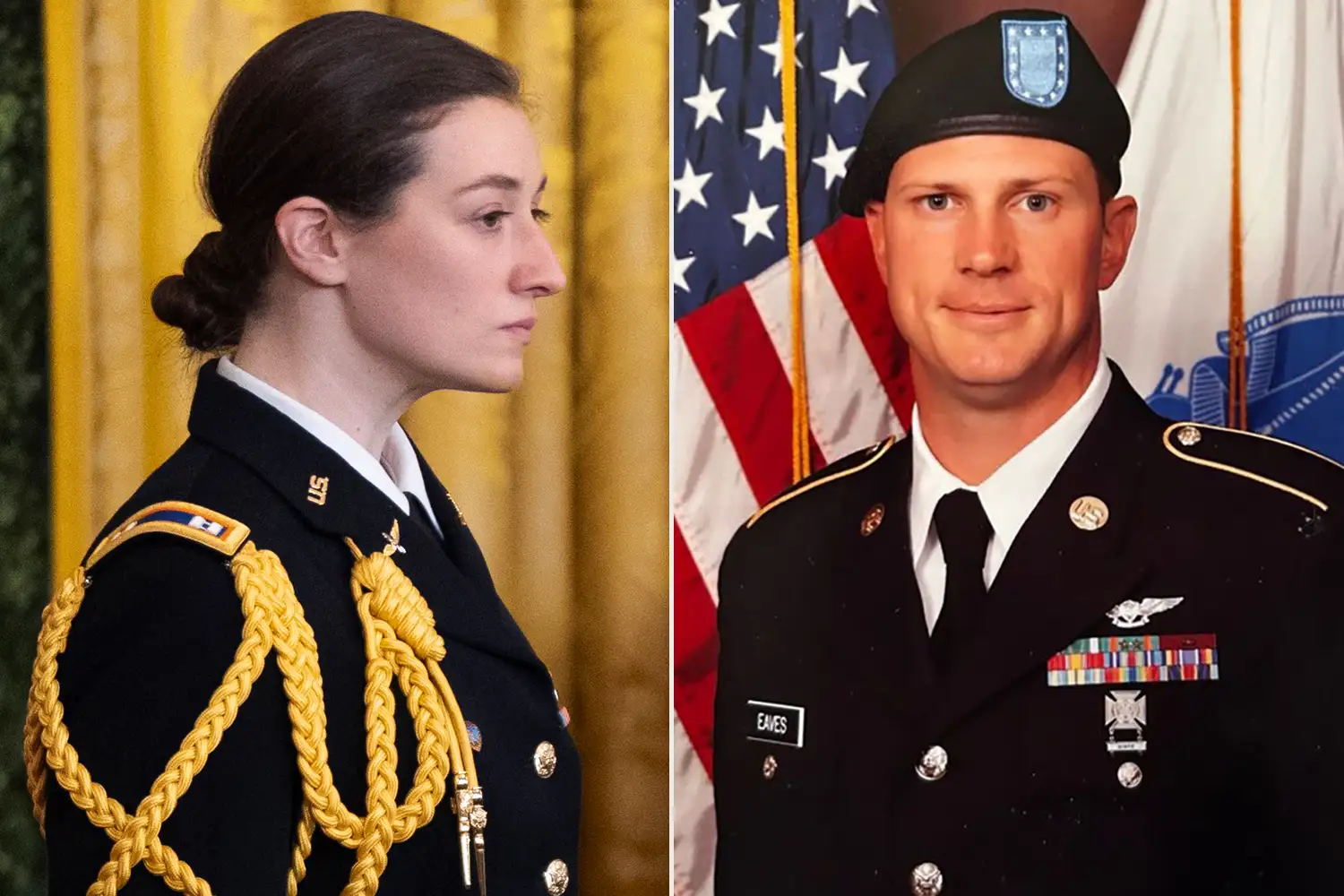

Just seconds before a deadly mid-air collision outside Washington, D.C., the pilot of a U.S. Army Black Hawk helicopter was instructed to “come left” by her onboard instructor — moments before they struck an American Airlines jet, killing 67 people.
New details emerged during a three-day hearing launched Wednesday, July 30, by the National Transportation Safety Board (NTSB), shedding light on the Jan. 29 crash at Ronald Reagan Washington National Airport. The hearing also included thousands of pages of investigative documents and a newly released cockpit transcript.
The American Airlines flight, carrying 64 people — including several young figure skaters traveling home from a camp in Kansas — had just been rerouted to a new runway shortly before landing. Meanwhile, the helicopter, returning to Fort Belvoir as part of a night evaluation exercise, had three service members onboard: 28-year-old pilot Capt. Rebecca Lobach, instructor Chief Warrant Officer 2 Andrew Eaves, 39, and Staff Sgt. Ryan O’Hara, 28.
According to investigators, the Black Hawk was flying in restricted airspace near the airport at an altitude higher than allowed — between 200 and over 300 feet — possibly due to a misreading from its altimeter. The crew reportedly believed they were flying lower than they actually were, with transcripts showing repeated altitude callouts that were about 100 feet off.
Cockpit audio captured relaxed conversation between Lobach and Eaves during their 15-minute flight. But about two and a half minutes before impact, Eaves warned they were flying too high and instructed Lobach to drop to 200 feet.
Despite two separate alerts from air traffic control about the nearby passenger jet, the Black Hawk crew stated they had visual contact and were granted permission to maintain their own separation from the jet.
However, a critical final instruction from air traffic control — to pass behind the plane — was missed due to a microphone disruption in the helicopter.
Roughly 20 seconds before the collision, Eaves gave his last directional command: “Alright, kinda come left for me ma’am, I think that’s why he’s asking,” referencing the traffic controller. Lobach responded, “Sure.” He added, “We’re kinda out towards the middle,” to which she replied, “Oh-kay fine.”
The brief exchange lasted just four seconds.
At that moment, the helicopter was 270 feet above ground. The passenger jet, descending onto its final approach, was at 320 feet. Three seconds later, at 8:48 p.m., the two aircraft collided over the Potomac River.
The NTSB’s hearing continues as questions remain over whether errors in altitude readings, communication breakdowns, or protocol failures ultimately led to the tragedy.