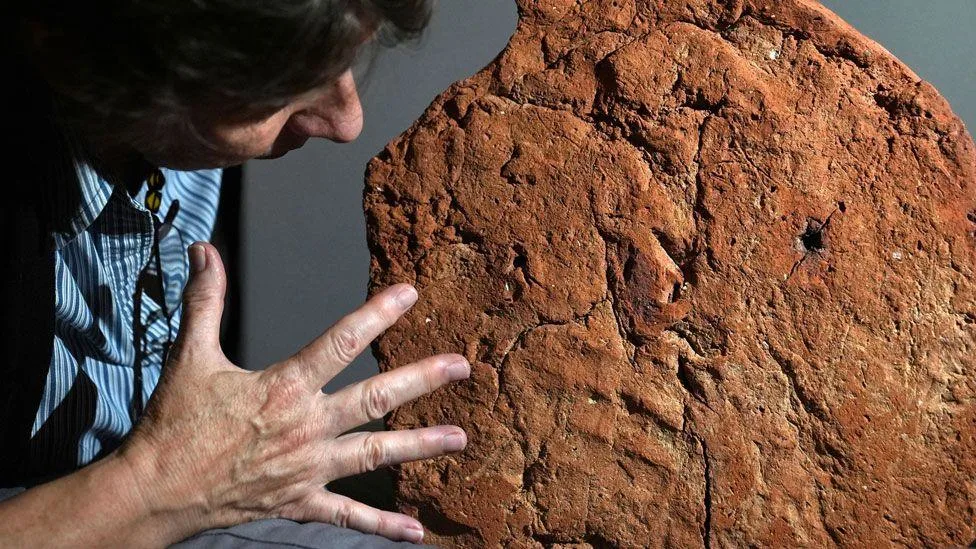

A remarkable 4,000-year-old handprint has been uncovered on a clay model known as a “soul house” by researchers at the University of Cambridge, offering a rare glimpse into the life of an ancient Egyptian artisan.
The handprint was found on the underside of the artifact while curators at the Fitzwilliam Museum were preparing for an upcoming exhibition, Made in Ancient Egypt, which opens on October 3.
“This find takes you straight to the moment the object was made, and to the person who made it,” said Helen Strudwick, senior Egyptologist at the museum. “We often see partial fingerprints in paint or varnish, but a complete handprint like this is exceptionally rare.”
The soul house—dating back to between 2055 and 1650 BC—was a ceramic model of a two-story building with open fronts and detailed food offerings crafted from clay. These models were typically placed in tombs and may have served either as offering trays or symbolic homes for the souls of the deceased.
The potter likely built the house around a wooden stick framework, which burned away during the kiln-firing process, leaving the hollowed clay structure behind. According to experts, the handprint was probably left when the potter lifted or moved the model while the clay was still damp, perhaps to dry it before firing.
Despite the abundance of ancient Egyptian ceramics that have survived over millennia, very little is known about the potters who made them. Unlike artists who painted coffins or carved stone, potters were often looked down upon—one ancient Egyptian text even likens them to pigs wallowing in mud.
The museum hopes the exhibition will shine a light on these overlooked craftspeople. “Everyone knows about pharaohs like Tutankhamun,” said Strudwick. “But few people consider the hands—quite literally—behind the things they left behind.”
In the case of this soul house, those hands have now come back into view, 4,000 years later.