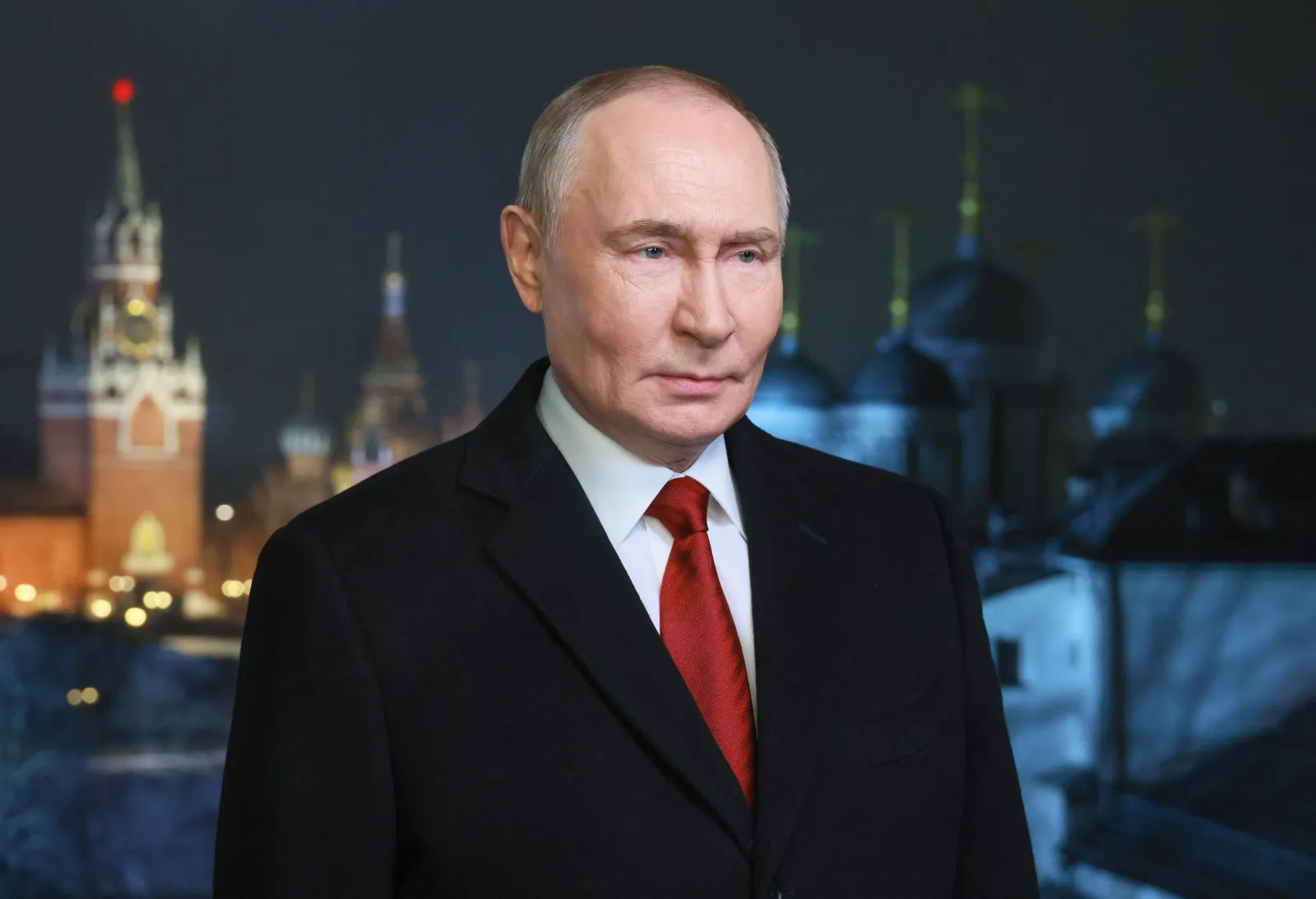

The Kremlin says it is closely monitoring what it called an “extraordinary” situation unfolding around Greenland, as European NATO allies deploy forces to the self-governing Danish territory for Arctic military exercises—an effort framed as alliance unity amid U.S. President Donald Trump’s escalating push for Washington to secure control of the island.
Russia signaled it would expand defense capabilities and infrastructure across the Arctic, and branded the NATO drills a provocation. Moscow also dismissed Trump’s argument that Russia or China would eventually take Greenland if the United States does not.
Trump has argued the U.S. needs Greenland for national security—and that NATO would ultimately be safer with the territory under American control.
The dispute has the potential to strain NATO, a cornerstone of post-World War II transatlantic security. The White House has declined to rule out the use of military force as part of a pressure campaign aimed at Denmark, pushing it to agree to transfer the territory. Any widening rift inside NATO would benefit Russia strategically—both in the context of Ukraine and across Europe.
The tensions also reflect a shifting global order, accelerated by Trump and what he has described as a new “Donroe Doctrine,” a revival of the 19th-century Monroe Doctrine concept of American primacy in the Western Hemisphere. Trump’s approach—illustrated by his seizure of Venezuelan leader Nicolas Maduro—casts hard power, rather than international rules, as the ultimate judge of outcomes.
“The situation is unusual—I would even say extraordinary from the standpoint of international law,” Kremlin spokesman Dmitry Peskov said on Friday morning, originally in Russian, according to state news agency TASS.
Trump has indicated that “international law does not represent any kind of priority [or] substance for him,” Peskov said. “Therefore, the situation is developing along some other trajectory. Together with the entire world, we will watch which one.”
Peskov described the Greenland debate as “very contradictory,” pointing to the U.S. drive to take control from Denmark—potentially through a purchase of the strategically significant territory—despite repeated rejections from leaders in both Nuuk and Copenhagen. “We proceed from the assumption that Greenland is a territory of the Kingdom of Denmark,” Peskov said.
Greenland, NATO, and Arctic Security
Greenland’s strategic importance to the United States is rooted in geography and emerging Arctic dynamics. Its location supports early-warning missile detection and space surveillance, sits near developing Arctic sea routes, and could provide access to significant—but largely undeveloped—natural resources, including critical minerals and rare earth elements, as well as possible oil and gas reserves.
NATO Secretary-General Mark Rutte said on Monday that “all allies” agree Arctic security is “a priority,” arguing that melting ice is opening sea lanes while increasing the risk of heightened Russian and Chinese activity. Rutte noted that seven of the eight Arctic powers are NATO members.
“We have to work together to make sure that the Arctic stays safe,” Rutte said, adding that discussions are underway on practical ways NATO allies can strengthen security in the region.
Russia Responds to NATO’s Greenland Exercises
On Thursday, as troops from Denmark and other NATO allies began arriving in Greenland for military exercises dubbed Operation Arctic Endurance, Russian Foreign Ministry spokeswoman Maria Zakharova called the move “yet another provocation” by Western powers and warned of “serious consequences.”
“It is important to understand that any attempts to ignore Russia’s interests in the Arctic, especially in the sphere of security, will not go unanswered and will have far-reaching consequences,” Zakharova said.
“Our country will continue to firmly defend its positions in the region in order to ensure its sustainable socio-economic development, the preservation of the natural environment, cultural heritage, and the traditional way of life of Indigenous peoples.
“We will continue a course aimed at strengthening national sovereignty in the Arctic zone, first and foremost our own defense capabilities and the infrastructure of the Northern Sea Route.”
Zakharova also said, “we agree with China’s position on the unacceptability of references” to Russian and Chinese activity around Greenland and in the Arctic as “a reason for the current aggravation.”
Norway’s Nuclear Weapons Warning
In October, Norwegian Defense Minister Tore Sandvik warned that Russia is expanding its footprint at an Arctic Circle base, including nuclear weapons aimed toward the United States.
“Russia is building up on the Kola Peninsula…where one of the largest arsenals of nuclear warheads in the world is located,” Sandvik told Britain’s The Daily Telegraph. “They are not only pointed towards Norway, but towards the U.K. and over the pole towards Canada and the U.S.”
“We are the eyes and ears of NATO in this area, and we see that they’re testing new weapons, for example hypersonic missiles, and they are testing nuclear-driven torpedoes and nuclear warheads,” he continued.
Russia stations nuclear weapons on the Kola Peninsula alongside its Northern Fleet, established in 1733.
Sandvik argued that in any conflict with NATO, Russia would likely target the Bear Gap—between Svalbard and mainland Norway—along with the GIUK Gap between the U.K., Iceland, and Greenland.
“Putin needs to establish what is called the Bastion defence. He needs to control the Bear Gap to make sure that he can use his submarines and the Northern Fleet. And he wants to deny [NATO] allies access to the GIUK Gap,” Sandvik said.