
For nearly three years after Bryan Kohberger murdered four University of Idaho students, his family remained largely out of public view. Now, one of his sisters is speaking for the first time.
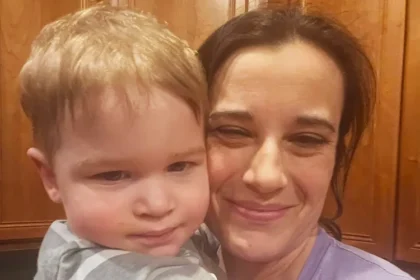
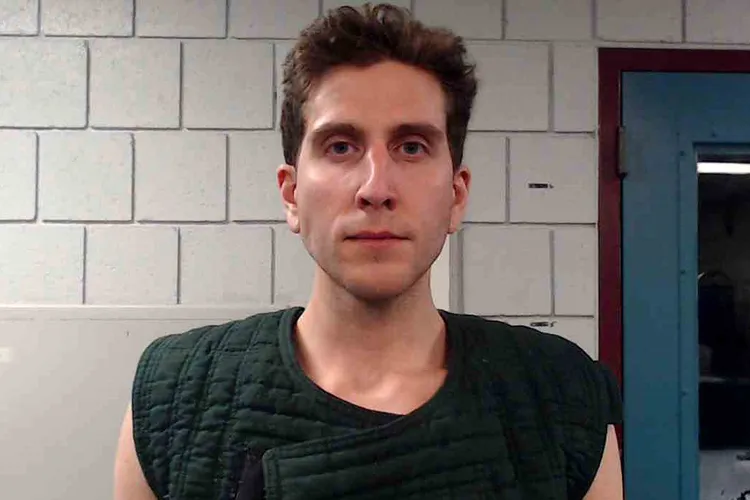
Mel Kohberger, one of Bryan’s two sisters, shared her perspective in an interview published by The New York Times on Jan. 3. Bryan, who confessed to the 2022 killings, was sentenced in 2025 to four consecutive life sentences without the possibility of parole. While Mel did not address the details of the crime itself, she spoke candidly about her childhood with Bryan and how their family has struggled in the years since his confession.
Mel said she first learned about the Nov. 13, 2022, murders of Kaylee Goncalves, Madison Mogen, Xana Kernodle and Ethan Chapin when news broke that an unknown attacker had entered the students’ off-campus home. Alarmed, she reached out to her brother.
“Bryan, you are running outside and this psycho killer is on the loose,” she recalled telling him. According to Mel, Bryan reassured her that he would be careful and thanked her for her concern.
:max_bytes(150000):strip_icc():focal(954x212:956x214):format(webp)/Bryan-Kohberger-010325-02-63b8bb25f99e4e1e845c04e690cc3cd4.jpg)
In the interview, Mel described Bryan as socially awkward, sometimes abrasive and prone to arguing with her, but said she never witnessed violent behavior. She recalled an instance when he restrained her hands to de-escalate an argument rather than escalate it. She also spoke about their upbringing, saying their parents, Maryann and Michael Kohberger, raised their children to value loyalty, self-reliance and putting others first.
Mel said she learned of Bryan’s arrest when police entered her parents’ Pennsylvania home late at night. The news came through her sister, Amanda, and initially felt unreal.
“She was like, ‘I’m with the F.B.I., Bryan’s been arrested,’” Mel recalled. “I was like, ‘For what?’” She said disbelief quickly turned to physical illness as the reality set in.
She also spoke about the intense public scrutiny her family faced after the arrest, particularly in an era shaped by true crime culture. At the time, Mel was training for a job as a mental health counselor, but left the position after her employer was overwhelmed by outside inquiries. Online attention also spread to her sister Amanda, after old footage surfaced of her appearing in a low-budget horror film from 2011.
In another painful episode, Mel said someone used the name “Melissa J. Kohberger” to publish a book about the case, seemingly attempting to profit from the tragedy by exploiting her identity. She described the experience as both confusing and deeply hurtful.
:max_bytes(150000):strip_icc():focal(1397x546:1399x548):format(webp)/Bryan-Kohberger-010325-56a5bb47dae2469c9c7c2c14e9eeaf47.jpg)
“It’s like being victimized but not really being a victim,” she said.
Mel also addressed speculation that her family may have suspected Bryan long before his arrest. She firmly rejected that idea.
“I have always been a person who has spoken up for what was right,” she said. “If I ever had a reason to believe my brother did anything, I would have turned him in.”
Looking back to before the murders, Mel said her family felt proud of Bryan for becoming a doctoral candidate in criminology at Washington State University, especially given the challenges he had faced earlier in life, including bullying and a past heroin addiction.
“We were all so proud of him,” she said, “because he had overcome so much.”
Today, she said, the family continues to experience grief — particularly during holidays when Bryan’s absence is felt. But those moments, she explained, inevitably lead them to think about the families of the victims and the depth of their loss.
“The idea is making me so emotional that I can barely speak to you about it,” she said through tears.
Mel also reflected on her own former interest in true crime, acknowledging how her perspective has changed after becoming personally entangled in such a case.
“It’s human nature to be curious about darker things,” she said. “That’s how we keep ourselves safe.”
At the same time, she emphasized the need for a more compassionate approach.
“I think we should try and come together for a true crime culture that is way more protective and empathetic to the families of the victims,” she added.