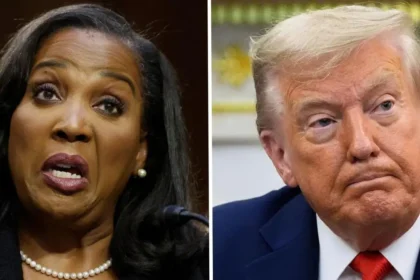
WASHINGTON — A high-stakes diplomatic standoff between the United States and Spain over military operations in Iran escalated sharply Wednesday, as Madrid flatly contradicted White House claims of cooperation and President Donald Trump threatened to sever all trade ties with the NATO ally.
The dispute centers on the strategic use of Rota and Morón airbases in southern Spain. While the White House insists Spain has capitulated to U.S. pressure, Spanish officials have doubled down on their refusal to support strikes they deem “unjustifiable” and outside the scope of international law.
Conflicting Narratives: The White House vs. Madrid
The friction reached a boiling point Wednesday morning when White House Press Secretary Karoline Leavitt informed reporters that Spain had reversed its previous opposition following President Trump’s Tuesday threat of economic retaliation.
“It’s my understanding… they’ve agreed to cooperate with the U.S. military,” Leavitt stated, suggesting that Madrid had “heard the president’s message loud and clear.”
However, Spanish Foreign Minister José Manuel Albares issued a swift and public rebuke. Speaking to Cadena Ser, Albares stated that Spain’s position has “not changed one iota,” effectively accusing the White House of misrepresenting the diplomatic reality.
“No To War”: Sánchez Defies Washington
Spanish Prime Minister Pedro Sánchez further galvanized the resistance in a nationally televised address, framing the refusal as a matter of national sovereignty and moral principle.
“We are not going to be complicit in something that is bad for the world… just out of fear of reprisals,” Sánchez said. He summarized his administration’s stance in four words: “No to the war.”
The Prime Minister’s defiance targets the legal basis of the U.S.-led intervention in Iran, arguing that any use of joint bases for strikes not authorized by the United Nations Charter is a violation of Spanish law and interests.
Economic Warfare and the EU Factor
The Trump administration has pivoted to economic leverage to break the stalemate. Treasury Secretary Scott Bessent suggested Wednesday that Spain’s refusal “puts American lives at risk” and did not rule out a trade embargo.
| Key Spanish Exports to U.S. | Estimated Annual Value |
| Pharmaceuticals | €4.2 Billion |
| Olive Oil | €1.1 Billion |
| Refined Petroleum | €1.8 Billion |
| Electrical Transformers | €0.9 Billion |
Despite the threats, President Trump faces significant legal and geopolitical hurdles:
- The EU Bloc: As an EU member, Spain’s trade policy is managed by the European Commission. A unilateral U.S. embargo on Spain would technically constitute a trade war against the entire 27-nation bloc.
- Legal Precedent: The U.S. Supreme Court recently limited the President’s ability to use emergency powers for sweeping tariffs, though the administration argues that “total embargoes” fall under a different legal category.
Military Sovereignty at a Crossroads
At the heart of the crisis are the Rota and Morón de la Frontera bases. While these installations host thousands of U.S. personnel and advanced hardware, they remain under Spanish sovereign command.
President Trump suggested Tuesday that the U.S. could “just fly in and use” the bases regardless of Madrid’s consent, a statement that has alarmed European defense analysts who fear a breakdown in the NATO command structure.
What’s Next?
The European Commission has signaled “full solidarity” with Spain, suggesting that any U.S. trade action could trigger immediate retaliatory measures from Brussels. As the military campaign in Iran intensifies, the rift in the trans-Atlantic alliance appears to be widening, with no clear diplomatic off-ramp in sight.