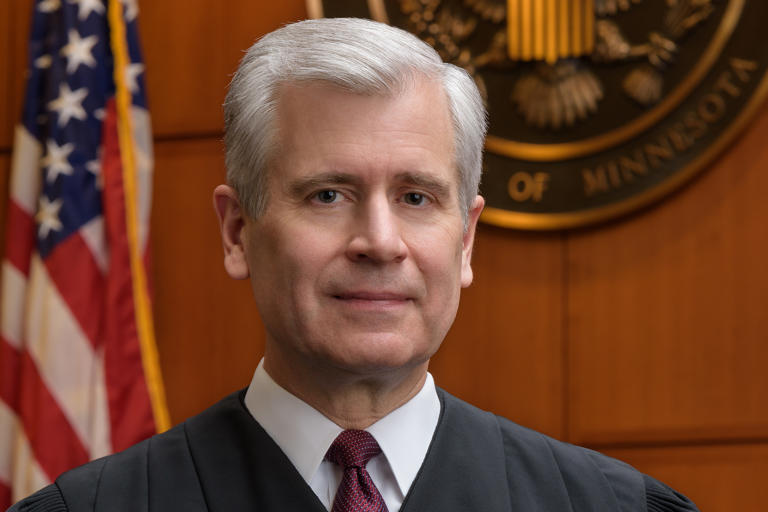

MINNEAPOLIS — In an extraordinary escalation of the legal battle over the Trump administration’s immigration enforcement, the Chief U.S. District Judge for the District of Minnesota issued a blistering rebuke to Justice Department leadership on Thursday, threatening criminal consequences for what he termed a historic disregard for the rule of law.
Chief Judge Patrick Schiltz, a George W. Bush appointee, warned that federal authorities have continued to violate court mandates at an unprecedented rate amid the administration’s “Operation Metro Surge” deportation initiative.
“This Court will continue to do whatever is required to protect the rule of law, including, if necessary, moving to the use of criminal contempt,” Schiltz wrote in a message posted to a federal immigration docket. “One way or another, ICE will comply with this Court’s orders.”
A Crisis of Compliance
The judge’s warning stems from hundreds of emergency lawsuits filed by detainees in the Twin Cities who allege they have been illegally held by Immigration and Customs Enforcement (ICE). According to Schiltz, the federal bench in Minnesota has been forced to routinely utilize civil contempt threats and monetary fines just to compel the government to follow basic judicial instructions.
Schiltz noted the historical anomaly of the current friction between the executive and judicial branches.
“The Court is not aware of another occasion in the history of the United States in which a federal court has had to threaten contempt—again and again and again—to force the United States government to comply with court orders,” Schiltz stated.
National Judicial Pushback
Minnesota is not an isolated front. Judges across the country reported similar patterns of administration misconduct this week:
New Jersey: Judge Zahid Quraishi cited “rampant misconduct,” declaring the defiance “ends today.”
West Virginia: Judge Irene Berger criticized the administration for a “lack of respect for the law” and cited gross “sloppiness” in filings—including a case where officials claimed a detainee had a drug conviction from 2009, a year the individual was only four years old.
Texas: Judge Kathleen Cardone identified a “worrying trend” of missed deadlines by administration officials.
In Minnesota, other judges have already moved beyond warnings. Judge Eric Tostrud recently held officials in civil contempt, forcing the government to pay for a plane ticket for a detainee who was illegally transferred to Texas. Meanwhile, Judge Jeffrey Bryan has scheduled a mass contempt hearing for next month involving two dozen cases where ICE allegedly withheld personal property from released detainees.
Tensions Between the Bench and the U.S. Attorney
The conflict has also become personal between the bench and Minnesota’s top federal prosecutor. Schiltz revealed that U.S. Attorney Daniel Rosen “attacked the court” in a Feb. 9 email, calling the judge’s previous rebukes “beyond the pale of accuracy.”
Schiltz responded by verifying his initial data and discovering an additional 113 violations across 77 more cases, most occurring after his initial warning in January. He defended the rank-and-file government attorneys, suggesting they had been placed in an “impossible position” by leadership who deployed 3,000 ICE agents to the region without the legal infrastructure to handle the resulting litigation.
The Path Forward
The Justice Department has not yet officially responded to the threat of criminal contempt. Unlike civil contempt, which is designed to coerce compliance through fines, criminal contempt is intended to punish past defiance and can result in jail time for officials found to be in willful violation of court orders.
As Operation Metro Surge continues, the federal courts appear to be moving toward a constitutional showdown over executive power and judicial oversight. The combined contempt hearing scheduled for next month in Minnesota will likely serve as a pivotal moment in determining whether the judiciary can successfully rein in the administration’s enforcement tactics.