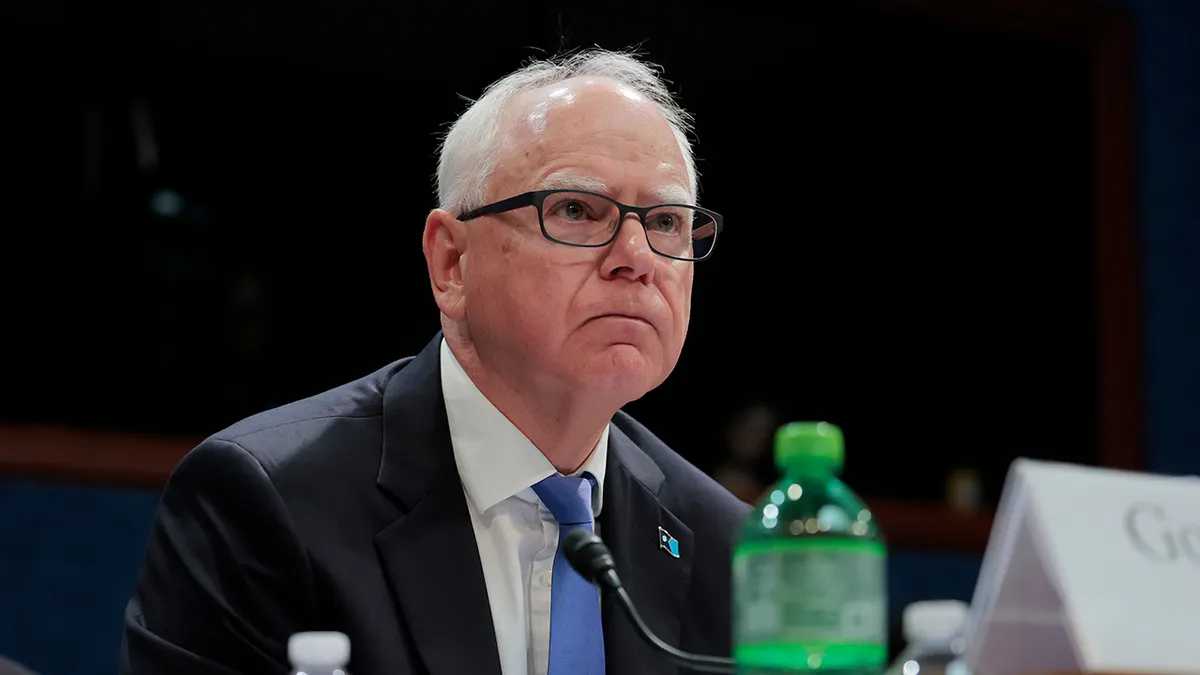

The Washington Post editorial board is accusing Democratic Minnesota Gov. Tim Walz of “refusing to take responsibility” for a massive welfare fraud scheme that unfolded during the COVID-19 pandemic, arguing he is not “helping himself” by downplaying his role in what they say happened “in plain sight.”
The criticism comes as the Justice Department announced new charges last week against the 78th defendant in the sprawling Feeding Our Future case. Prosecutors say the scheme siphoned more than $250 million from a federally funded child nutrition program and has already produced over 50 convictions. Many of those charged are members of Minnesota’s Somali community.
According to the editorial, state programs became an easy target. The board wrote that residents, many of Somali descent, exploited established Medicaid initiatives and set up sham food distribution sites and autism centers to divert taxpayer dollars away from vulnerable families. They argued that the scale of the growth should have raised immediate alarms.
The editors noted that the number of autism centers in Minnesota reportedly jumped by 700 percent between 2018 and 2023, once it became clear how much welfare funding was available. Over the same period, spending surged from $6 million to nearly $192 million — an increase of about 3,000 percent. The board said no reasonable observer could view those numbers as evidence of a genuine spike in autism cases, and faulted officials for failing to respond when red flags surfaced.
The editorial highlighted Walz’s appearance on “Meet the Press” on Sunday, where he was asked whether he would accept blame for not stopping the fraud sooner. Walz replied that he “certainly” takes responsibility for “putting people in jail,” insisting that Minnesota is a generous, prosperous, well-run, AAA-rated state that naturally attracts criminals. He added that those who broke the law are being prosecuted, but said it was “lazy” to vilify an entire community over the actions of a relative few.
The board countered that the fraudsters had clearly targeted what they described as Minnesota’s “vast and unaccountable” welfare infrastructure — likened to European-style entitlements — which they argued proved surprisingly easy to abuse. They said it was “lazy” for Walz to praise the state’s safety net without fully acknowledging how its oversight failures allowed such a scandal to fester.
Walz, they noted, did sign anti-fraud legislation earlier this year aimed at tightening controls and preventing future abuses. But the editorial argued that he simultaneously presided over a broad expansion of the welfare state without putting strong enough guardrails in place to ensure that money reached those who genuinely qualify.
The editors also reserved sharp words for President Donald Trump’s reaction. They condemned his decision to direct an offensive slur at Walz in a Truth Social post and denounced his move to end deportation protections for Somalis in Minnesota, calling that policy response “morally bankrupt.”
The board further pointed out that former Vice President Kamala Harris carried Minnesota by only four points in the 2024 election, despite having Walz on the ticket — a margin they suggested may signal political vulnerability in a state long considered safely Democratic.
In a separate column on Tuesday, Washington Post columnist Jim Geraghty echoed the criticism, arguing that Walz is “crumbling” under scrutiny, along with any realistic prospects he might have had for a 2028 national run.