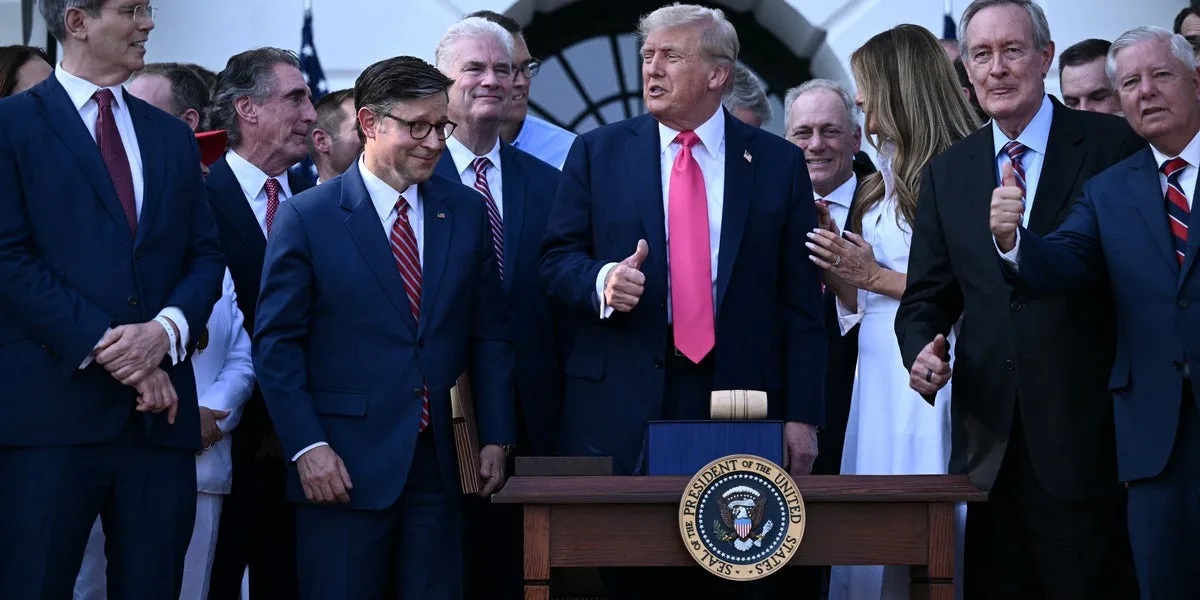

Facing mounting criticism over deep Medicaid cuts in President Donald Trump’s sweeping new tax bill, administration officials took to Sunday talk shows in an effort to downplay the fallout — even as projections show millions could lose health coverage.
On CNN’s State of the Union, Treasury Secretary Scott Bessent dismissed concerns raised by Democrats about new work requirements tied to Medicaid, accusing them of trying to “infantilize the poor.”
“The idea that these requirements will cause some massive hemorrhaging of insurance doesn’t make a lot of sense to us,” Bessent said, insisting the bill doesn’t cut benefits but simply adds conditions to qualify.
National Economic Council Director Kevin Hassett echoed that defense on CBS’s Face the Nation, denying that significant numbers of people would lose coverage. “There are no changes in benefits. There’s a change in requirements to get the benefit,” he said.
Despite the administration’s efforts to calm fears, even some Republicans have warned the cuts could hurt the party in the 2026 midterms. Medicaid remains widely popular across the political spectrum, and while work requirements may initially seem appealing to voters, support often drops once the complexities — and consequences — become clear.
Under the bill, many Medicaid recipients would need to prove they’re working, attending school, or volunteering at least 80 hours per month. Though exemptions exist for parents of young children, pregnant individuals, and people with disabilities, critics say the red tape will push many off the rolls — not due to lack of eligibility, but because of the administrative burden.
According to the nonpartisan Congressional Budget Office, as many as 11.8 million people could lose health coverage under the bill. The Economic Policy Institute warned the new requirements are unlikely to boost employment, but will significantly increase barriers to care, especially for gig workers or caregivers with irregular schedules.
Bessent brushed off such concerns, saying, “Poor people have agency… asking them to register twice a year for these benefits is not a burden.”
The bill also threatens health coverage beyond Medicaid. Pandemic-era subsidies under the Affordable Care Act (ACA) — which have helped keep premiums down — are set to expire unless renewed later this year. The legislation would also tighten ACA eligibility verification and eliminate automatic re-enrollment, steps that experts warn could further reduce access to care.
Pressed about the fate of those subsidies, Hassett deflected, pivoting to hospital tax policy before concluding, “I think nobody’s going to lose their insurance” — a claim sharply at odds with independent analysis.Tools