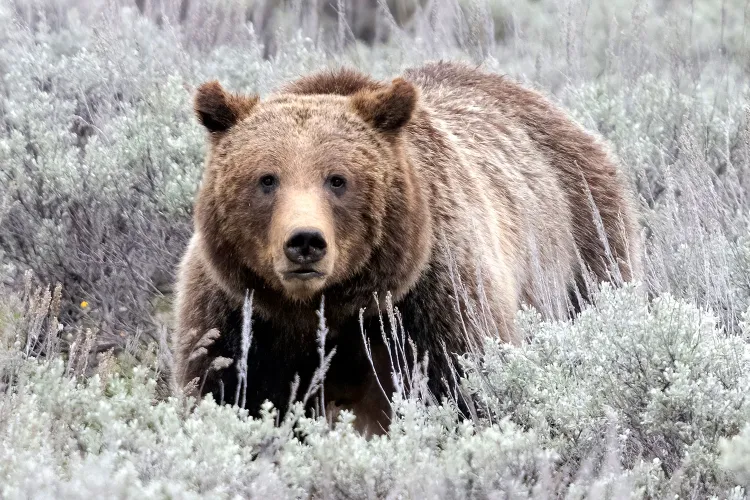

The Trump administration is pushing to scale back protections for endangered wildlife and the habitats they depend on.
The Interior Department’s Fish and Wildlife Service and NOAA’s National Marine Fisheries Service have proposed rules that would roll back safeguards established during the Biden administration for plants and animals threatened largely by habitat loss. Similar changes were floated by Republicans during President Donald Trump’s first term, but were later blocked under former President Joe Biden.
Under the proposed updates, economic impacts could be weighed more heavily when determining whether a species qualifies for protection under the Endangered Species Act (ESA). The agencies also want to repeal the ESA’s long-standing “blanket rule,” which automatically grants species listed as “threatened” the same protections as those labeled “endangered.” If that rule is removed, federal agencies would have to craft protections on a species-by-species basis instead of applying a uniform standard.
:max_bytes(150000):strip_icc():focal(749x508:751x510):format(webp)/noaa-headquarters-112025-4d4ee10e712741dab03c230fdaaf5511.jpg)
Humane World for Animals notes that more than 100 at-risk species currently rely on threatened-status protections, including grizzly bears, wolverines, and certain wolf populations. Property-rights groups have challenged the blanket rule in the past, but those lawsuits were put on hold when the Trump administration moved to rewrite it. Before any final change is made, the proposed rule will go through a 30-day public comment period.
Administration officials argue the revisions are practical and overdue, saying environmental regulations have placed excessive limits on development, energy, and mining projects.
“This administration is restoring the Endangered Species Act to its original intent, protecting species through clear, consistent, and lawful standards that also respect the livelihoods of Americans who depend on our land and resources,” Interior Secretary Doug Burgum said in a statement.
:max_bytes(150000):strip_icc():focal(795x229:797x231):format(webp)/wolverine-112025-58e8b441e292477ab939bc9502aeccdf.jpg)
The Fish and Wildlife Service, charged with conserving imperiled species, groups listings into five categories: endangered, threatened, endangered due to similarity of appearance, threatened due to similarity of appearance, essential experimental population, and nonessential experimental population.
Species currently protected under the ESA include animals such as cheetahs, lemurs, marine otters, black rhinoceroses, blue whales, polar bears, and many others.
Environmental organizations warn that weakening protections could slow rescue efforts for species already close to extinction, including killer whales, monarch butterflies, and Florida manatees.
“The proposal to repeal this rule is completely reckless,” said Kitty Block, president and CEO of Humane World for Animals. “Even if they are listed as ‘threatened’ under the ESA, species could become extinct without its protections.”
Humane World for Animals and Humane World Action Fund say the broader package could make it harder to list species that need help and could create loopholes that undercut habitat and recovery safeguards.
“The rule provides an important safety net for vulnerable wildlife, giving species time to recover their populations before they become critically endangered,” Block added. “Wiping out this rule benefits only industry and developers, not animals and their future ability to survive.”
:max_bytes(150000):strip_icc():focal(818x352:820x354):format(webp)/orca-whale-112025-02efe8f386c1490eb07ad50f66fc137d.jpg)
Other conservation advocates described the move as politically driven and dangerous for wildlife on the edge.
“There is no legal reason to revisit this rule,” said Sara Amundson, president of Humane World Action Fund. “This isn’t about policy, it’s about whether we stand for wildlife protection or cater to trophy hunters and developers at the expense of species fighting to survive.”
Groups connected with the Endangered Species Coalition also emphasized the law’s broad public support, citing polls that place approval around 84%.
“For decades, the vast majority of Americans have supported strong protections for our wildlife — from bald eagles to polar bears to Pacific Northwest salmon,” said Earthjustice attorney Kristen Boyles. She argued that the administration’s approach prioritizes corporate interests over conservation.
Legal and environmental critics further say the changes may violate the ESA’s purpose and past court interpretations.
“These changes were unlawful the first time they tried, and they are unlawful now,” said Rebecca Riley, managing director at the Natural Resources Defense Council (NRDC). “This would undermine a successful and wildly popular law to help out billionaires in the oil and gas, logging, and mining industries.”
“Rolling back these protections would put politics over science and corporate profits over the survival of wildlife,” added Joanna Zhang, an endangered-species advocate with WildEarth Guardians. “At a time of accelerating climate and biodiversity crises, we need stronger protections for wildlife and habitat, not weaker ones.”
Burgum has previously argued that the endangered species list is too difficult to leave once a species is added. He compared it to “Hotel California,” suggesting that tools like genetic engineering could help remove species from the list. He has also criticized the current system as overly focused on regulation rather than innovation.
The Environmental Protection Agency estimates that more than 1,300 species in the United States are currently listed as endangered or threatened under the Endangered Species Act of 1973.