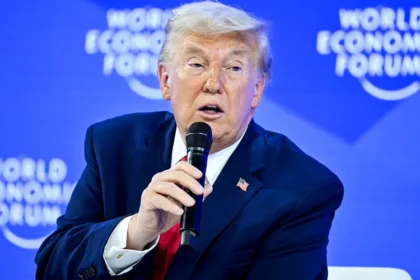
President Donald Trump hailed a Supreme Court ruling on Friday as a major victory, after the justices limited the ability of lower federal judges to issue nationwide injunctions—clearing a legal hurdle in his ongoing push to end birthright citizenship.
“This was a big one, wasn’t it?” Trump said with a grin as he entered the White House briefing room, flanked by Attorney General Pam Bondi and Deputy Attorney General Todd Blanche.
The 6-3 decision marks a partial win for Trump, who has faced multiple legal roadblocks to his executive order aimed at denying citizenship to children born in the U.S. to undocumented immigrants or those in the country temporarily. While the high court did not rule on the constitutionality of the order itself, it reined in the ability of district judges to block presidential actions nationwide—a move long sought by the Trump administration.
Bondi confirmed that the court will consider the full legality of Trump’s executive order in its next term, which begins in October.
Trump, Bondi Praise Barrett Opinion
Trump and Bondi praised the court’s conservative majority, especially Justice Amy Coney Barrett, who authored the majority opinion. Barrett argued that only the Supreme Court should have the authority to impose sweeping injunctions that apply beyond the specific parties involved in a case.
“This decision restores the constitutional balance between the executive and judicial branches,” Bondi said. “We’re seeing the judiciary return to its proper role.”
Trump echoed that sentiment, blasting lower court judges who had blocked his policies in the past. “I was elected with a historic mandate,” he said. “In recent months, a handful of radical judges have tried to override the will of the people and stop policies that Americans voted for in record numbers. That’s not democracy—it’s judicial tyranny.”
When asked about criticism from some conservatives who say Barrett hasn’t always aligned with Trump, the former president brushed it aside. “I don’t know about that. I’ve always had great respect for her. And today, her opinion was brilliantly written,” he said.
The Birthright Citizenship Fight Continues
Trump doubled down on his argument that birthright citizenship, as it stands, encourages illegal immigration. His executive order—signed on Day 1 of his second term—seeks to limit citizenship rights to those born to legal U.S. residents or citizens.
“They’ve used birthright citizenship, some of the worst people, including cartels, to smuggle children into this country,” Trump claimed. “That ends now.”
However, federal judges reviewing the policy have suggested it may be clearly unconstitutional under the 14th Amendment, which states that all persons born in the U.S. are citizens.
The administration has argued that the clause has been misinterpreted and exploited, and insists the policy is necessary to protect U.S. borders.
Democrats Warn of Authoritarian Shift
Democrats quickly condemned the ruling, warning it weakens the judiciary’s power to check presidential authority.
Senate Minority Leader Chuck Schumer called it “a green light for Trump to unravel the foundations of American democracy.”
“This decision limits courts’ ability to block illegal executive actions,” Schumer wrote on X, formerly Twitter. “It’s an unprecedented and terrifying step toward authoritarianism—a grave danger to our democracy.”
He added that Trump’s plan to end birthright citizenship is “blatantly unconstitutional,” and accused the Court of “ducking the question and bowing to an out-of-control Executive Branch.”
California Senator Adam Schiff echoed that sentiment, calling the ruling “a dark day for our democracy.”
While the legal battle over birthright citizenship is far from over, Friday’s ruling is a significant moment in Trump’s broader effort to expand executive authority—and reshape the U.S. immigration system through aggressive unilateral action.