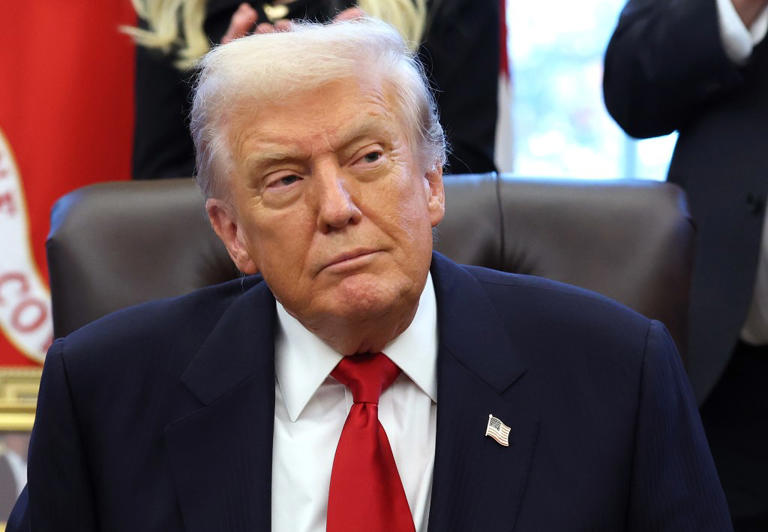

Five years after Donald Trump tried to challenge the outcome of the 2020 presidential election, the final criminal case connected to those efforts has been thrown out—leaving the president facing no criminal trial despite what prosecutors once described as strong evidence.
With Georgia’s racketeering case now dismissed and federal election-interference charges halted on presidential-immunity grounds, Trump no longer faces criminal jeopardy for conduct that prosecutors had characterized as part of a sweeping bid to remain in power unlawfully.
Why It Matters
Following years of investigations and detailed allegations that Trump and his allies tried to overturn Georgia’s 2020 election results, the collapse of the state’s racketeering prosecution—combined with federal prosecutors’ decision to abandon their own case due to presidential immunity—means Trump will never stand trial over those actions.
The resolution highlights how procedural delays, political timing and constitutional protections ultimately shielded a sitting president from prosecution, raising larger questions about accountability and the limits of the justice system when the defendant occupies the Oval Office.
How the Georgia Case Fell Apart
The Georgia case, widely viewed as the last active criminal proceeding tied to the 2020 election, ended on November 26, 2025, when Fulton County Superior Court Judge Scott McAfee ordered the matter “dismissed in its entirety.”
The dismissal followed state prosecutor Peter Skandalakis’s move to shut down the case after he assumed responsibility for it earlier in the month.
“In my professional judgment, the citizens of Georgia are not served by pursuing this case in full for another five to ten years,” Skandalakis wrote in his motion seeking dismissal.
He argued that the prosecution would, in theory, be “best pursued at the federal level,” but conceded that such an option no longer exists because former Special Counsel Jack Smith had already been forced to drop his federal election-interference case after Trump’s reelection and the Supreme Court’s expansion of presidential immunity.
Skandalakis’s review did not minimize the seriousness of the conduct described in the indictment.
The plan pursued by Trump and his allies, he wrote, “quickly shifted from a legitimate legal effort into a campaign that ultimately culminated in an attack on the Capitol,” stressing that those events were “conceived in Washington, D.C., not the State of Georgia.”
Even so, he concluded that pressing forward was not realistic, pointing to constitutional, logistical and evidentiary challenges, as well as the legal constraints on forcing a sitting president to appear in court.
Legal Hurdles and Structural Obstacles
Filed in August 2023, the Georgia indictment alleged that Trump and 18 co-defendants conspired to overturn Joe Biden’s victory in the state.
It drew national attention in part because of a recorded January 2021 phone call during which Trump urged Georgia Secretary of State Brad Raffensperger to “find 11,780 votes.”
Four defendants—including attorneys Sidney Powell and Kenneth Chesebro—pleaded guilty and agreed to provide truthful testimony in any future proceedings.
But the case became mired in structural complications.
The disqualification of Fulton County District Attorney Fani Willis over an “appearance of impropriety” tied to her relationship with a special prosecutor had already slowed the case and muddied its path.
Skandalakis, a nonpartisan official tasked with naming a replacement prosecutor, ultimately took the case himself only after he could not persuade anyone else to accept it.
He later concluded that continuing the prosecution would not “serve the interests of justice.”
Federal Barriers and the End of Criminal Exposure
Georgia’s dismissal parallels what happened at the federal level.
In January 2025, Smith issued a partially public report asserting that “the admissible evidence was sufficient to obtain and sustain a conviction at trial,” and that Trump “would have been convicted…if he had not successfully been re-elected in 2024.”
According to Smith, the Constitution’s bar on prosecuting a sitting president was the only reason the federal case did not proceed.
Trump strongly denounced Smith’s conclusions, labeling the prosecutor “deranged” and calling the report “fake,” as reported by the BBC.
He also cheered the Georgia dismissal, posting that “LAW and JUSTICE have prevailed” and describing the case as a “witch hunt.”
With the Georgia prosecution now over, one of the last remaining paths to criminal accountability for conduct related to the 2020 election has closed.
Georgia State University law professor Anthony Michael Kreis said the state case had represented “an opportunity for justice and reconciliation and a kind of truth-telling that has been squandered,” according to NPR Illinois.
With no outstanding indictments and constitutional protections shielding Trump from federal prosecution while in office, the dismissal effectively brings to an end efforts to hold him criminally responsible for his attempts to overturn the 2020 election.
Five years on, Trump no longer faces criminal consequences for those events.
What People Are Saying
Upon learning he would not face criminal trial, Trump called for Fulton County District Attorney Fani Willis herself to be prosecuted, saying: “Now she should be prosecuted. What Fani Willis did to innocent people, patriots that love our country… she should be put in jail. She’s a criminal.”
Defending his co-defendants and casting the case as persecution, he added: “Those people have been so unfairly dragged into this… These are high-quality people who don’t even know why they were brought in.”
What Happens Next
With the Georgia case dismissed and federal charges blocked by presidential immunity, all criminal avenues tied to Trump’s efforts to overturn the 2020 election have effectively been exhausted, leaving no remaining route for legal accountability.
From here, the fallout moves entirely into the political realm, where any consequences will be determined by voters rather than judges or juries.
The larger reckoning now lies with the system itself, as lawmakers, legal scholars and election officials confront the precedent that a president can avoid trial for alleged election subversion through a combination of procedural delays, constitutional protections and electoral timing.