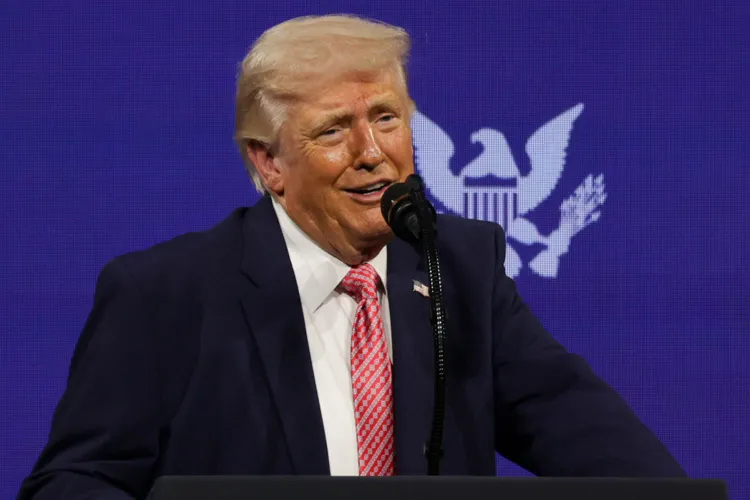

President Donald Trump signaled a preference for associating with “losers” over successful peers during a candid Q&A session at the Future Investment Initiative (FII) Priority Summit on Friday. The 79-year-old commander-in-chief suggested that such company makes him “feel better” and provides an audience more willing to listen to his own achievements.
The comments, delivered on March 27, surfaced during an unscreened dialogue following the President’s keynote address on the Iran war and global investment strategies. When asked by an attendee to define what is currently missing in the sphere of global leadership, Trump emphasized the necessity of “winning.”
A Candid Exchange on Success
While addressing the nature of leadership, Trump shifted to a personal reflection on his social and professional circles.
“You don’t have to wait a lifetime to find out if somebody is a winner or a loser,” Trump told the audience. “You got a lot of losers, mostly losers, fortunately. It’s a good thing to have a lot of losers. I always like to hang around with losers, actually, because it makes me feel better.”
The President further elaborated on his friction with other high-achievers, stating he “hates” listening to the success stories of other very successful individuals. “I like people who like to listen to my success,” Trump added, a remark that drew laughter from the gathered investors and dignitaries.
:max_bytes(150000):strip_icc():focal(728x131:730x133):format(webp)/president-donald-trump-first-address-congress-white-house-east-room-030425-239b48b7bb82453e808da9372dbc0180.jpg)
Context and Clarification
Recognizing the weight of the statement, Trump briefly walked back the sentiment, though he stopped short of a full retraction. “I’m only kidding. Eh, sort of,” the President noted. He maintained that leadership remains significantly “easier” when paired with personal success and a winning record.
The FII Priority Summit, a high-stakes gathering for global financiers and political leaders, served as a platform for Trump to discuss his administration’s stance on Middle Eastern volatility and economic growth. Unlike many high-profile political appearances, Trump opted for an open forum, explicitly stating that he did not request the screening of audience questions.
Editorial Analysis
Trump’s rhetoric highlights a consistent theme of his political brand: the binary categorization of “winners” and “losers.” While the tone was partially humorous, the admission offers insight into the President’s leadership psychology during a period of heightened geopolitical tension. By prioritizing an audience for his own narrative over the competitive dialogue of peers, the President reinforces a “top-down” communication style that has become a hallmark of his second term.