
President Donald Trump announced Tuesday that high-stakes negotiations to end the war with Iran could resume in Pakistan within the next 48 hours. The diplomatic pivot follows a volatile weekend that saw the collapse of previous talks and the immediate implementation of a U.S. naval blockade on Iranian ports.
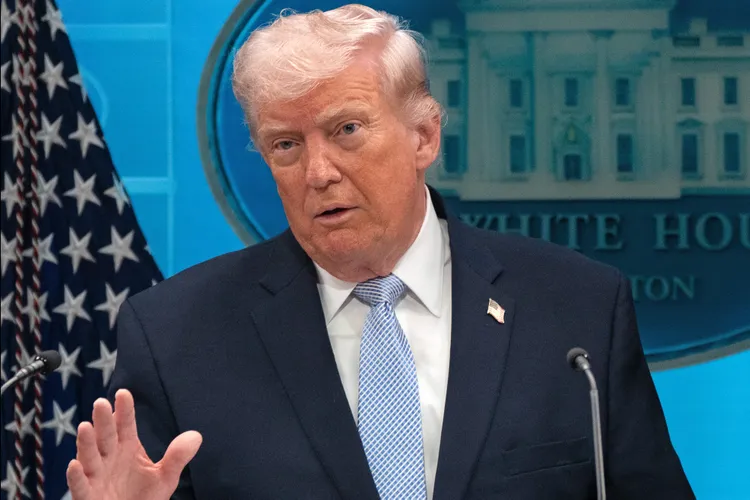
“Something could be happening over the next two days,” Trump told reporters, indicating a renewed preference for the Islamabad venue.
While Vice President JD Vance confirmed the administration’s desire for a “grand bargain,” he cautioned that deep-seated mistrust remains a primary hurdle. “You are not going to solve that problem overnight,” Vance stated during an event in Georgia.
The central friction point remains Iran’s nuclear program. According to sources familiar with the negotiations, the U.S. demands a 20-year suspension of all nuclear activity and the removal of enriched material. Tehran has countered with a three-to-five-year halt. However, backchannel discussions since the weekend suggest both sides are narrowing the gap on a verification framework.
The prospect of a diplomatic breakthrough provided immediate relief to volatile energy markets. Benchmark oil prices retreated below $100 per barrel on Tuesday, despite the continued closure of the Strait of Hormuz—a crisis that has claimed roughly 5,000 lives since hostilities erupted on February 28.
U.S. Central Command (CENTCOM) confirmed that more than a dozen warships are currently enforcing the blockade. In its first 24 hours, officials reported that no vessels breached the perimeter, forcing six merchant ships to reverse course.
The blockade has drawn sharp international division:
- China: Labeled the move “dangerous and irresponsible.”
- NATO Allies: Britain and France declined participation in the blockade but offered to secure the Strait once a peace deal is reached.
- The IMF: Warned the global economy remains on the “brink of recession” if the conflict persists into 2027.
Parallel to the Iran crisis, Secretary of State Marco Rubio hosted a landmark meeting between Israeli and Lebanese envoys in Washington. This represents the first high-level engagement between the two nations since 1993.
While Israel continues strikes against Hezbollah in Lebanon—claiming these actions are exempt from the current week-long ceasefire—Iran insists the truce must be comprehensive.
The push for peace arrives as the Trump administration faces domestic headwinds. A recent Reuters/Ipsos poll shows American approval for strikes against Iran has dipped to 35%. Rising energy costs and the threat of a prolonged conflict appear to be driving the administration’s renewed urgency to secure a diplomatic exit.