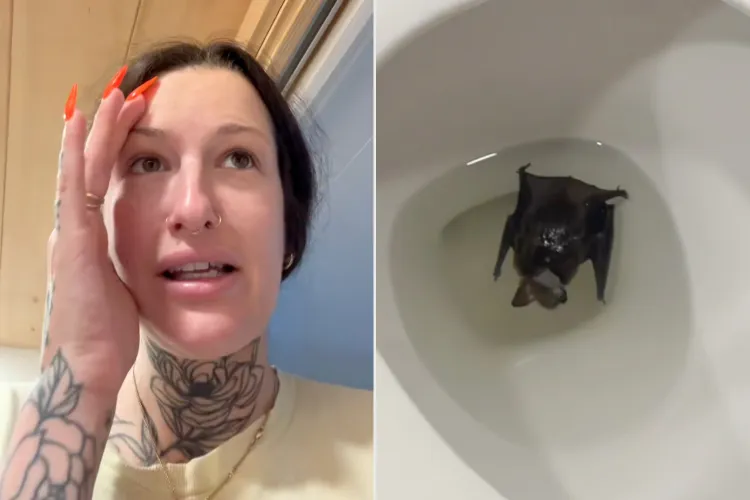

One afternoon, Alison Doyle flushed her downstairs toilet, expecting the usual swirl of water. Instead, she saw the dead body of a tiny bat. What started as a normal laundry day quickly turned into a trip to the hospital and then a viral TikTok video.
“I went downstairs to do laundry after living in this new place for a month,” Alison told PEOPLE. “I looked down and saw a baby bat. It was dead.”
Alison said she rarely used that bathroom and didn’t know how long the bat had been there. Still, she grabbed her phone and recorded the moment before flushing the bat away.
Since Alison has been sharing her life online for two years, posting the video to TikTok felt natural. But the response was fast and serious. Many people warned her to get checked for rabies, a dangerous virus that bats can carry.
“I had about 100 people telling me to get a rabies shot,” Alison said. Surprised, she called paramedics for advice.
:max_bytes(150000):strip_icc():focal(749x0:751x2):format(webp)/alison-doyle-dead-bat-081125-4-16c5cc6a8c4e41c59b208a1ccd91e2d4.jpg)
They told her to go to the emergency room right away. “The chance of getting rabies is very low,” she was told, “but if you do get it and don’t get help, it’s almost always fatal.”
Even though Alison is autistic and finds hospitals overwhelming, this warning pushed her to go. “I told a nurse, ‘If you don’t think I need to be here, I want to go home,’” she remembered.
Hospitals can be tough for Alison because of the bright lights, noise, and crowded rooms. But the nurse reassured her, saying it was good she came. This helped calm her anxiety.
Doctors decided she needed to start rabies treatment right away. “The first day, I got five shots. Then a few days later, I got another shot,” Alison said.
Her treatment required several visits, but in Canada, paramedics can come to her home for free. “That’s the best thing that’s ever happened to me,” she said.
Even though the shots made her feel sick, Alison was thankful for the care she received. “I can’t believe how well I was treated.”
Alison is autistic level one, meaning she needs some support but not a lot. She explained, “Lower support needs doesn’t mean no support needs.”
Because she spoke up about her needs, hospital staff gave her special care. They put her in a quiet private room to wait away from noise and crowds.
“There was a sofa and an armchair, and I just relaxed there in the dark for five hours,” she said. “It was the best care I’ve ever had.”
Before leaving, they gave her a gluten-free banana popsicle because she has celiac disease. This small kindness meant a lot to her.
Alison also noticed support from other autistic people online. But she thinks more voices from Black, brown, and Indigenous autistic people should be heard too.
“Some visibility is better than none,” she said, “but we need a lot more representation.”
Her viral story, she hopes, will raise more awareness. “Autism is a spectrum. It looks different for everyone and doesn’t have one look.”
Alison’s experience showed her how important it is to speak up for herself, especially in healthcare. “Advocating for myself was the best thing I could do,” she said.
She wants others to take rabies risks seriously. “If a dead bat is in your home, it got in when it was alive,” she warned.
“They have tiny teeth and can bite without you noticing. If you value your life, get rabies shots.”
What started as a strange afternoon became a story about health, standing up for yourself, and how kindness can help in hard times.
“Disabilities make things harder — that’s why they’re called disabilities,” Alison said. “It means I have a harder time doing things than others, and that’s okay.”