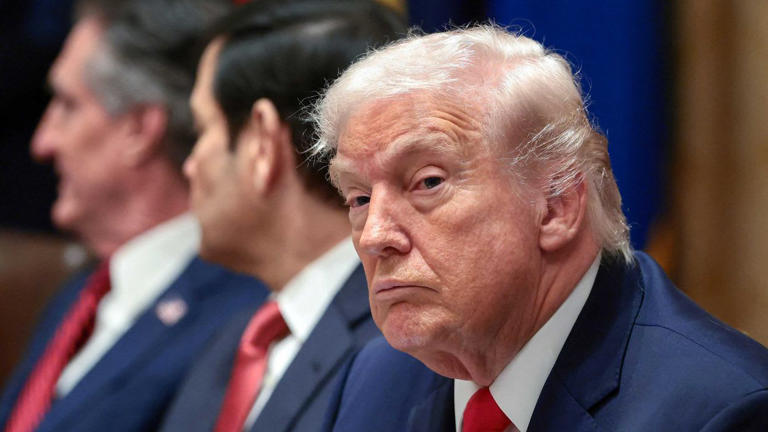

WASHINGTON D.C. — In a defiant State of the Union address, President Donald Trump reaffirmed a core campaign pillar, vowing that his administration “will always protect Social Security, Medicare, and Medicaid.” However, a series of sobering reports from the Congressional Budget Office (CBO) and non-partisan economists suggest that the very tax policies the President hailed as “big and beautiful” are the primary drivers hastening the insolvency of those very programs.
The internal contradiction of the administration’s fiscal policy has created a looming “solvency gap.” While the One Big Beautiful Bill Act (OBBBA) provided immediate tax relief to millions, it simultaneously stripped the nation’s social safety nets of the revenue required to sustain them for future generations.
The Medicare Acceleration: 12 Years of Solvency Erased
The most immediate impact of the OBBBA is seen in the Hospital Insurance (HI) Trust Fund, which finances Medicare Part A. According to the CBO’s updated 2026 projections, the fund’s lifespan has been slashed by over a decade.
- Previous Insolvency Projection: 2052
- Current Insolvency Projection: 2040
- Net Loss: 12 years of financial stability
The OBBBA introduced a temporary deduction for taxpayers aged 65 and older and eliminated taxes on Social Security benefits. While these moves are politically popular, they effectively “starved” the trust fund of its traditional revenue streams.
If the HI Trust Fund is exhausted by 2040, the law dictates that Medicare can only pay out what it collects. This would trigger automatic benefit cuts starting at 8% in 2040, potentially rising to 10% by 2056. This would directly impact inpatient hospital care, home health services, and hospice care for tens of millions of seniors.
Social Security’s 2032 Deadline
Social Security faces an even tighter timeline. The CBO now estimates the Social Security trust fund will be depleted by fiscal year 2032.
Without legislative intervention, the Committee for a Responsible Federal Budget (CRFB) warns of a catastrophic “benefits cliff.” A typical couple turning 60 today could see an annual reduction of $18,400 in retirement benefits once the fund runs dry.
The President’s “no tax on tips” and “no tax on overtime” initiatives, while boosting take-home pay for workers, have further reduced the payroll tax inflow that sustains these programs.
The Economic Dilemma: Debt vs. Discretionary Cuts
As these deadlines approach, lawmakers face a “trilemma” of difficult choices:
- Raise Taxes: Reversing the OBBBA cuts to restore revenue.
- Slash Benefits: Reducing payouts to match current revenue.
- Deficit Spending: Financing the gap with national debt.
Expert analysis suggests the third option carries the highest systemic risk. Bernard Yaros, lead U.S. economist at Oxford Economics, warns that using general revenue to patch the shortfall could spook bond markets, leading to a sustained spike in interest rates.
Veronique de Rugy, a senior research fellow at the Mercatus Center, cautions that the market’s reaction could be preemptive, suggesting that the mere commitment to a debt-ridden path could trigger a financial crisis.
Looking Ahead: The 250th Anniversary Pressure
The collision of these fiscal realities arrives as the United States prepares for its 250th anniversary. To restore the lost 12 years of Medicare solvency, Congress will eventually be forced into “politically fraught” decisions regarding tax increases or healthcare payment slashes.
While the President maintains that his administration has made it “easier for Americans to save for retirement,” the data suggests that the foundational pillars of that retirement—Social Security and Medicare—are on a significantly more fragile footing than they were a year ago.