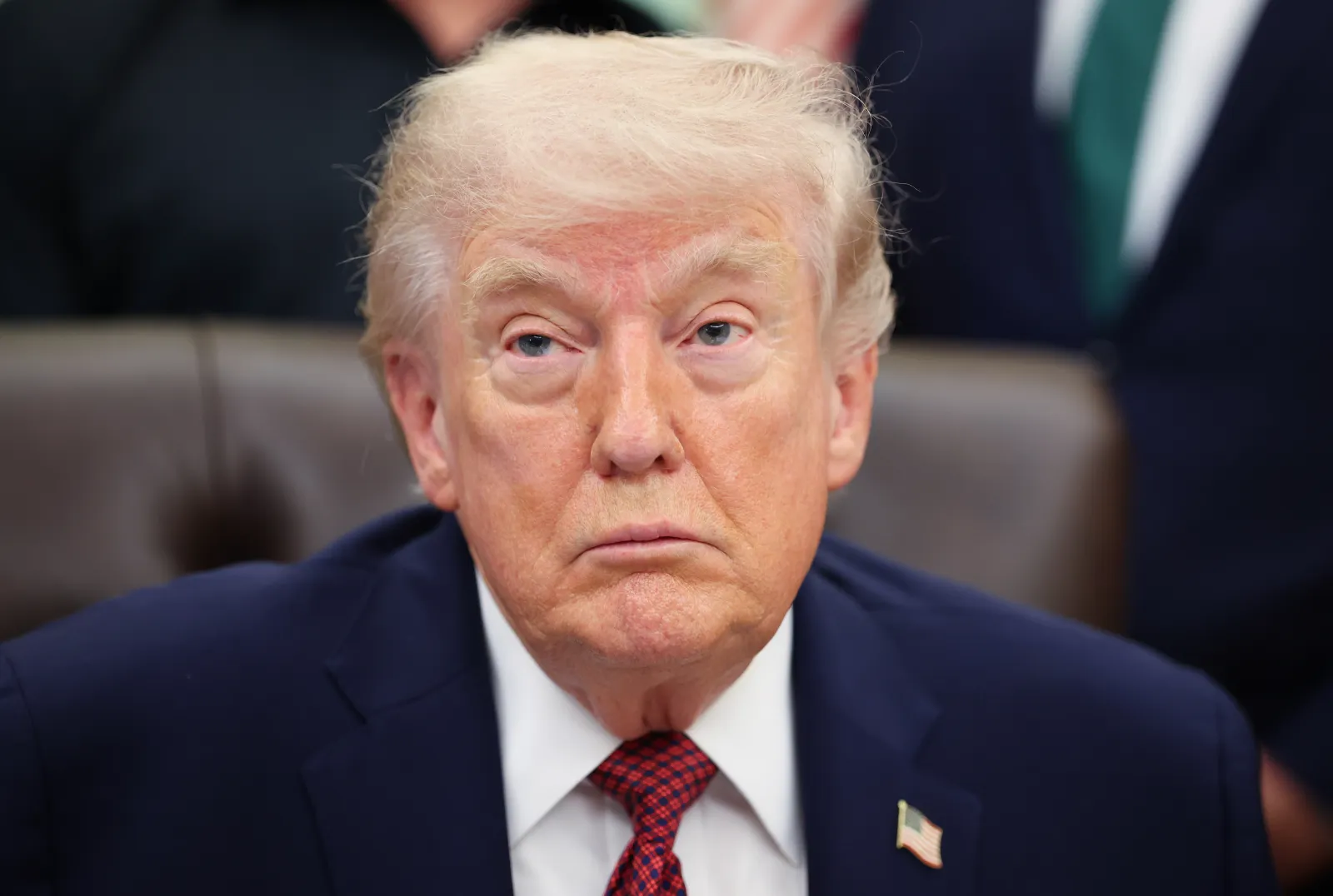

President Donald Trump faces a deepening political crisis as a majority of Americans hold his administration responsible for surging fuel costs, threatening Republican prospects in the upcoming 2026 elections.
A new survey from Quinnipiac University reveals that 65% of voters blame the President for the recent spike in energy prices. The frustration is particularly acute among independents, 73% of whom hold the administration accountable. While the White House has characterized the economic strain as a necessary trade-off for preventing a nuclear-armed Iran, the political cost is becoming impossible to ignore.
The Price of Conflict
The nationwide average for a gallon of regular gasoline reached $4.04 this week, a sharp increase from the $3.00 average maintained before the U.S. and Israel launched strikes against Iran on February 28. Despite the administration’s insistence that prices remain “not very high,” the economic reality for American consumers is stark.
Mark Zandi, chief economist at Moody’s Analytics, estimates that the conflict has already drained $21.3 billion from American pockets. Zandi warns that the financial fallout is set to intensify, noting that gas prices are unlikely to return to pre-war levels in the near term, regardless of the conflict’s outcome.
Internal Discord and Market Reality
The administration appears divided on the duration of the crisis. While President Trump told The Hill on Monday that prices would plummet “as soon as [the war] ends,” Energy Secretary Chris Wright offered a more sober assessment. Speaking to CNN, Wright admitted that while prices may have peaked, they likely will not return to sub-$3.00 levels until 2027.
Industry experts support the more cautious outlook. Bob McNally, president of Rapidan Energy Group, emphasized that the damage to infrastructure and the disruption of Gulf production cannot be reversed overnight.
“Even if the conflict and disruptions were to end today, the ripple effects would be felt for many months,” McNally stated, citing a three-to-four-month lead time just to restart flow through the Strait of Hormuz.
A Fragile Ceasefire
The domestic political pressure arrives as a two-week ceasefire is scheduled to expire this Tuesday. Tensions remain high following Trump’s announcement that the U.S. seized an Iranian-flagged vessel, coupled with reports of Iranian forces firing on a French ship.
While U.S. officials are slated for negotiations in Pakistan this evening, Tehran has yet to signal a willingness to engage. As the blockade of the vital waterway continues, the administration finds itself trapped between its foreign policy objectives and a domestic electorate increasingly unwilling to foot the bill.