
A cross-party push to undo a major executive order from President Donald Trump is gaining momentum in Congress, with two high-profile Senate Republicans now backing the effort.
Last Thursday, the House of Representatives voted 232–194 to advance the Protect America’s Workforce Act, legislation designed to repeal Executive Order 14251. The measure drew notable Republican support: 22 House Republicans broke with their party to vote in favor of overturning the order that restricts union rights across parts of the federal government.
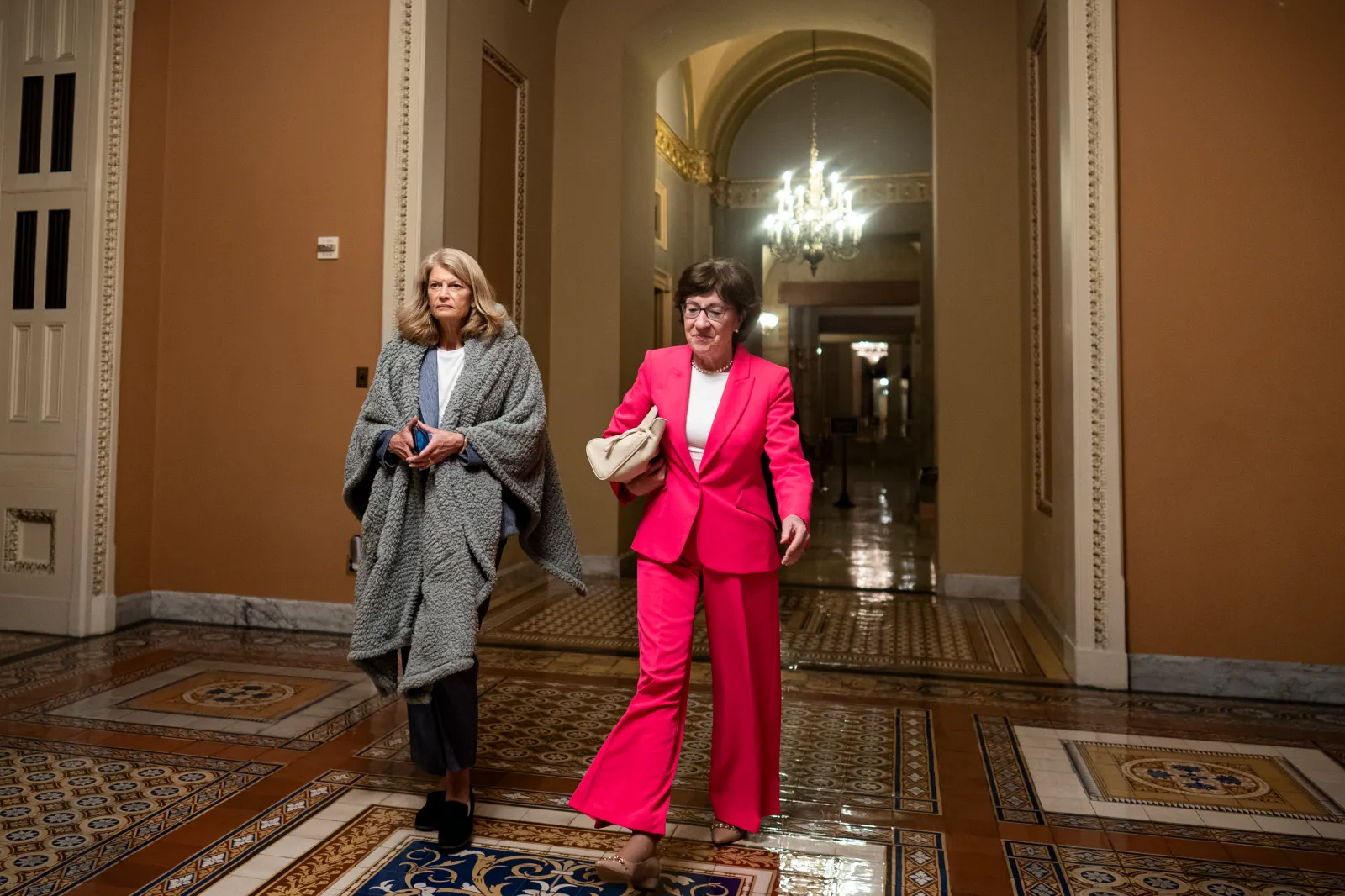
Attention has now shifted to the Senate, where Sen. Lisa Murkowski (R-Alaska) and Sen. Susan Collins (R-Maine) have joined the effort, according to a report first published by Fox News.
“Collective bargaining rights and workplace protections have lifted up federal employees across the United States for decades, protecting them from unsafe working conditions and political retribution,” Murkowski said in a statement to Newsweek.
Why It Matters
The executive order limits collective bargaining rights and related protections that union negotiators say shape day-to-day workplace conditions, pay discussions, and employees’ ability to raise grievances. Supporters of repeal argue these rights are central to maintaining a stable, fair federal workforce. Critics contend that easing restrictions can reduce agency efficiency and, in some cases, create national security risks.
What To Know
The Senate version of the bill was introduced by Sen. Mark Warner (D-Va.) in September. In the House, the measure was introduced by Rep. Jared Golden (D-Maine), who brought it to a vote using a discharge petition—a procedural tool that can force floor action when a bill has enough support, even over leadership objections.
Trump signed Executive Order 14251 in March 2025, carving out select federal agencies and subdivisions from the Federal Service Labor-Management Relations Statute, the law that generally protects collective bargaining for federal workers.
The administration’s stated justification was national security. Agencies affected include the Departments of State, Defense, Treasury, and Justice, along with other components tied to security or intelligence work.
Despite the House passage, the bill’s path in the Senate remains uncertain. Sen. Josh Hawley (R-Mo.), often seen as one of the more union-friendly Republicans, expressed doubt in comments to Fox News.
“I don’t know,” Hawley said. “The public sector unions and private sector unions seem to be two different things.”
The 22 House Republicans Who Voted for Repeal
The following House Republicans voted in support of the legislation:
- Don Bacon (Nebraska)
- Lauren Boebert (Colorado)
- Mike Bost (Illinois)
- Ryan Bresnahan (Pennsylvania)
- Brian Fitzpatrick (Pennsylvania)
- Andrew Garbarino (New York)
- Darrell Issa (California)
- Dave Joyce (Ohio)
- Tom Kean (New Jersey)
- Nick LaLota (New York)
- Mike Lawler (New York)
- Ryan Mackenzie (Pennsylvania)
- Nicole Malliotakis (New York)
- Barry Moore (Alabama)
- Zach Nunn (Iowa)
- Jimmy Patronis (Florida)
- Chris Smith (New Jersey)
- Pete Stauber (Minnesota)
- Mike Turner (Ohio)
- David Valadao (California)
- Jeff Van Drew (New Jersey)
- Derrick Van Orden (Wisconsin)
What People Are Saying
Lisa Murkowski, in a statement to Newsweek: “Whether our neighbors are working to ensure food safety, respond to forest fires, track hurricanes, or review patents, our nation’s federal employees deserve these protections. I’m proud to stand up for our federal employees, as they work tirelessly for our nation’s benefit.”
Jared Golden, after the House vote: “Federal workers show up on the job every day to do the people’s work, and their limited collective bargaining rights are critical to protecting them from unfair treatment and political interference. I’m proud of the strong, bipartisan coalition that came together to pass the Protect America’s Workforce Act in the House, and I urge the Senate to quickly take up this bill and join us in standing up for workers.”
What Happens Next
The bill now faces a tougher test in the Senate, where it is still unclear whether supporters can assemble enough votes to pass the legislation.