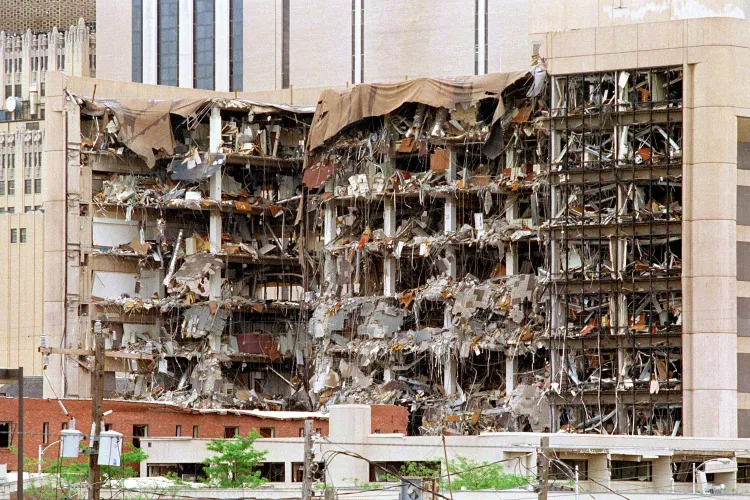

The United States paused this week to observe the 31st anniversary of the Oklahoma City bombing, a watershed moment in American history that remains the deadliest act of domestic terrorism on U.S. soil.
At 9:02 a.m. on April 19, 1995, a rental truck packed with approximately 4,800 pounds of improvised explosives detonated in front of the Alfred P. Murrah Federal Building. The blast decimated the structure’s north face, claiming 168 lives—including 19 children—and injuring more than 680 others. Three decades later, the event continues to define the nation’s approach to domestic extremism and emergency response.
The bombing was orchestrated by Timothy McVeigh, a former U.S. Army soldier fueled by radical anti-government ideologies. Investigators determined McVeigh timed the attack to coincide with the second anniversary of the federal siege at the Branch Davidian compound in Waco, Texas.
Assisted by accomplice Terry Nichols, McVeigh utilized a tactical blend of fertilizer and fuel oil to execute the strike. While Nichols is currently serving multiple life sentences without the possibility of parole, McVeigh was executed by lethal injection in June 2001. His arrest occurred just 90 minutes after the explosion during a routine traffic stop for a missing license plate—a detail that remains a staple of federal law enforcement training.
The tragedy’s most harrowing focal point remains “America’s Kids,” the second-floor daycare center where 15 of the 19 child victims perished. Only six children from the facility survived the collapse.
For survivors like Joe Webber, who was just 20 months old at the time of the blast, the anniversary serves as a complex reminder of a history they lived through but cannot fully recall. Now in his early 30s, Webber has previously characterized his survival as both a “blessing and a hindrance,” noting that while he was spared the visual trauma of the event, he remains permanently tethered to the collective grief of a city and a nation.
The 1995 attack fundamentally altered the American security landscape. It prompted the passage of the Antiterrorism and Effective Death Penalty Act of 1996 and led to the permanent fortification of federal buildings nationwide.
Today, the Oklahoma City National Memorial stands where the Murrah Building once fell. Its “Field of Empty Chairs” serves as a stark, silent inventory of the lives lost, ensuring that the lessons of April 19—and the resilience of the “Oklahoma Standard”—are not obscured by the passage of time.