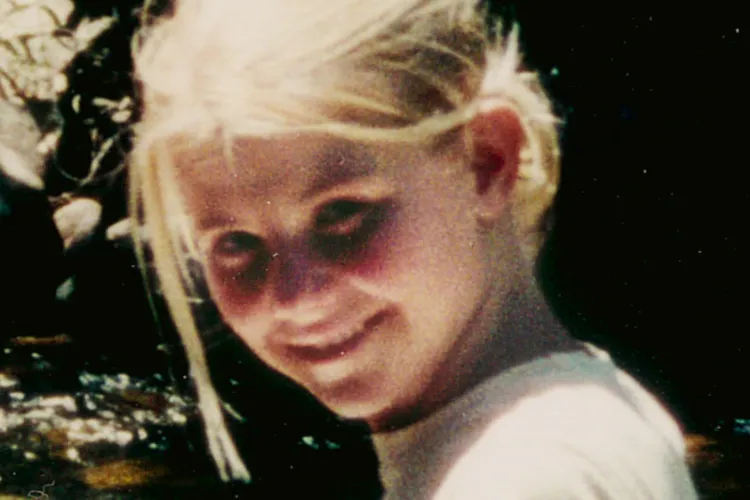

Elizabeth Smart became a household name after she disappeared from her bedroom on the night of June 5, 2002.
Smart was 14 years old when she was taken from her family’s Salt Lake City home while she slept by Brian David Mitchell, who claimed to be a prophet named “Emmanuel.” Mitchell and his wife, Wanda Barzee, kept her captive for nine months, during which Smart endured severe abuse, including repeated sexual violence.
On March 12, 2003, Smart and her abductors were spotted walking in Sandy, Utah. Even though she was disguised and initially gave police a false name, authorities ultimately identified and rescued her, reuniting her with her family after months of desperate searching.
More than two decades later, Smart is revisiting her experience in a new Netflix documentary, Kidnapped: Elizabeth Smart, which began streaming on Jan. 21. The film includes archival material and interviews with Smart, her family, and investigators—along with a closer look at early investigative decisions and what Smart says life in captivity was really like.
:max_bytes(150000):strip_icc():focal(734x331:736x333):format(webp)/kidnapped-elizabeth-smart-father-netflix-012126-1cc9b07959b1454a9fa0548ef91973b5.jpg)
Here are 10 major revelations highlighted in the documentary:
1) Ed Smart says he was hospitalized in a psychiatric ward shortly after the kidnapping
In the days after Elizabeth disappeared, one of the earliest theories investigators pursued was whether someone in the family—particularly her father, Ed Smart—could be involved. Ed describes the suspicion as crushing.
“I was overwhelmed to the point that I was shaking and I couldn’t stop shaking,” he says in the documentary.
Ed says his father took him to the hospital, where he was admitted to a psychiatric ward. “To have your daughter go missing is horrendous,” he recalls, adding that being treated as a possible suspect made it even harder to endure.
:max_bytes(150000):strip_icc():focal(756x320:758x322):format(webp)/elizabeth-smart-family-news-conference-012126-9c737baf2a6b47eeaa0374dfa9c62437.jpg)
2) Elizabeth’s uncle Tom Smart says exhaustion and stress affected him during a polygraph
Investigators also looked at Ed’s brothers, Tom and Dave Smart, as potential suspects. Tom drew particular attention after a CNN interview with Nancy Grace about a week after Elizabeth vanished, where he described the kidnapping as a “wonderful story” and said the person who took her was “not a bad person at all,” but someone who “actually likes Elizabeth.”
Tom later failed a polygraph. In the documentary, he attributes his performance to extreme stress, lack of sleep, and mental strain.
“After three or four days of that, with no sleep, you tend to collapse on yourself,” he says, adding: “I was hearing things.”
:max_bytes(150000):strip_icc():focal(787x388:789x390):format(webp)/elizabeth-smart-parents-012126-9539750e21d541dc8fed47c76ae5b91c.jpg)
3) The family believes early suspicion hurt the broader search effort
The Smart family says investigators’ focus on them shifted public perception and weakened community momentum at a crucial moment.
“It was dumbfounding as to how long it took the police essentially to clear the family,” Ed says, adding that once suspicion fell on them, volunteer search participation dropped.
Dave Smart also argues that media coverage amplified the impact: “The numbers just took a dive.”
Lead investigator Cory Lyman defends the approach as standard procedure, saying the family’s alibis checked out and investigators found nothing suspicious after reviewing seized computers and emails.
:max_bytes(150000):strip_icc():focal(784x286:786x288):format(webp)/robert-albert-ricci-court-012126-d8a18edd4b674617b283c477200daeda.jpg)
4) Elizabeth’s sister told police their prime suspect, Richard Ricci, wasn’t the abductor
Police focused heavily on Richard Ricci, a contractor who had worked in the Smart home and had a criminal history. Investigators learned Ricci had a dispute over wages with Ed Smart, and a search of Ricci’s home uncovered stolen jewelry belonging to Elizabeth’s mother, Lois. Police also noted Ricci had driven hundreds of miles without a clear explanation, leading to theories that Elizabeth had been abducted and harmed far from Salt Lake City.
But the documentary emphasizes a major contradiction: the key witness inside the home—Elizabeth’s sister Mary Katherine, who heard the abductor’s voice—insisted it was not Ricci.
“The police said we’re 99.9% sure we’ve got our man,” Tom Smart says. “But here’s the thing: The only eyewitness said it wasn’t him.”
Detective Cordon Parks says investigators questioned Mary Katherine’s certainty, believing she might have been groggy and may not have seen the abductor clearly.
Ricci remained in custody until he suffered a brain aneurysm and fell into a coma, CNN reported. He died on Aug. 30, 2002.
:max_bytes(150000):strip_icc():focal(736x388:738x390):format(webp)/kidnapped-elizabeth-smart-sister-netflix-012126-557d25f6cac14ff38bc8c8887ff5b8dd.jpg)
5) Investigators doubted Mary Katherine when she later recalled the name “Emmanuel”
Mary Katherine repeatedly told police the abductor’s voice seemed familiar. Around four months after the kidnapping, she recalled a name tied to that voice: “Emmanuel.”
According to the documentary, “Emmanuel” was a homeless street preacher the family had encountered about a year earlier. Lois had given him Ed Smart’s card, and Ed later hired him for odd jobs—meaning Mary Katherine had previously heard him speak.
The family saw this as a major breakthrough. Investigators, however, were skeptical. Lyman says “Emmanuel” hadn’t appeared on the lists of people being investigated and hadn’t seemed connected to the family beyond brief contact. Parks says her recollection faced “disbelief” from some investigators, who questioned whether the memory was reliable.
Ed Smart expresses frustration in the documentary, saying the family felt the witness account should have carried more weight.
:max_bytes(150000):strip_icc():focal(776x382:778x384):format(webp)/elizabeth-smart-parents-bloomberg0012126-b596b3d5ccfb47978224a81a78a7d78f.jpg)
6) Elizabeth describes the first assault after the abduction as physically devastating
In the documentary, Smart speaks in direct terms about sexual violence beginning shortly after she was taken. She describes being assaulted for the first time after being brought to a remote encampment and forced into a makeshift “marriage” ceremony.
She recalls trying to delay the assault, believing rescue might come in time, but says she was overpowered. Afterward, she describes significant physical injury and says she lost consciousness.
7) Elizabeth says shame made her fear her family might not want her back
Smart says the abuse continued throughout her captivity, and that her strict religious upbringing shaped how she processed what was happening to her.
She says she felt deep shame and didn’t understand the difference between consensual intimacy and rape. In the documentary, she describes believing she was “filthy,” and even thinking at times that being found might be worse if her family learned what had happened.
8) She says Mitchell used public humiliation and threats to control her
Beyond sexual abuse, Smart describes repeated humiliation and coercion—being restrained, threatened, and forced into degrading situations. She says Mitchell used intimidation and the threat of violence against her or her family to enforce compliance, and that food could be withheld as punishment.
:max_bytes(150000):strip_icc():focal(776x309:778x311):format(webp)/brian-david-mitchell-court-012126-7b61580eeccf49bfa0ff54403cbb57d6.jpg)
9) Elizabeth says there was a moment months earlier when rescue felt close—but slipped away
The documentary recounts an August 2002 episode in which Mitchell and Barzee brought Elizabeth down from the mountains into Salt Lake City after a conflict, according to Smart’s account.
While the three were in a library, a homicide detective approached and said he needed to see Elizabeth’s face, which was covered. Smart says Mitchell refused, claiming it violated religious beliefs and insisting only certain people could see her face. She says Barzee physically signaled her to stay silent, and the detective ultimately walked away.
Smart describes that moment as a lost chance: “I didn’t feel safe enough crying out, and that lifeline disappeared.”
:max_bytes(150000):strip_icc():focal(454x537:456x539):format(webp)/brian-david-mitchell-mugshot-012126-31cbb6220e0549fb8ae3b5d0efb1ccf7.jpg)
10) A detective argues Mitchell deliberately prolonged the case by faking mental illness
Mitchell was arrested in March 2003, but he didn’t go to trial until March 2010. The documentary attributes much of the delay to repeated competency hearings to determine whether he was fit to stand trial.
Detective Cordon Parks argues Mitchell exploited that process intentionally, describing him as manipulative and “crafty.” Parks says he believes Mitchell wasn’t genuinely mentally ill and used the system to stall proceedings.
Ed Smart acknowledges the delays were painful but says the passage of time also gave the family more space to heal before facing trial.