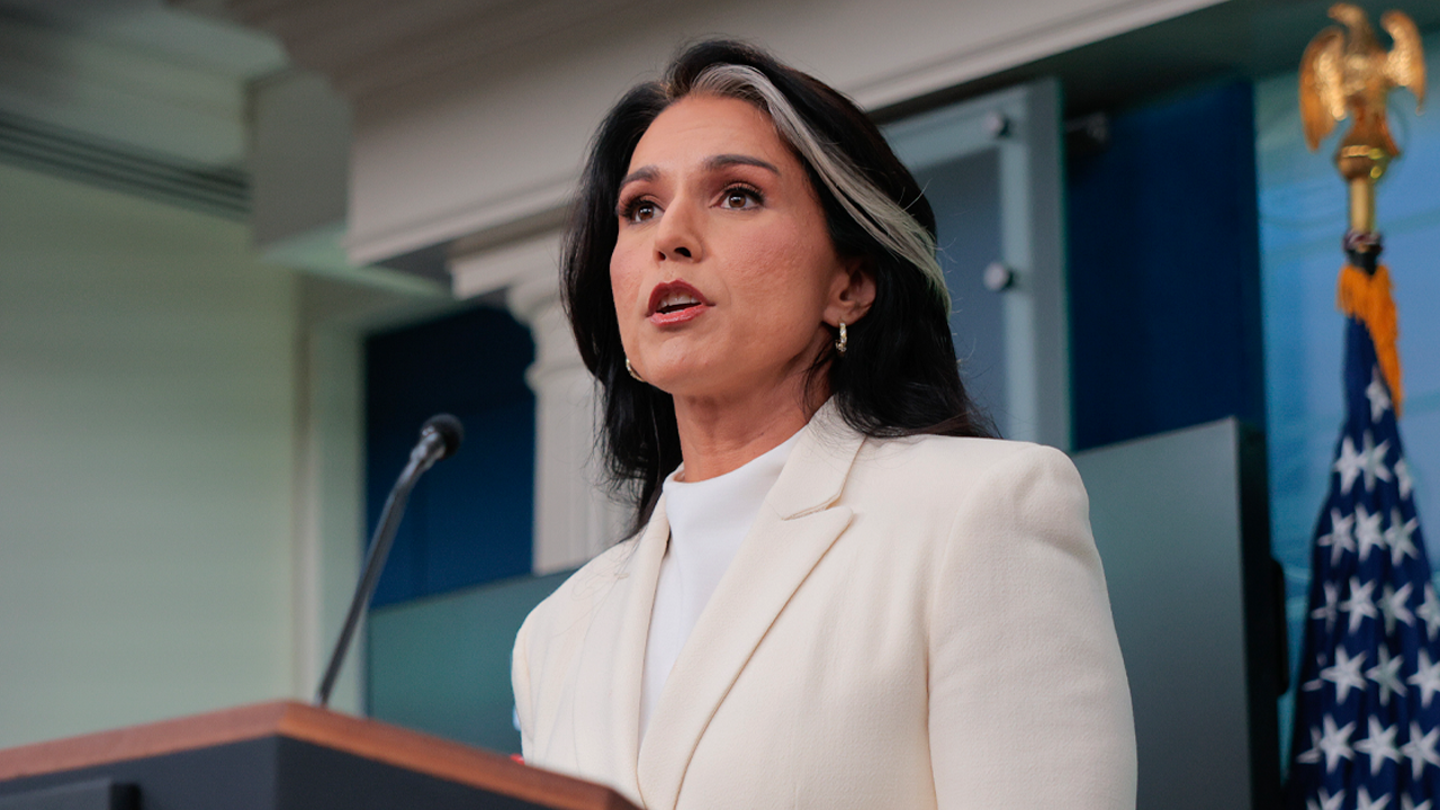

Disarray within the Trump administration’s national security apparatus spilled into the public eye Wednesday as Director of National Intelligence Tulsi Gabbard provided testimony to the Senate Intelligence Committee that directly undermined President Donald Trump’s primary justifications for the ongoing war in Iran.
The high-stakes hearing, held nearly three weeks into the conflict, revealed a stark disconnect between the White House’s “imminent threat” narrative and the actual findings of the U.S. intelligence community.
The “Obliterated” Program: A Conflict of Facts
The central tension of the hearing focused on the status of Iran’s nuclear capabilities following last year’s “Operation Midnight Hammer.” President Trump and White House special envoy Steve Witkoff have recently sounded alarms, claiming Tehran was “a week away” from industrial-grade bomb material and was actively rebuilding its enrichment capacity.
However, under questioning, Gabbard explicitly contradicted these assertions.
“As a result of Operation Midnight Hammer, Iran’s nuclear enrichment program was obliterated,” Gabbard testified. “There have been no efforts since then to try to rebuild their enrichment capability.”
Gabbard further distanced the intelligence community from the President’s State of the Union claim that Iran is developing an intercontinental ballistic missile (ICBM) capable of reaching the U.S. mainland, stating the formal assessment remains unchanged: no such restart has been detected.
Defining “Imminent”: A Shift in Accountability
The hearing took a contentious turn when Senator Jon Ossoff (D-GA) pressed Gabbard on what constitutes the “imminent threat” used to justify the current military campaign. Gabbard declined to provide a standard definition, instead shifting the burden of proof entirely to the Oval Office.
“It is not the intelligence community’s responsibility to determine what is and is not an imminent threat,” Gabbard stated. “The President is the only one who can make that determination.”
The remark drew a sharp rebuke from the committee, with Ossoff arguing that identifying threats to American interests is the fundamental mandate of the DNI. The exchange highlighted a growing vacuum of accountability regarding the legal and intelligence-based triggers for the war.
Fallout and Resignations
The cracks in the administration’s facade follow the high-profile resignation of Joe Kent, Director of the National Counterterrorism Center (NCTC). In a blistering resignation letter made public Tuesday, Kent alleged that the war was “manufactured” and that Tehran posed no immediate danger to the United States.
Kent’s departure—and his claim that the administration acted primarily due to pressure from Israel—has fueled skepticism on Capitol Hill regarding the true objectives of the military intervention.
Strategic Miscalculations
The administration is also facing scrutiny over its apparent lack of preparation for Iran’s regional retaliation. While President Trump recently expressed “shock” that Iran struck U.S. allies in Qatar, Saudi Arabia, and the UAE, intelligence officials suggest such outcomes were not only predictable but expected.
Despite the President’s claims of being blindsided, White House Press Secretary Karoline Leavitt confirmed that Trump had been “fully briefed” on retaliatory risks, including the potential closure of the Strait of Hormuz—a scenario the Pentagon has modeled for decades.
As the conflict enters its fourth week, the discrepancy between the President’s rhetoric and his intelligence chief’s testimony raises urgent questions about the transparency of the administration’s war aims and the stability of the U.S. national security strategy in the Middle East.