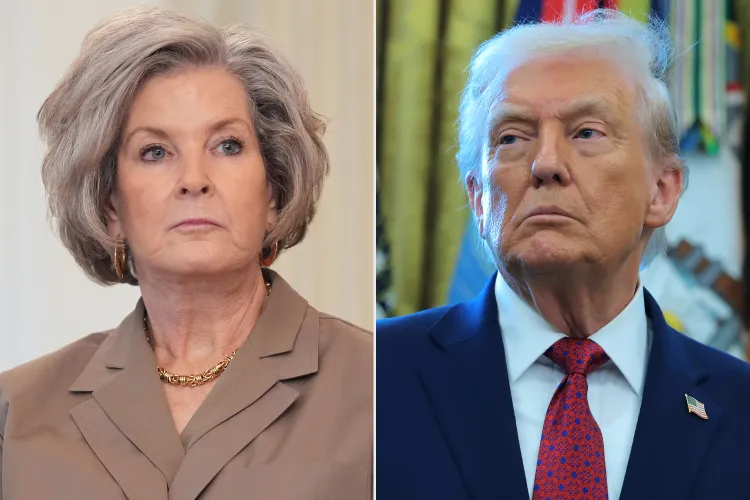

White House Chief of Staff Susie Wiles convened a high-stakes, closed-door strategy session with dozens of top Republican operatives on April 20, as President Donald Trump’s approval ratings crater ahead of the 2026 midterm elections.
The emergency summit, held in the capital under tight security, marks an “intensification of preparations” for what internal GOP data suggests will be a bruising election cycle. Recent polling places the President’s approval at a precarious 37 percent, leaving the party vulnerable to a potential Democratic sweep of both the House and the Senate this November.
Geopolitical Fallout and Economic Strain
The administration’s current political instability stems largely from the economic aftershocks of the February 28 joint U.S.-Israeli military initiative against Iran. While the operation successfully neutralized high-level Iranian leadership and naval assets, the subsequent closure of the Strait of Hormuz has paralyzed global shipping.
The resulting surge in domestic gas prices has significantly alienated moderate voters. Compounding this discontent are lingering questions regarding the Department of Justice’s handling of the Epstein files and public backlash over intensified ICE enforcement actions that turned violent over the winter months.
Domestic Controversies and Religious Friction
Beyond policy, the President faces a series of self-inflicted cultural flashpoints. A recent controversy involving an AI-generated image—which critics argued depicted Trump in a messianic light—sparked accusations of blasphemy from segments of his traditional MAGA base.
The administration’s rapport with religious voters further deteriorated following an unprecedented public feud with Pope Leo XIV, the first American pontiff. The President’s digital attacks on the Pope, whom he characterized as “weak on crime” and “too liberal,” followed the Vatican’s vocal opposition to the ongoing conflict in Iran.
On April 13, Pope Leo XIV reaffirmed his stance, stating he would not be intimidated by the administration and would continue to advocate for peace.
A Narrowing Path to November
For Wiles, the April 20 huddle—her second such meeting since February—represents a desperate bid to decouple the party’s legislative candidates from the President’s sagging numbers. If the GOP fails to retain control of Congress, the President faces a “lame duck” final two years, with his policy agenda likely to be dismantled by a hostile legislature.
Strategists leaving the summit remained tight-lipped, but the objective is clear: the GOP must find a way to stabilize the narrative before the midterm window closes.