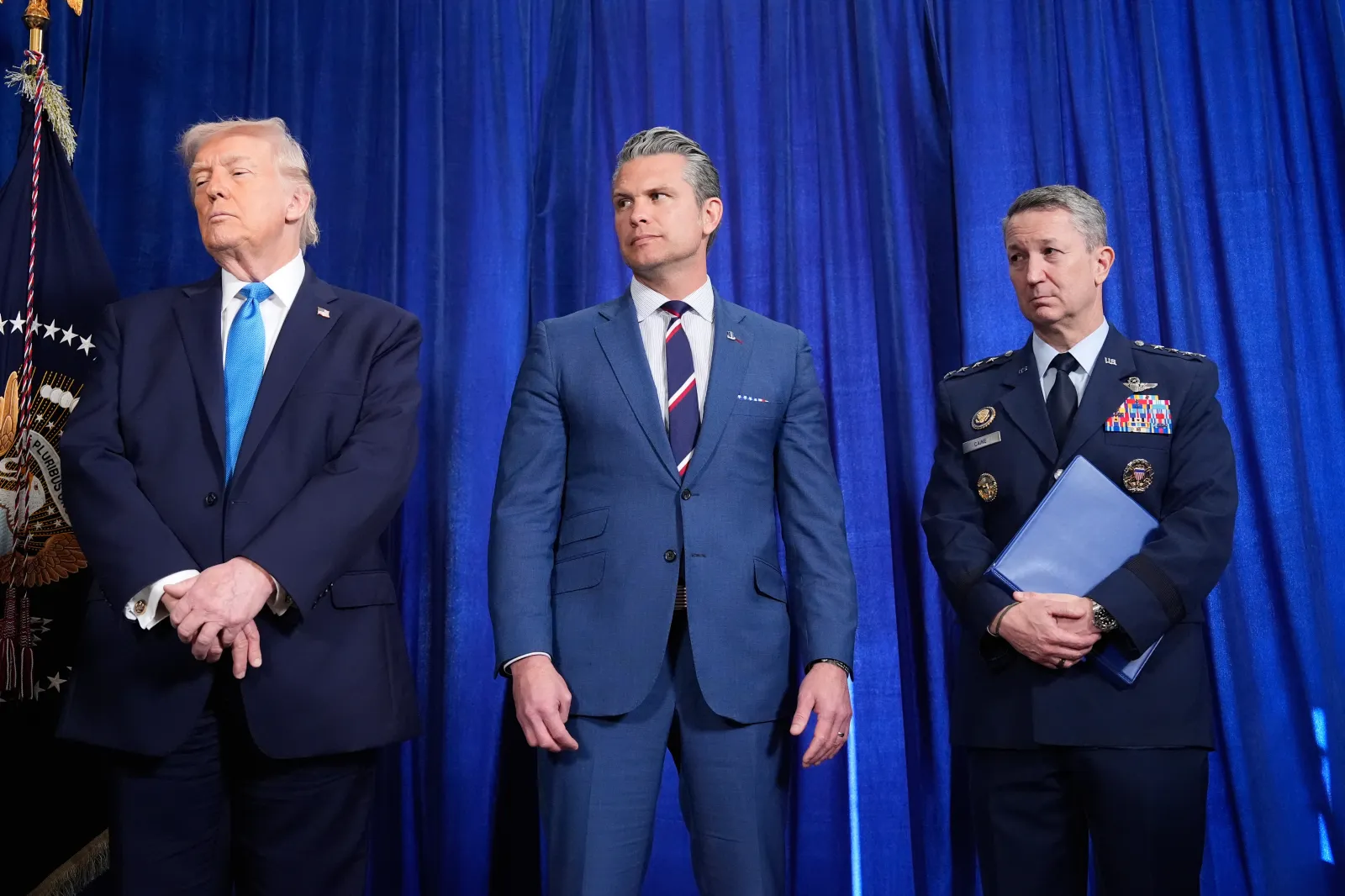

WASHINGTON — President Donald Trump’s Saturday announcement of “major combat operations” against Iran has ignited a fierce constitutional standoff in the nation’s capital. While Republican leadership largely praised the joint U.S.-Israeli strikes as a necessary step toward regional “liberation,” Democrats—joined by a small faction of non-interventionist Republicans—are demanding an immediate return to Washington to curb the President’s authority to wage war.
The strikes, characterized by the administration as a response to failed diplomatic “off-ramps” and Iran’s nuclear ambitions, represent the most significant military escalation in the Middle East in decades.
GOP Leaders Applaud “Massive” Military Action
In the wake of the strikes, Senate Majority Leader John Thune (R-S.D.) commended the bravery of U.S. service members, framing the escalation as an inevitability caused by Iranian intransigence.
“The Iranian regime has refused the diplomatic off-ramps that would peacefully resolve these national security concerns,” Thune stated, echoing the White House’s position that the mission is a defensive necessity.
The rhetoric from the President’s most staunch allies was even more definitive:
Sen. Lindsey Graham (R-S.C.): Proclaimed the “end of the largest state sponsor of terrorism is upon us,” calling the operation the “biggest change in the Middle East in a thousand years.”
Speaker Mike Johnson (R-La.): Confirmed he remains in “close contact” with the White House as the operation proceeds.
Rep. Rick Crawford (R-Ark.): Chairman of the House Intelligence Committee, justified the action by stating Iran “absolutely cannot be allowed to maintain a nuclear weapon.”
Democrats Demand War Powers Vote
The Democratic response was swift and focused on the legality of the unilateral action. Senate Minority Leader Chuck Schumer (D-N.Y.) called for the Senate to “reassert its constitutional duty” by passing a resolution to enforce the War Powers Act.
“The administration has failed to provide Congress and the public with critical details about the scope and immediacy of the threat,” Schumer said, demanding an immediate classified briefing for all senators.
Sen. Tim Kaine (D-Va.), a perennial advocate for congressional war oversight, labeled the strikes a “colossal mistake” and “idiotic action.” Kaine is leading the charge for a War Powers Resolution alongside Schumer and, notably, Republican Sen. Rand Paul (R-Ky.)
“Every single Senator needs to go on the record about this dangerous, unnecessary, and idiotic action,” Kaine said in a statement.
A Fractured Bi-Partisan Landscape
While the party lines are largely drawn, the escalation has created unusual bedfellows and internal dissent:
The Non-Interventionist Right: Rep. Thomas Massie (R-Ky.) and Rep. Warren Davidson (R-Ohio) broke with their party, arguing that “War requires Congressional authorization.” Massie indicated he would partner with progressive Rep. Ro Khanna (D-Calif.) to force a vote.
The Pro-Strike Left: Sen. John Fetterman (D-Pa.) broke ranks with his party to support the President, stating Trump was “doing what’s right and necessary to produce real peace.”
| Key Proponents of the Strike | Key Opponents / Critics |
| Sen. John Thune (R-S.D.) | Sen. Chuck Schumer (D-N.Y.) |
| Sen. Lindsey Graham (R-S.C.) | Sen. Tim Kaine (D-Va.) |
| Sen. John Fetterman (D-Pa.) | Sen. Rand Paul (R-Ky.) |
| Speaker Mike Johnson (R-La.) | Rep. Thomas Massie (R-Ky.) |
The “Gang of 8” and the Path Ahead
The administration has moved to mitigate the fallout by briefing the “Gang of 8”—the top leaders and intelligence committee heads from both parties—prior to the strikes. Secretary of State Marco Rubio reportedly led these notifications.
However, the path forward remains volatile. House Minority Leader Hakeem Jeffries (D-N.Y.) confirmed his caucus is committed to a vote next week, accusing Trump of leaving American troops vulnerable to “retaliatory actions” by bypassing Congress.
While similar resolutions were narrowly defeated last year, the scale of this “massive ongoing operation” may shift the political calculus as lawmakers weigh the risks of a full-scale regional war.
What’s Next: The White House is expected to hold full Senate and House briefings this week. All eyes are on the upcoming votes in both chambers, which will serve as a definitive litmus test for President Trump’s “America First” military doctrine.