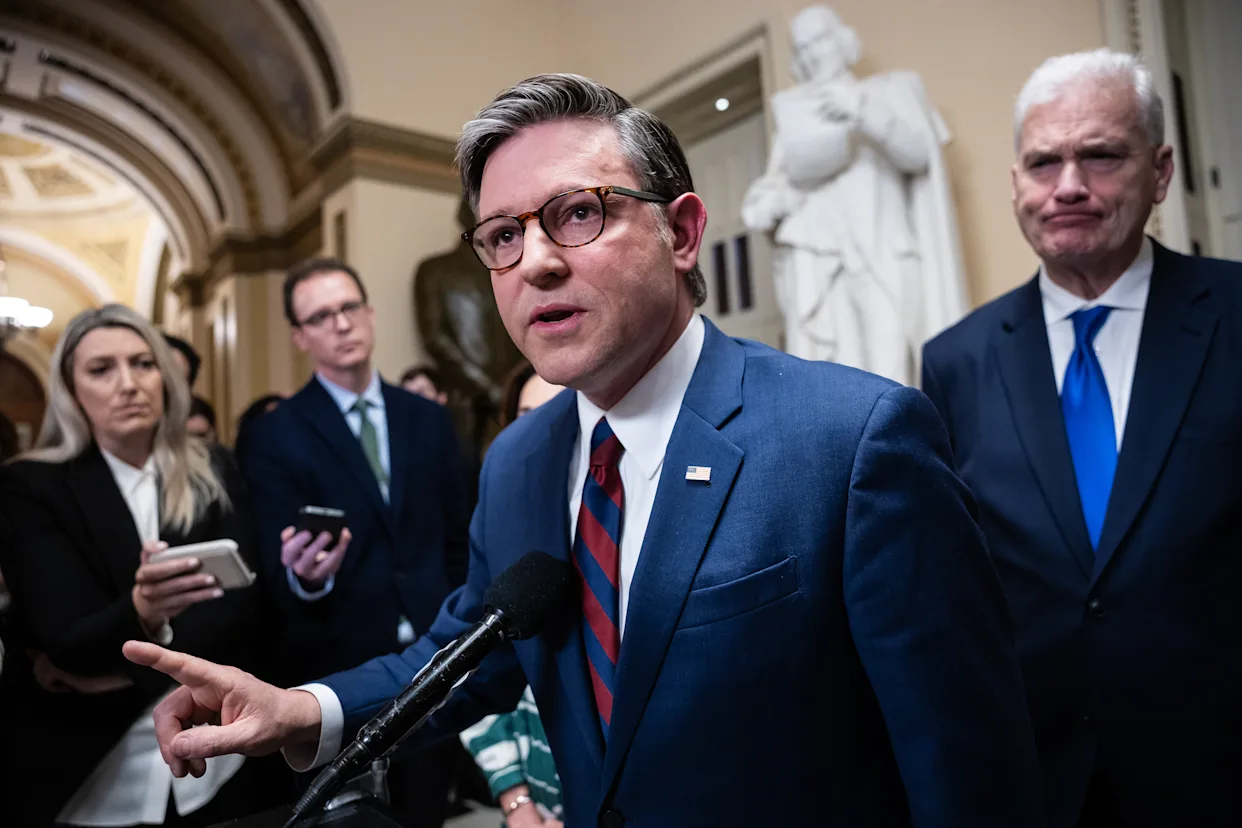

House Speaker Mike Johnson abruptly canceled a planned Wednesday vote on reauthorizing a critical U.S. surveillance authority, exposing deep fractures within the Republican conference and complicating efforts backed by President Donald Trump to extend the program before its imminent expiration.
The measure would renew Section 702 of the Foreign Intelligence Surveillance Act, a cornerstone intelligence tool set to lapse within days. Johnson told reporters negotiations required “a few more hours,” signaling a possible vote as early as Thursday, though senior lawmakers cautioned a deal may slip further.
At the center of the impasse is a rebellion from ultraconservative Republicans demanding stricter limits on how intelligence agencies conduct warrantless surveillance. Their resistance has forced GOP leadership and White House officials into last-minute talks over potential reforms—despite months of prior awareness about the looming deadline.
One proposal gaining traction is an amendment from Rep. Clay Higgins that would require a warrant for certain searches involving U.S. citizens under Section 702. The provision aims to strike a balance: preserving intelligence capabilities while adding legal safeguards. However, the White House has pushed back on expanding constraints, reflecting Trump’s insistence on a “clean” extension without new guardrails.
The compromise has failed to unify Republicans. Some, including Rep. Andrew Clyde, indicated the proposal could address part of their concerns. Others argue it falls short of long-standing demands to curb warrantless surveillance practices more aggressively.
Further complicating negotiations are disputes over the length of the extension—currently proposed at 18 months—and additional policy demands from hard-liners, including measures targeting data brokers and a ban on a central bank digital currency.
House Intelligence Committee Chair Rick Crawford acknowledged ongoing disagreements, noting leadership must weigh whether proposed changes would secure enough votes for passage or alienate additional members.
Behind the scenes, frustration has mounted on all sides. Republican lawmakers privately criticized Trump administration officials for engaging seriously on reform proposals only in recent days. White House aides, in turn, accused holdouts of undermining national security priorities during a time of global conflict.
The compressed timeline underscores the stakes. Any House-passed extension must also clear the Senate before the April 20 deadline. Senate Majority Leader John Thune said he remains “optimistic,” but left open whether senators would accept last-minute policy changes.
With negotiations intensifying and divisions unresolved, the fate of one of the government’s most powerful intelligence tools now hinges on a narrow and rapidly closing window on Capitol Hill.