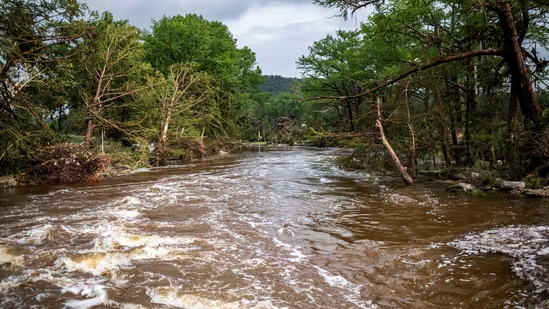

Flooding remains the deadliest weather-related hazard in the U.S., claiming over 125 lives annually on average, according to the National Weather Service. Flash floods, in particular, are the leading cause of storm-related deaths nationwide. From hurricanes to record rainfall events, here’s a look at some of the most catastrophic floods in recent U.S. history:
Texas Hill Country, July 2025
Flash floods swept through central Texas after relentless rainfall, leaving at least 32 people dead and dozens missing. Search teams used helicopters, boats, and drones to rescue stranded victims, including campers near the Guadalupe River. Authorities are still assessing the full extent of the disaster.
Hurricane Helene, 2024
Helene tore through Florida, Georgia, the Carolinas, Tennessee, and Virginia, killing nearly 250 people. Most deaths resulted from catastrophic inland flooding, not wind damage. North Carolina alone recorded 108 fatalities, making Helene the deadliest U.S. hurricane since Katrina.
Eastern Kentucky Floods, 2022
Late July 2022 saw 45 people killed in eastern Kentucky as torrential rain devastated entire communities. Homes, schools, and critical infrastructure were swept away, displacing thousands.
Waverly, Tennessee, 2021
A staggering 17 inches of rain in less than 24 hours caused creeks in Waverly to burst, claiming 20 lives, including twin infants. Entire homes and businesses were washed away.
Hurricane Harvey, 2017
Striking Texas as a Category 4 hurricane, Harvey stalled over the Gulf Coast, dumping several feet of rain. At least 68 people died, nearly all from freshwater flooding. Over 300,000 structures were damaged, with total damages reaching $125 billion.
West Virginia Floods, 2016
An unassuming rainstorm turned deadly in June 2016, killing 23 people across West Virginia. Many were trapped overnight as floodwaters surged.
Superstorm Sandy, 2012
Sandy, a rare hybrid storm, battered the East Coast in October 2012. It killed 147 people, including 72 in the U.S., with drowning as the leading cause of death.
Mississippi River Floods, 2011
Spring 2011 brought record rainfall and snowmelt, triggering widespread flooding across the Mississippi River Basin. Flash floods led to 24 deaths in Oklahoma, Missouri, Arkansas, Louisiana, and Tennessee.
Hurricane Ike, 2008
Ike brought a 20-foot storm surge to Galveston and dropped over 4 feet of rain on Houston. The storm caused over 100 deaths, many from flooding, and left massive property damage in its wake.
Hurricane Katrina, 2005
The most devastating flood disaster in modern U.S. history, Katrina struck the Gulf Coast and overwhelmed levees in New Orleans. Nearly 1,400 people died, and damages soared to $200 billion. Entire neighborhoods were submerged as rescues unfolded from rooftops.
Tropical Storm Allison, 2001
Allison dropped 40 inches of rain over Texas and Louisiana, leading to 41 deaths, mostly in the Houston area. The storm lingered for days, causing widespread urban flooding and prolonged power outages.
Flood Safety Reminder
With flash floods and severe storms becoming more intense and frequent, experts urge civilians to monitor weather alerts closely and never underestimate rising water. As NORAD emphasized in recent rescue efforts, timely action is key to saving lives.