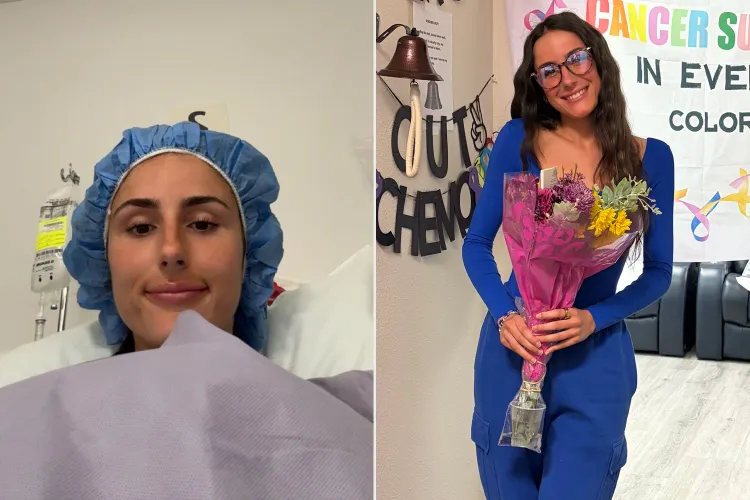

At just 24 years old, Meagan Meadows was diagnosed with stage 3 colon cancer — a life-altering moment she now shares openly to raise awareness. Through social media, Meadows has been candid about her experience, urging others to pay attention to symptoms she nearly ignored before seeking medical help.
A video she posted in July 2025 quickly gained traction, going viral only a month after her diagnosis. Eight months later, Meadows marked a major milestone: completing her final round of chemotherapy.
“The support I received from that video was incredible,” Meadows tells PEOPLE. “I connected with so many strangers and formed relationships with people I would never have met otherwise.”
She describes a dedicated online community that consistently rallied behind her.
“There was a group of about 10 people who commented on nearly every video, offering love and encouragement,” she says. “Their kindness helped me through some very difficult moments and brought genuine happiness during a time when life felt overwhelmingly heavy.”
While the connections proved meaningful, Meadows acknowledges that not all advice she encountered — both online and offline — was beneficial. Now that her treatment has concluded, she offers guidance for those supporting loved ones facing similar diagnoses.
:max_bytes(150000):strip_icc():focal(499x0:501x2):format(webp)/meagan-meadows-13-02192026-027043a7dc164ad2883fd8792159b028.jpg)
“Please avoid giving unsolicited medical advice, especially if you are not a doctor or expert,” Meadows says. “Cancer is already incredibly overwhelming. When someone suggests deviating from the care plan recommended by our medical team, it can create unnecessary anxiety and make us feel like we’re doing something wrong.”
Instead, Meadows emphasizes the importance of emotional validation.
“The most helpful thing you can do is listen and validate how we feel, rather than trying to correct us,” she explains. “Even though we understand that the future is uncertain for everyone, it’s impossible not to think about it sometimes.”
She is particularly firm about another common but harmful behavior: sharing negative outcomes.
“Absolutely do not tell stories about someone who had the same diagnosis and didn’t survive,” Meadows says. “Those stories create fear we simply don’t need. We’re already grappling with those worries internally.”
Less than a month after completing chemotherapy, Meadows credits her loved ones for providing the most meaningful support throughout her journey.
:max_bytes(150000):strip_icc():focal(749x0:751x2):format(webp)/meagan-meadows-14-02192026-c315d956f16d4dc6aeaec52a0f1e70e4.jpg)
“My family and boyfriend spent countless hours with me, often doing absolutely nothing,” she says. “Their willingness to simply be there — even when it wasn’t easy or pleasant — meant everything.”
She recalls thoughtful gestures that helped her stay emotionally grounded.
“My boyfriend’s family gave me small gifts before each chemo session. My friends regularly checked in, FaceTimed whenever possible, and some even traveled from other states just to visit. Those moments reminded me I wasn’t alone.”
Beyond her immediate circle, Meadows says her viral video connected her with a broader community of individuals who deeply understood her experience.
“I’ve spoken with people who went through this years ago and continue to navigate long-term challenges,” she says. “I’ve also connected with those currently facing stage 4 diagnoses. Despite their own battles, they offered me strength and comfort.”
Although her treatment is now complete, Meadows says that network remains invaluable. Above all, she stresses that presence outweighs perfection when supporting someone with cancer.
“Showing up usually means far more than finding the right words,” Meadows says. “Most of the time, there are no perfect words — and that’s okay. Just be there.”