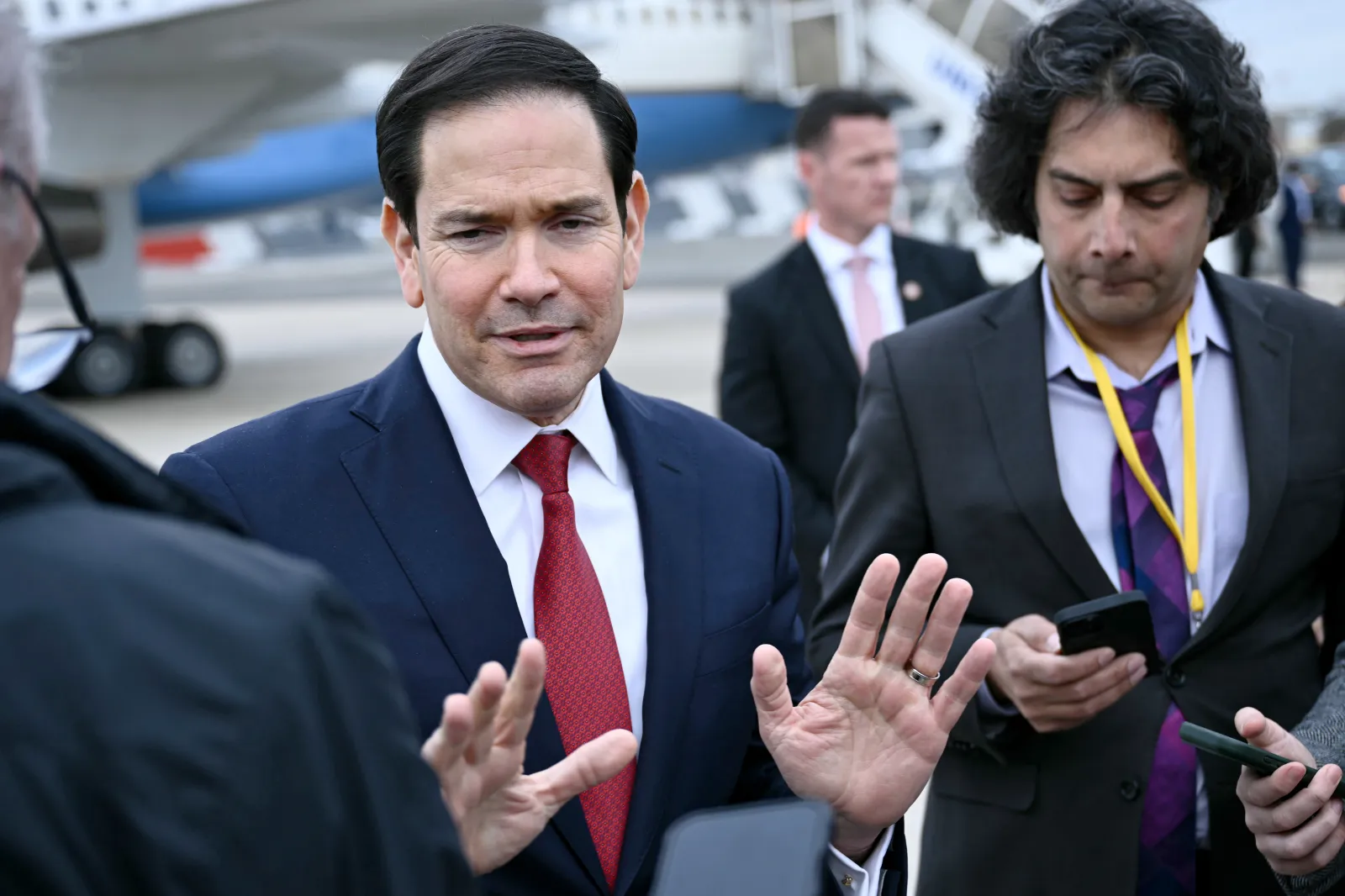

Secretary of State Marco Rubio confirmed Friday that the United States is “ahead of schedule” in meeting its military objectives in Iran and expects to conclude operations within weeks—all without the deployment of ground combat forces.
Despite the recent deployment of 1,000 troops from the Army’s 82nd Airborne Division to the region, Rubio emphasized that the Pentagon’s current strategy relies on precision and air superiority rather than a traditional land invasion. He noted that the influx of personnel is intended to provide President Donald Trump with “maximum optionality” should regional dynamics shift unexpectedly.
The Battle for the Strait of Hormuz
A primary concern for the administration remains the post-conflict security of the Strait of Hormuz. Rubio warned that Tehran may attempt to implement an illegal “tolling system” or restrictive measures on the strategic waterway once active hostilities cease.
“The world has to have a plan,” Rubio stated following a G7 ministerial meeting in France. He characterized any Iranian attempt to tax or block international shipping as “illegal and unacceptable,” calling for a global coalition to ensure the free flow of commerce.
The G7 foreign ministers echoed this urgency in a joint statement, citing U.N. Security Council Resolution 2817 and the Law of the Sea. The group underscored the “absolute necessity” of maintaining toll-free navigation to prevent further shocks to global energy, fertilizer, and commercial supply chains.
Regional Intelligence and Ukraine Aid
Addressing reports of foreign interference, Rubio dismissed claims that Russia has provided actionable intelligence to Iranian forces. “There is nothing Russia is doing for Iran that is in any way impeding or affecting our operation,” he asserted.
The Secretary also addressed concerns regarding the depletion of resources for other theaters. While Patriot air-defense systems have been relocated from Europe to the Middle East—triggering warnings from Ukrainian President Volodymyr Zelensky—Rubio maintained that no military aid has been officially diverted from Kyiv to date. However, he signaled that the administration would prioritize U.S. national security needs if the conflict scales.
A Call for International Burden-Sharing
Rubio’s closing remarks served as a blunt directive to global allies, particularly in Asia, who rely heavily on Middle Eastern fuel. He argued that the responsibility for securing international waters should not fall solely on the U.S. military.
“They get far more of their fuel from there than we do,” Rubio said, framing the security of the Strait of Hormuz as a “burden-sharing test” for the international community.