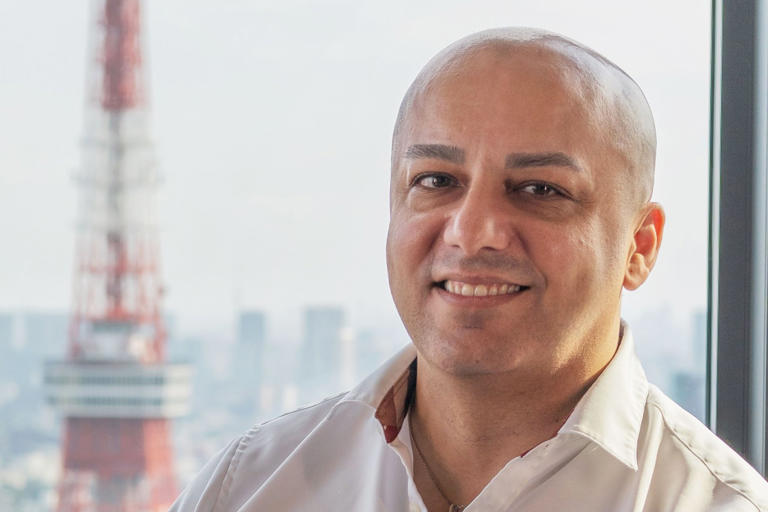

SAN FRANCISCO — As the class of 2026 enters a volatile labor market, a growing chorus of Silicon Valley’s elite is issuing a startling warning: the traditional roadmap to professional success—law school, med school, and even PhDs—may now be a race against an unbeatable opponent.
Jad Tarifi, the founder of Google’s first generative-AI team, warns that the rapid acceleration of artificial intelligence is outpacing the traditional academic cycle. For Gen Z students seeking shelter from a cooling job market within the ivory tower, Tarifi suggests they might be “throwing away” years of their lives on credentials that will be obsolete before the ink on their diplomas is dry.
The Velocity Gap: Why AI Outpaces the Classroom
The core of the issue lies in the “velocity gap”—the discrepancy between the years required to earn a terminal degree and the weeks it takes for large language models to leapfrog human benchmarks.
“AI itself is going to be gone by the time you finish a PhD,” Tarifi told Business Insider. He notes that even specialized fields, such as applying AI to robotics, likely will be “solved” by the time a current student completes a five-year doctoral program.
This sentiment is echoed by OpenAI CEO Sam Altman, who recently stated that forthcoming models, such as GPT-5, perform on par with “PhD-level experts” across virtually any topic. When a software subscription provides the expertise of a doctoral candidate for a fraction of the cost, the market value of the human credential inevitably shifts.
The Erosion of “Safe” Professions
For decades, medicine and law were considered “recession-proof” and “AI-proof” sanctuaries. Tarifi argues otherwise, citing the reliance of these fields on rote memorization and legacy systems.
Medical Education: Current curriculums are often based on memorization of data that AI can recall instantly and more accurately.
Legal Training: The time-intensive nature of law school (three years plus clerking) makes it vulnerable to an AI landscape that evolves fundamentally every six months.
A “Perfect Storm”: Rising Debt and Outdated Curricula
The skepticism toward higher education isn’t limited to AI researchers. Meta CEO Mark Zuckerberg recently questioned whether the current university system is equipping students for the modern workforce at all.
“I’m not sure that college is preparing people for the jobs that they need to have today,” Zuckerberg noted, highlighting the “taboo” nature of suggesting that college may not be the optimal path for everyone.
With student debt reaching record highs, the “payoff” for an undergraduate degree has already diminished. This has led to a surge in students pursuing advanced degrees to differentiate themselves—a strategy Tarifi calls risky.
The “Brain Drain” and the Short-Term Gold Rush
Despite the warnings, the immediate financial allure of the private sector remains a powerful magnet. According to data from MIT, 70% of AI doctoral students now head straight into the private sector, compared to just 20% two decades ago.
This has created a “brain drain” in academia. Henry Hoffmann, chair of the University of Chicago’s computer science department, reports that students are being courted with “high six-figure” offers—and in extreme cases, eight-figure signing bonuses—long before they finish their dissertations.
However, experts warn this may be a “bubble” of human talent acquisition before AI agents become capable of performing the very research these PhDs are being hired to conduct.
The New Skillset: Agency and Human Connection
If the “credential treadmill” is broken, what should young professionals focus on? Tarifi suggests a pivot from collecting credentials to cultivating unique perspectives.
Future-Proofing Strategies:
Niche Intersectionality: Rather than general AI, focus on “AI for biology” or other highly specific, cross-disciplinary fields.
Emotional Intelligence: Developing “the art of connecting deeply with others,” a trait AI cannot yet replicate.
Human Agency: The ability to direct technology rather than just operating within its existing frameworks.
As the boundary between human expertise and machine capability continues to blur, the most valuable assets in the 2026 economy may not be found in a lecture hall, but in the ability to adapt to a world where the only constant is the speed of obsolescence.