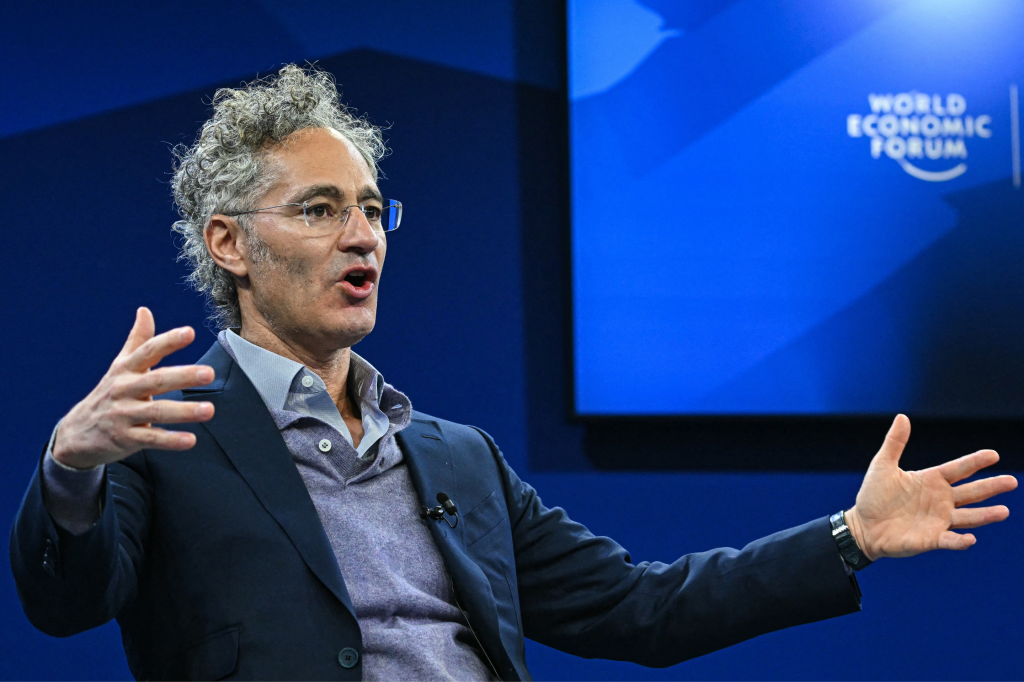

As artificial intelligence begins to fundamentally dismantle the traditional white-collar labor market, Palantir Technologies CEO Alex Karp has issued a provocative directive for workers seeking survival: pivot to vocational trades or lean into neurodivergence.
Karp’s assessment, delivered during recent high-level forums including the World Economic Forum, suggests that the “elite” path of humanities and general management is rapidly losing its market value. Instead, the 58-year-old billionaire argues that the future belongs to those whose skills or cognitive frameworks cannot be easily replicated by large language models.
The Survival Blueprint: Trades and “Non-Linear” Thinking
Karp identifies two primary categories of workers likely to remain indispensable:
- Vocational Specialists: Skilled trades—electricians, plumbers, and HVAC technicians—remain difficult to automate and are in high demand as Big Tech builds out the physical infrastructure for AI data centers.
- The Neurodivergent: Individuals with ADHD, autism, or dyslexia (the latter of which Karp lives with) offer a “creative friction” and artistic risk-taking that AI struggles to simulate.
Karp views cognitive differences not as disabilities but as strategic advantages. “Success will favor people who look at things from a different direction,” Karp noted, emphasizing that the “standard” thinker is the most susceptible to being replaced by a standard algorithm.
Palantir’s War for Unconventional Talent
Palantir is aggressively operationalizing this philosophy. The company’s Neurodivergent Fellowship specifically recruits talent that deviates from traditional corporate profiles, asserting that these individuals will play a “disproportionate role” in Western technological dominance.
Simultaneously, the firm is challenging the necessity of the four-year degree through its Meritocracy Fellowship. This program recruits high-performing high school graduates—skipping the “debt trap” of university—and offers a $5,400 monthly stipend to train them directly within Palantir’s ecosystem. By fall 2026, the program aims to scale, pitching a “Palantir degree” as a more viable credential than an Ivy League diploma.
The Institutional Counter-Argument
Not all industry leaders share Karp’s skepticism of higher education. Executives at Microsoft and Anthropic argue that the “humanities” are entering a renaissance.
- Jaime Teevan (Microsoft): Asserts that “metacognitive skills”—critical thinking and the ability to challenge systems—require the “friction” provided by a liberal arts education.
- Daniela Amodei (Anthropic): Contends that as technical tasks are automated, “soft skills” like high EQ, compassion, and nuanced communication will become the most valuable assets in the workforce.
Market Outlook: A Gartner study predicts that by 2027, 20% of Fortune 500 sales organizations will specifically recruit neurodivergent talent to drive innovation. As the “entry-level” role for Gen Z continues to vanish, the divide between Karp’s “vocational-creative” model and the “human-centric” liberal arts model will define the next decade of American employment.