
The arrest of a U.S. Army veteran who protested the Trump administration’s immigration policies has raised concerns among legal experts and fellow veterans who know him from his service in Afghanistan.
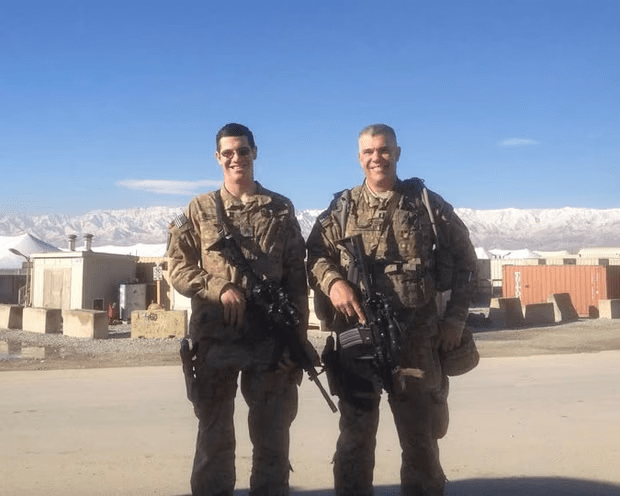
Bajun Mavalwalla II, a former army sergeant who survived a roadside bomb on a special operations mission in Afghanistan, was charged in July with “conspiracy to impede or injure officers” after participating in a demonstration against federal Immigration and Customs Enforcement (Ice) in Spokane, Washington.
Legal experts say the case signals a stronger approach by the administration toward protests. Veterans who served with Mavalwalla say the charges seem unfair.
“Here’s a guy who held a top secret clearance and was privy to some of the most sensitive information we have, who served in a combat zone,” said Kenneth Koop, a retired colonel who trained the Afghan military and police during Mavalwalla’s deployment. “To see him treated like this really sticks in my craw.”
The June 11 protest that led to Mavalwalla’s arrest involved a smashed government van windshield and slashed tires. However, he was not among the over two dozen people arrested at the scene. More than a month later, on July 15, the FBI arrived at his home.
On the day of his arrest, the 35-year-old, who earned a degree in sustainable communities from Sonoma State University using his GI Bill, was set to move into a 3,000-square-foot house he bought with his girlfriend, a nurse and fellow Afghanistan war veteran. They used a loan backed by the Department of Veterans Affairs.
Mavalwalla’s father, a retired US Army intelligence officer with three Bronze Stars from tours in Iraq and Afghanistan, had brought his truck to help move him. But at 6 a.m., the FBI knocked on his door and arrested him. Cell phone footage shows Mavalwalla smiling in disbelief as agents handcuffed him.
“This is not how I planned to spend my moving day,” Mavalwalla said. “I’m a military veteran. I’m an American citizen.”
Later that day, Mavalwalla, who receives disability compensation for post-traumatic stress disorder from his military service, appeared in federal court with eight others linked to the protest.
While some protesters allegedly struck federal officers and let the air out of tires, Mavalwalla was only charged with “conspiracy to impede or injure officers.”
The indictment states that Mavalwalla and co-defendants “physically blocked the driveway of the federal facility and/or physically pushed against officers despite orders to disperse.” He pleaded not guilty and has no prior criminal record.
His family says Mavalwalla was committed to non-violent protest, inspired by their family’s connection to Mahatma Gandhi. A short video on Instagram shows him briefly jostling with a masked officer before linking arms with other demonstrators to block the gate.
The conspiracy charge could carry up to six years in prison, a $250,000 fine, and three years of supervised release. He was released while awaiting trial and allowed to travel to Disneyland for a planned family trip.
‘He’s a test case to see how far they can go’
The US attorney’s office in Spokane declined to comment on the ongoing investigation. The indictment came two days after Richard Barker, the acting US attorney for eastern Washington, resigned. He described leaving as “a very difficult decision.”
The current acting US attorney, nominated for the permanent post by Donald Trump, is Pete Serrano, a former conservative litigator. He has no prior prosecutorial experience and has called January 6 rioters “political prisoners.” Senator Patty Murray has pledged to block his confirmation.
Legal experts say Mavalwalla’s charges show how far the Trump administration may go to limit protests against Ice while expanding raids and deportations.
So far, most demonstrators were charged for assault or obstruction, which usually require a direct victim. But a federal conspiracy charge focuses on intent. Prosecutors must only show that the defendants agreed to impede or injure an officer.
“He’s a test case to see how far they can go,” said Luis Miranda, former chief spokesperson for the Department of Homeland Security under Joe Biden.
‘Honest, direct, polite, and very trustworthy’
Mavalwalla’s arrest shocked many veterans connected through service in Afghanistan. His commanding officer, Col. Charles Hancock, described him as “honest, direct, polite, and very trustworthy” and expressed concern about the country’s state.
Koop noted that Mavalwalla had used his security clearance connections to help a translator escape the Taliban. He said Mavalwalla naturally cared about human rights and safety.
Mavalwalla also helped Afghans left behind after the fall of Kabul. He located safe houses, arranged travel, and raised $130,000 to support at least 32 people, including visa applications and flights.
“You cannot save the world,” he told one volunteer. “It’s good to try though.”
‘An issue of selective prosecution’
Mavalwalla joined hundreds responding to a social media post by former Spokane city council president Ben Stuckart encouraging protesters to block an Ice transport.
Former prosecutors say the conspiracy law is broad and gives authorities significant power. Bruce Antkowiak, a former federal prosecutor, said intent must be proven, not direct action. Robert Chang, a law professor at UC Irvine, added that such cases can chill free speech under the First Amendment.
Experts expect more conspiracy charges as the Trump administration continues Ice’s rapid deportation agenda. Jennifer Chacón, a Stanford law professor, says social media monitoring may increase to catch protesters.
Mavalwalla’s parents believe he was racially profiled and remain hopeful that America’s promise will endure.
“My father left India at 19, floated six days across the Arabian Sea, nearly died, and was sponsored to come to the U.S.,” his father said.
Gandhi’s legacy
The Mavalwalla family has a long history of peaceful activism. Mavalwalla II’s great-great-grand-uncle worked with Gandhi in South Africa and supported India’s non-violent revolution. Gandhi was godfather to Mavalwalla’s great-grandmother, and the family has preserved his burial shroud.
Three days after the protest, Mavalwalla’s mother texted him: “Channel your inner Gandhi.”
“I know, mom,” he replied. “Always non-violence.”