
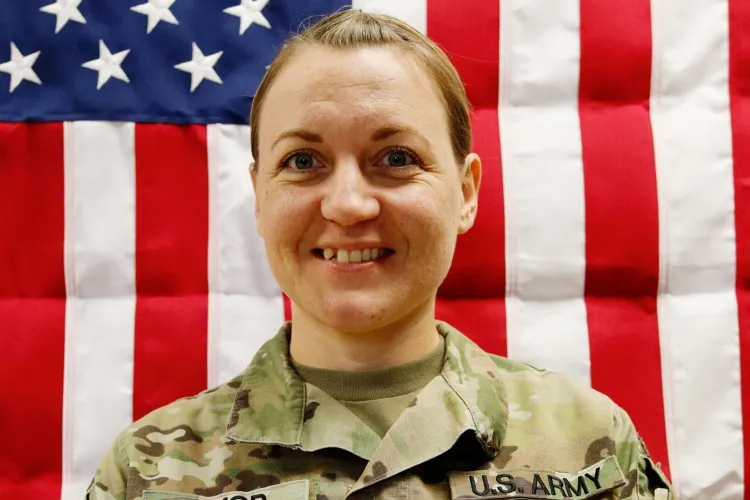

As the United States navigates the opening stages of a high-stakes conflict with Iran, the family of Army Sgt. 1st Class Nicole M. Amor is working to ensure her sacrifice is defined by her life, not just her death.
Amor, 39, was one of six service members killed on March 1, 2026, during an unmanned aircraft system attack at Port Shuaiba, Kuwait. The Department of Defense confirmed the strike occurred just days after the onset of hostilities with the Iranian regime. A native of White Bear Lake, Minnesota, Amor was reportedly less than a week away from completing her second tour of duty in Kuwait and returning home to her husband and two children.
“She was the rock for a lot of people and the glue for a lot of people,” her husband, Joey Amor, told reporters this week. “That’s what she felt day in and day out, both military and civilian.”
The couple’s history was rooted in the military; they met more than 20 years ago while stationed at Fort Eustis, Virginia, and married in 2015. While the transition to a combat zone often carries inherent risks, Joey Amor noted the specific pain of the incident occurring in Kuwait—a location many families previously considered relatively secure.
The reality of the strike reached home through fragmented news reports of an explosion hitting a sustainment unit. Desperate for word, Joey sent a final text to his wife, expressing his growing worry and asking for a response. Ninety minutes later, officials confirmed she was among the casualties.
The March 1 attack also claimed the life of Sgt. Benjamin N. Pennington, who later died of wounds sustained during a simultaneous strike at Prince Sultan Air Base in Saudi Arabia.
In the wake of her memorial service held on March 20, the Amor family is focusing on a tribute that reflects Nicole’s personal passions. An avid gardener, her legacy will be preserved through a memorial greenhouse currently under construction by her husband and children.
“I will get to spend the rest of my life maintaining and growing [it],” Joey Amor said, emphasizing that the project provides a tangible way for their children to process a loss he has been careful to address with transparency.
Fellow soldiers have echoed the family’s sentiments, describing Amor as a stabilizing force. Her obituary highlighted a life dedicated to “nurturing life wherever she could,” a mission her family vows to continue despite the weight of their grief.
As the war with Iran continues to demand a heavy toll on U.S. forces, the Amor family’s story remains a stark reminder of the personal cost behind the casualty lists.


