

Global financial markets are standing at a geopolitical crossroads as the conflict in Iran reaches a critical inflection point. While President Donald Trump signals a potential de-escalation, Wall Street’s most influential leaders are preparing for two vastly different economic futures: a period of renewed abundance or a “stark and steep” global recession.
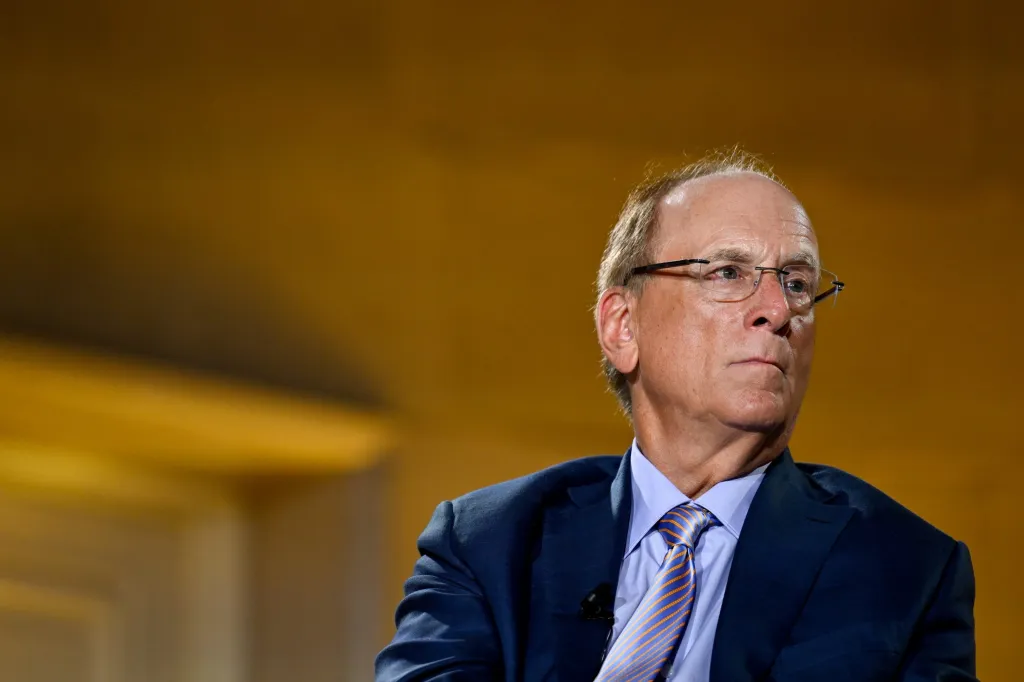
BlackRock CEO Larry Fink, speaking to the BBC, outlined a binary scenario for energy markets. According to Fink, the resolution of the conflict will either see Iran re-integrated into the global economy, driving oil prices down to $40 a barrel, or leave the regime in permanent isolation, potentially skyrocketing prices to $150.
“We have two very extreme outcomes,” Fink warned, noting that a middle ground is increasingly unlikely. “Everybody has to recognize that there’s not going to come somewhere in the middle.”
The Stakes of the Strait
Central to this volatility is the Strait of Hormuz. Iran’s military presence in the narrow waterway currently bottlenecks roughly 20 million barrels of oil per day—approximately 20% of the world’s supply. With the strait currently littered with mines and subject to Iranian “toll” demands, shipmasters remain hesitant to navigate the passage.
If the blockade persists, the ripple effects will extend far beyond the gas pump. Fink highlighted that $150 oil would disrupt global supply chains, specifically hitting agricultural prices and fertilizer production, which relies heavily on natural gas by-products.
The Mojtaba Factor
The geopolitical landscape shifted dramatically this month following the death of Supreme Leader Ayatollah Ali Khamenei. His son, Mojtaba Khamenei, has assumed leadership, presenting a pivotal choice for the White House.
While the U.S. and Israel have achieved their primary objective of neutralizing the elder Khamenei, the younger leader’s willingness to cooperate with Western powers remains the primary “X-factor” for analysts. If the younger Khamenei seeks a pivot toward the West, it could provide the “off-ramp” President Trump needs to wind down military operations.
Market Optimism vs. Reality
Despite the risks, some banking titans remain hopeful. JPMorgan Chase CEO Jamie Dimon expressed “little optimism” regarding a long-term resolution, echoing a general upbeat sentiment on Wall Street that the conflict might conclude within a narrow window.
However, many analysts remain skeptical of the administration’s recent positive updates, citing a lack of verifiable action on the ground. For now, the global economy remains tethered to the Strait of Hormuz, waiting to see if Tehran chooses international integration or continued confrontation.


