
A Minneapolis daycare connected to Minnesota’s expanding fraud investigation is pushing back against criticism after online footage raised questions about whether children were ever present at the facility.
The Quality “Learing” Center came under scrutiny last week when independent journalist Nick Shirley posted video showing the building appearing empty during business hours, despite records indicating it had received millions of dollars in public funding. Viewers also noticed the misspelling of “learning” on the sign above the entrance, which quickly became a symbol of the broader controversy.
On Monday, the New York Post reported that staff were seen escorting dozens of children into the center, even as nearby residents said they had long believed the facility was closed.
“We’ve never seen kids go in there until today,” one local resident said. “That parking lot is empty all the time, and I thought the place was permanently closed.”
Roughly 20 toddlers and young children were observed entering the center that morning. Ibrahim Ali, the son of the facility’s owner, dismissed claims that the building is usually inactive, arguing that Shirley filmed before operating hours.
“Do you go to a coffee shop at 11 p.m. and say, ‘Hey, they’re not working?’” Ali said, adding that 16 children were inside the center later that day. According to the center, its official hours run from 2 p.m. to 10 p.m., Monday through Thursday.
Ali also addressed the misspelled sign, blaming an outside graphic designer for the error and downplaying its significance. “What I understand is the owners dealt with a graphic designer. He did it incorrectly,” he said. “They didn’t think it was a big issue. That’s going to be fixed.”
The video sparked sharp reactions from lawmakers and renewed allegations that state authorities failed to stop what critics have labeled a massive fraud scheme. However, Minnesota Department of Children, Youth, and Families Commissioner Tikki Brown said the concerns raised by the footage were misleading.
Brown stated that each facility highlighted in Shirley’s reporting had undergone inspections within the past six months and that children were present during those visits. She added that none of the investigations uncovered evidence of fraud and that the centers maintain active state licenses, allowing payments to continue.
Federal authorities are now involved. The FBI confirmed it is assisting with the investigation, and ICE agents arrived in Minnesota this week to review records at multiple childcare centers.
FBI Director Kash Patel said the bureau has long been aware of fraud allegations in the state and suggested the case could be far larger than currently known. “The FBI believes this is just the tip of a very large iceberg,” Patel wrote. “We will continue to follow the money and protect children. This investigation remains ongoing.” He added that some cases may be referred to immigration authorities where applicable.
According to Shirley, the Quality Learning Center received approximately $1.9 million from Minnesota’s Child Care Assistance Program in 2025 alone, bringing its total funding to about $4 million. Shirley said that while posing as a parent seeking enrollment, he visited several centers and claimed he did not see any children present.
ICE agents also visited nearby facilities, including ABC Learning Center, where the director said agents requested two months of attendance records for review.
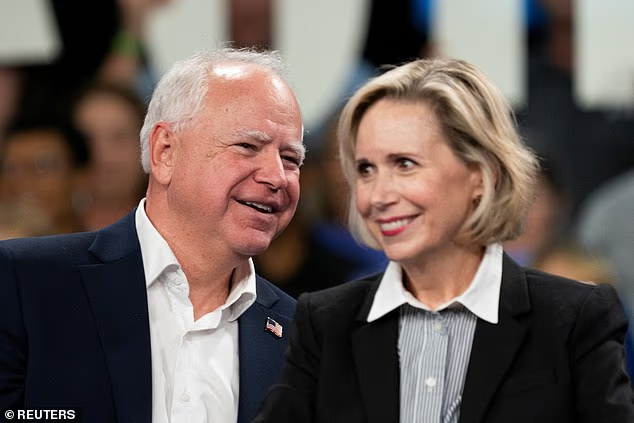
Minnesota Governor Tim Walz has faced growing criticism over how the state handled oversight of childcare funding programs. A spokesperson for Walz said the governor has spent years pressing lawmakers for stronger enforcement powers and has taken steps to tighten oversight, including commissioning external audits, closing high-risk programs, appointing a statewide program integrity director, and supporting criminal prosecutions. One facility connected to the investigations has already been shut down, the spokesperson said.
The controversy follows earlier revelations of a large-scale pandemic-era fraud involving the federally funded nonprofit Feeding Our Future. At least 78 people have been charged in that case, highlighting what critics say are deep vulnerabilities in Minnesota’s oversight of public assistance programs.