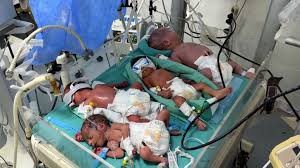

Doctors in Gaza say they are being pushed to desperate extremes—placing multiple newborns in a single incubator—as hospitals run dangerously low on fuel, forcing vital services to shut down and putting countless lives at risk.
The United Nations has warned that the fuel situation is now critical. Supplies are dwindling, and “virtually no additional accessible stocks” remain, according to the UN’s Office for the Coordination of Humanitarian Affairs (OCHA).
“Hospitals are rationing. Ambulances are stalling. Water systems are collapsing,” OCHA said in a statement. “And the deaths this is likely causing could rise rapidly unless Israeli authorities urgently allow new fuel in—regularly and in sufficient amounts.”
An 11-week Israeli blockade on humanitarian aid earlier this year brought Gaza’s 2.3 million residents to the brink of famine. Although limited aid deliveries resumed in May, humanitarian organizations say it falls far short of meeting the scale of the crisis.
CNN has reached out to Israel’s COGAT—the agency overseeing aid access into Gaza—for comment on the fuel shortage but has not yet received a response.
“A Life-or-Death Struggle” for Gaza’s Newborns
Dr. Fadel Naim, director of Al-Ahli Hospital, shared a heart-wrenching photo on social media showing several infants packed into a single incubator at Al-Helou Hospital.
“This tragic overcrowding is not just due to missing equipment,” he wrote on X. “It’s a direct result of the relentless war and suffocating blockade that have crippled Gaza’s healthcare system. The siege has turned routine care for premature babies into a life-or-death struggle.”
Dr. Mohammad Abu Silmiya, director of Al-Shifa Hospital in northern Gaza, warned that their last remaining fuel could run out within hours. The hospital has already shut down dialysis units to preserve fuel for emergency surgeries and intensive care. He said the facility is at risk of total shutdown, putting hundreds of patients in immediate danger, including 22 babies in incubators.
Footage from inside the hospital showed staff treating patients using flashlights.
Hospitals on the Brink of Collapse
The Nasser Medical Complex said it had only 24 hours of fuel left and was focusing remaining resources on critical departments like maternity and ICU.
Beyond electricity for lights and equipment, fuel powers the ambulances, water treatment systems, and sanitation infrastructure on which Gaza relies. With imports restricted and local supplies exhausted, the health ministry said its greatest challenge now isn’t just fuel—but also the lack of spare parts to keep generators running.
On Wednesday, the Al-Aqsa Martyrs Hospital in central Gaza announced that its main generator had failed due to missing parts. It has since switched to a smaller backup system that officials say will only last for a few hours.
“The lives of hundreds of patients are at risk,” the hospital warned in a statement, noting that its closure would impact half a million residents in the Central Governorate.
Israel Cites Security Concerns; Aid Groups Warn of Catastrophe
Israel has restricted fuel deliveries throughout the war, citing concerns that Hamas could divert the supply for military purposes, such as powering weapons systems.
But international aid groups say the humanitarian fallout has reached a breaking point.
Doctors Without Borders (MSF) called the situation “an unprecedented humanitarian crisis” and renewed calls for a ceasefire and unimpeded aid access.
“Our teams have worked under siege to treat the wounded and support collapsing hospitals while indiscriminate attacks continue,” MSF said. “We urge Israeli authorities—and the governments enabling this catastrophe, including the UK—to lift the siege now and prevent the erasure of Palestinians from Gaza.”
As Gaza’s hospitals edge closer to collapse, doctors, parents, and aid workers are pleading for immediate action to restore basic services and prevent even greater tragedy.