
Representative Raul Ruiz (D-Calif.) introduced legislation Monday to prohibit sitting presidents from naming public buildings after themselves, a move aimed at curbing an unprecedented wave of self-branding across the federal government.
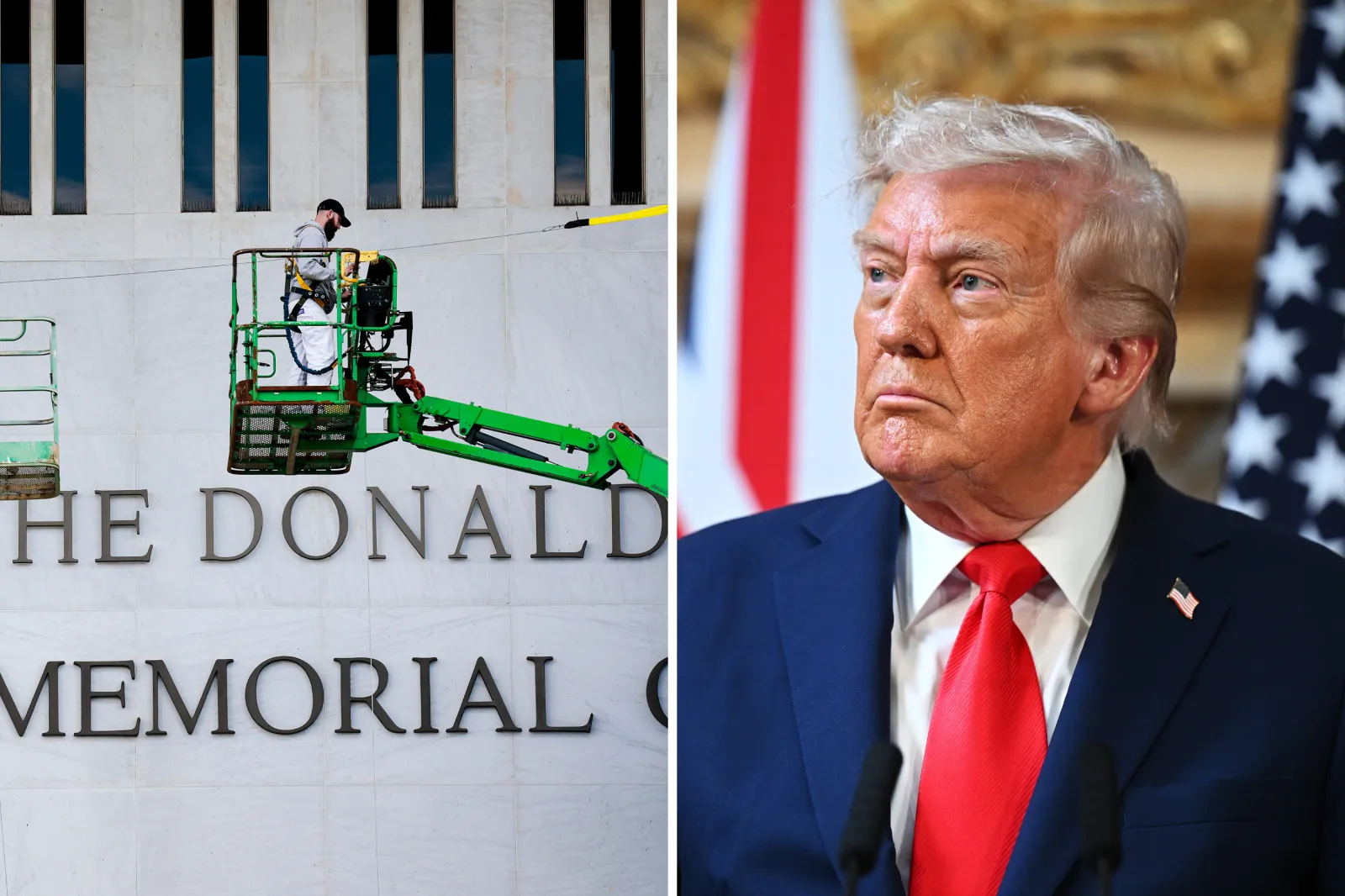
The bill, formally titled H.R. 8388, would bar any president—or federal employee acting on their behalf—from attaching the sitting commander-in-chief’s name or likeness to public property. The proposal follows a series of high-profile renamings that have seen President Donald Trump’s name affixed to storied national institutions and federal programs during his second term.
A Growing Federal Brand
The legislative push comes amid intensifying scrutiny over the administration’s efforts to reshape the American landscape. Notable recent actions include:
- The Kennedy Center: In December 2025, a Trump-appointed board voted to rename the John F. Kennedy Center for the Performing Arts to include Trump’s name. The move prompted a legal challenge from the Kennedy family, with Maria Shriver calling the decision “beyond comprehension.”
- U.S. Institute of Peace: The independent body was recently renamed the “Donald J. Trump U.S. Institute of Peace.” While Secretary of State Marco Rubio praised the change as a tribute to “the greatest dealmaker in our nation’s history,” critics like California Governor Gavin Newsom accused the administration of politicizing a non-partisan institution.
- Government Programs: The branding extends beyond architecture. The Department of Homeland Security recently launched a “Trump Gold Card” residency program, and the Treasury Department introduced “Trump Accounts” for child investment.
The Legislative Battle
H.R. 8388 has been referred to the House Committees on Transportation and Infrastructure and Oversight and Government Reform. While the bill does not name Trump explicitly, its introduction signals a formal attempt by House Democrats to reassert congressional authority over federal landmarks.
“Federal landmarks should remain insulated from personal branding by sitting presidents,” supporters argue, characterizing the current trend as a breach of long-standing executive norms.
The bill joins a list of stalled efforts to limit presidential branding. Previous proposals, such as the Federal Property Integrity Act, failed to gain traction following the Kennedy Center controversy.
Outlook and Obstacles
The path forward for H.R. 8388 remains steep. With Republicans maintaining control of Congress and the White House, the bill faces significant political headwinds. As of publication, no co-sponsors have signed onto the measure.
However, the legislation serves as a critical marker for the opposition. Even if the bill fails to advance, it provides a legislative framework for ongoing court challenges regarding whether a president has the legal authority to unilaterally rename federal assets without explicit congressional approval.
For now, the battle over the nation’s public spaces continues to move from the hallways of federal buildings to the floor of the House.