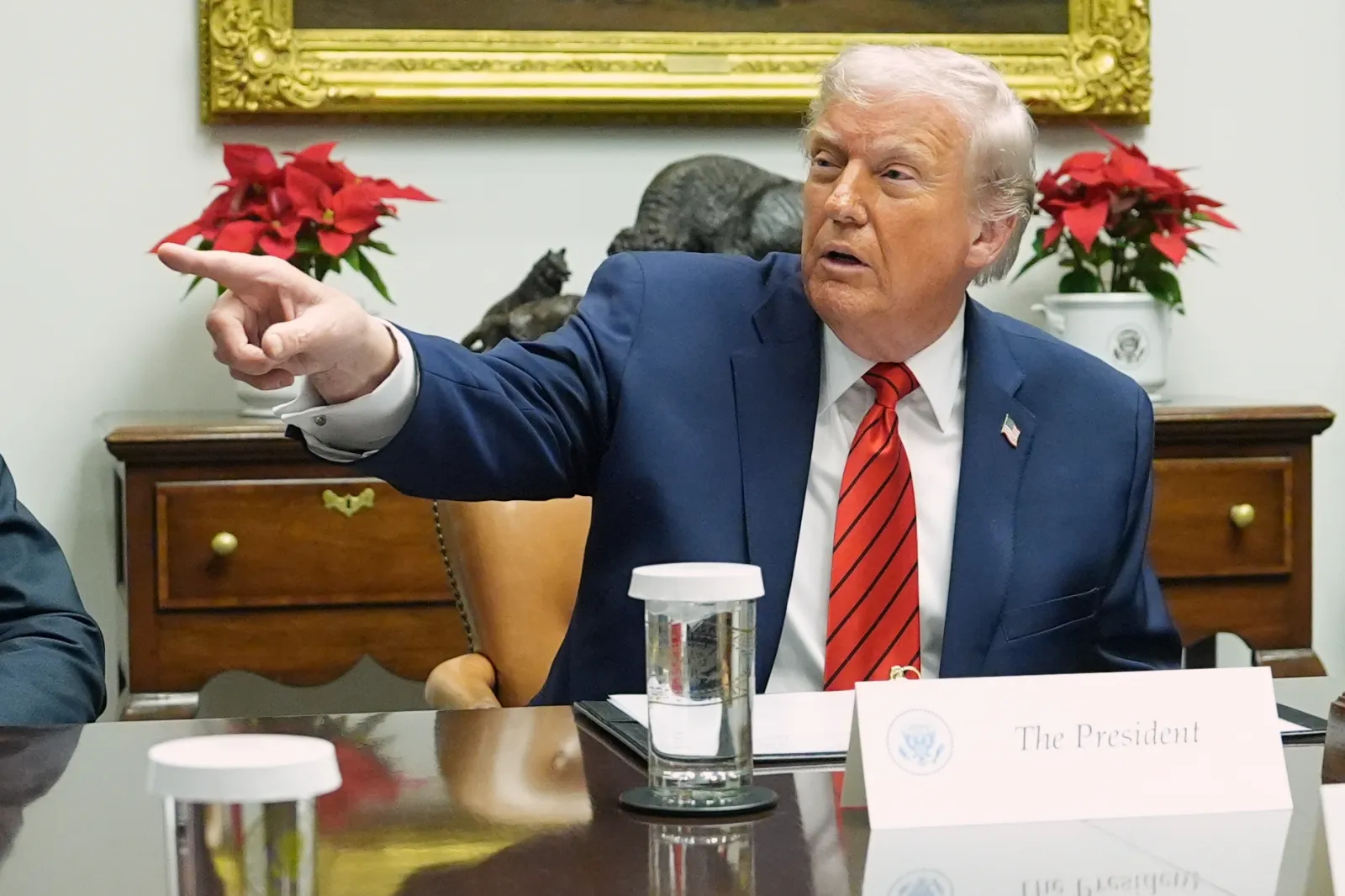

President Donald Trump appears to be losing ground with suburban Americans, according to new polling.
A survey from Quantus Insights shows the president’s standing in the suburbs worsening over the past few months, with net approval moving from -3 points in September to -16 points in December.
Why It Matters
Holding support across key voting blocs—including suburban voters—could shape the political landscape heading into the November 2026 midterms, when Republicans will be fighting to defend narrow control in Congress. Even though Trump won’t be on the ballot, midterm elections are widely viewed as a referendum on the president and his administration, meaning shifts in approval can carry real consequences for the GOP.
What to Know
Quantus Insights’ polling indicates a steady decline in suburban approval:
- September: 47% approve, 50% disapprove (net -3)
- November: 43% approve, 55% disapprove (net -12)
- December: 41% approve, 57% disapprove (net -16)
Heath Brown, an associate professor of public policy at the City University of New York, told Newsweek that economic pressures are likely weighing on the president’s support.
“Like all Americans, those living in the suburbs care about rising prices, quality schools, safe drinking water, and affordable health care,” Brown said. “Elected officials who focus on addressing those issues will likely draw support. Those who are unable or unwilling to confront those issues, are likely to see their standing sink.”
Economic concerns remain central for many voters. A Gallup poll previously found that Americans overwhelmingly cited financial pressures as a top reason they supported Trump in the 2024 election, and during the campaign the president promised to bring inflation down.
Thomas Whalen, an associate professor who teaches U.S. politics at Boston University, echoed that view in comments to Newsweek.
“The easiest answer is improving the economy,” he said. “[Trump’s] reckless tariff program in combination with his unwise cuts in social welfare programs among others have left many Americans scrambling to make ends meet, especially in increasingly expensive suburbs. Meanwhile, he seems more interested in holding Great Gatsby parties at the White House and obsessing over winning a Nobel Peace Prize than focusing on the bleak jobs picture. Indeed, a ‘let them eat cake’ approach didn’t work so well for Marie Antoinette back in the day and it’s not any better for the president right now.”
More Polling Signals Mixed Picture
The suburban slide comes alongside broader, mixed polling for the president.
- December I&I/TIPP polling showed Trump at net -3 overall, with 44% approving and 47% disapproving. That was an improvement from the prior month, when he stood at net -8 (41% approve, 49% disapprove).
- A recent Economist/YouGov poll found Trump at 39% approval and 58% disapproval, a net -19, described as his lowest level since returning to office in January.
- Morning Consult reported in December that Trump’s net approval was positive in 22 states, slightly better than a comparable point in his first term, when he was positive in 21 states.
What People Are Saying
Trump wrote on Truth Social in November: “So many Fake Polls are being shown by the Radical Left Media, all slanted heavily toward Democrats and Far Left Wingers. … Fake News will never change, they are evil and corrupt but, as I look around my beautiful surroundings, I say to myself, ‘Oh, look, I’m sitting in the Oval Office!’”
White House spokesman Kush Desai previously told Newsweek: “President Trump inherited the worst inflation crisis in a generation from Joe Biden’s incompetence, and his Administration has rapidly cooled inflation to a 2.5 percent annualized rate.”
“As the Administration’s supply-side policies of tax cuts, deregulation, and energy abundance continue taking effect, Americans can count on inflation continuing to fall and real wages continuing to rise,” Desai added.
What Happens Next
As Trump’s presidency continues, his support is likely to keep shifting—including among suburban voters—especially as economic conditions and political priorities evolve heading toward 2026.