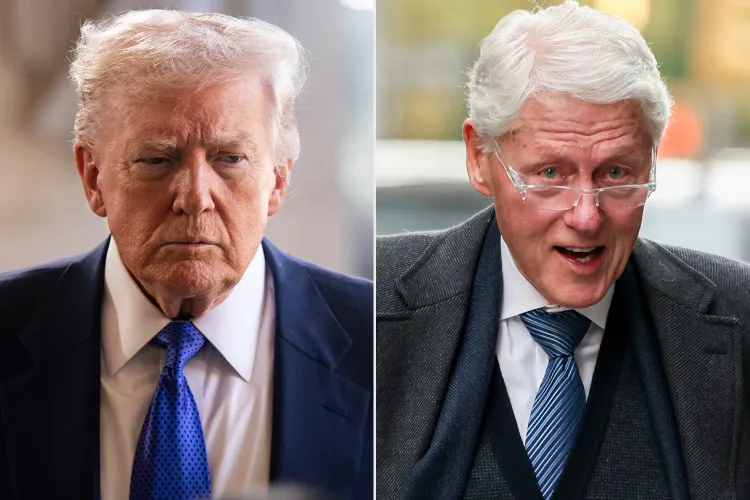

CHAPPAQUA, N.Y. — A high-stakes congressional deposition of former President Bill Clinton has ignited a fresh political firestorm, with House Democrats now citing a “new precedent” to demand that Donald Trump answer questions under oath regarding his own ties to disgraced financier Jeffrey Epstein.
The Friday, Feb. 27 hearing, held at Clinton’s residence in Chappaqua, marked a historic moment in the years-long investigation into Epstein’s high-profile social circle. While Republican investigators focused on Clinton’s travel history and relationship with the convicted offender, the proceedings shifted the national spotlight back to Trump, whose own history with Epstein remains a point of intense legislative scrutiny.
The Shift from the ‘Trump Rule’ to the ‘Clinton Rule’
Following the closed-door testimony, members of the House Oversight Committee framed the event as a turning point for executive accountability. Rep. Ro Khanna (D-Calif.) told reporters that Clinton’s cooperation effectively dismantled the “Trump rule”—a reference to Donald Trump’s previous defiance of congressional subpoenas, most notably during the January 6 investigation.
“Before this, we had the ‘Trump rule.’ Trump defied a congressional subpoena… saying presidents don’t have to testify,” Khanna stated. “Now we have the ‘Clinton rule,’ which is presidents and their family have to testify when Congress issues a subpoena. That means Donald Trump needs to come before our committee.”
Rep. Robert Garcia (D-Calif.), the ranking Democrat on the committee, echoed the sentiment, noting that Trump’s name appears extensively within the Epstein files. “This is not a hoax,” Garcia said. “He has not been exonerated.”
:max_bytes(150000):strip_icc():focal(749x0:751x2):format(webp)/donald-trump-jeffrey-epstein-4-071725-e21613d937dd4df7ab4a2c8d8f7fed70.jpg)
Trump Offers Sympathy, Claims ‘Exoneration’
Earlier on Friday, speaking to reporters outside the White House, Donald Trump expressed an uncharacteristic moment of solidarity with his former political rival.
“I like Bill Clinton. I don’t like seeing him deposed,” Trump said, before quickly pivoting to his own grievances. “But they certainly went after me a lot more than that.”
Trump has consistently used the word “exonerated” when discussing his relationship with Epstein, despite never being formally charged or deposed in connection to the case. When recently questioned about the arrest of former Prince Andrew—another figure appearing in the Epstein logs—Trump claimed he could speak on the matter “nicely” because of his perceived clearance of any wrongdoing.
Conflicting Accounts of the Testimony
As the deposition concluded, a war of words erupted between the committee’s leadership regarding what was actually said behind closed doors.
The Republican Perspective: House Oversight Chairman James Comer (R-Ky.) told the press that Clinton’s testimony did not implicate the former Republican president. According to Comer, Clinton stated he had “never seen anything” to suggest Trump was involved in Epstein’s criminal activities.
The Democratic Rebuttal: Oversight Committee Democrats quickly moved to “set the record straight” via social media, accusing Comer of a “mischaracterization” of the facts. They alleged that Clinton’s testimony actually raised new questions about why the Trump-Epstein relationship ended and confirmed that Trump once described having “great times” with the financier.
“The full transcript, unedited, should be released immediately,” the Democratic statement read, signaling a brewing battle over the public disclosure of the deposition.
Looking Ahead: A Path to Subpoena?
The “Clinton rule” has provided Democrats with significant rhetorical leverage. By voluntarily testifying (or appearing via subpoena) and stating in his opening remarks that “no person is above the law—especially Presidents,” Clinton has effectively boxed in the current legal arguments for presidential immunity regarding congressional inquiries.
The House Oversight Committee is expected to vote on the release of the full Clinton transcript early next week. Should the document contain the “new questions” Democrats alluded to, the pressure for a formal subpoena for Donald Trump is likely to reach a fever pitch.