
WASHINGTON — President Donald Trump on Friday denied any knowledge of a reported plan to declare a national emergency to seize federal control over the 2026 midterm elections, despite reports that his close allies are circulating a 17-page draft executive order that would do exactly that.
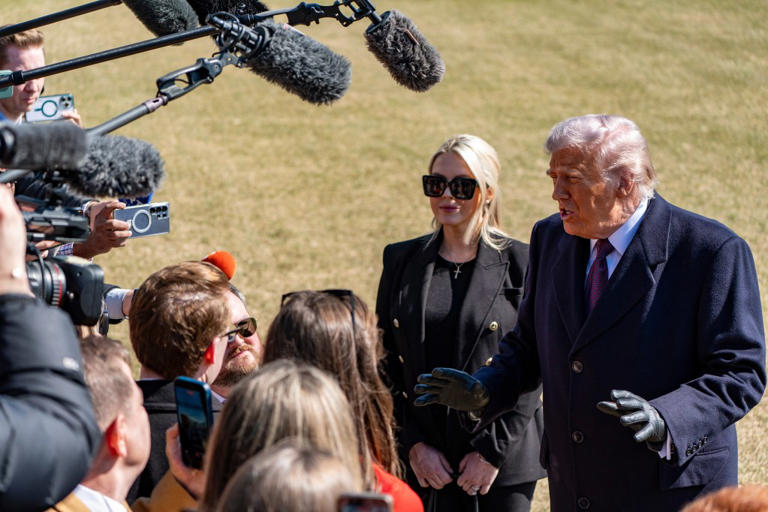
The denial came during a brief exchange with reporters on the White House South Lawn before the President departed on Marine One. When asked if he was considering a national emergency declaration to overhaul voting procedures, Trump responded sharply: “Who told you that?” He then added, “I’ve never heard about it.”
The President’s comments follow a series of investigative reports, first detailed by the Washington Post, revealing that pro-Trump activists—some claiming to be in “certain coordination” with the White House—are pushing a proposal that would cite alleged foreign interference as a legal trigger to expand presidential authority over the electoral process.
The ‘National Emergency’ Blueprint
The 17-page draft, dated April 12, 2025, and recently published by the voting rights group Democracy Docket, outlines a radical restructuring of American elections. The document proposes a “national blueprint” that would:
- Mandate paper ballots exclusively for federal contests.
- Ban electronic counting and the use of networked voter registration systems.
- Implement a federal voter ID mandate to prove U.S. citizenship.
- Strictly limit absentee voting and prohibit no-excuse mail-in ballots.
The draft justifies these sweeping changes by citing unproven claims of Chinese interference in the 2020 election—claims that the U.S. intelligence community and multiple audits have repeatedly debunked.
Political and Legal Firestorm
Critics were quick to jump on the President’s denial. Illinois Governor JB Pritzker, a frequent foil to the administration, reposted a clip of the exchange on X (formerly Twitter), writing: “Donald, you’re not denying it.”
The proposal has drawn fierce condemnation from civil rights organizations and legal experts who argue the order would violate the U.S. Constitution, which grants states the primary authority to regulate elections.
“This proposal is outright illegal, and it will not stand,” said Derrick Johnson, President of the NAACP. “The Constitution explicitly grants the power to regulate elections to state legislatures and Congress, not the President.”
Conversely, Republican supporters of the SAVE Act—a legislative mirror to many of the draft’s provisions—argue that federal intervention is necessary. Representative Bryan Steil (R-WI) recently stated that such reforms are “commonsense” measures to ensure that it is “easy to vote, but hard to cheat.”
The Executive Order vs. The SAVE Act
The controversy arrives as the SAVE America Act faces a gridlocked Senate. Earlier this month, Trump signaled he might bypass the legislative branch entirely, posting on Truth Social that he would enforce voter ID “whether Congress passed the SAVE Act or not.”
Legal analysts warn that any attempt to nationalize election rules via executive fiat would trigger an immediate constitutional crisis. Rick Wilson of The Lincoln Project characterized the draft as a “feature, not a bug,” intended to “delegitimize the very act of voting” by creating a “manufactured emergency.”
What To Watch
While the White House officially deferred to the President’s denial on Friday, the administration’s history of using the National Emergencies Act for policy goals—such as immigration enforcement—suggests a potential legal template is already in place.
With the 2026 midterms less than nine months away, any formal move to sign such an order would likely face immediate challenges in federal court. For now, the “irrefutable” legal argument Trump promised on social media remains unseen, even as the draft continues to circulate among his most influential outside advisors.