
Global energy leaders warned Monday that international markets have yet to fully price in the catastrophic physical supply shortages triggered by the closure of the Strait of Hormuz, even as oil futures trade 60% higher than pre-war levels.
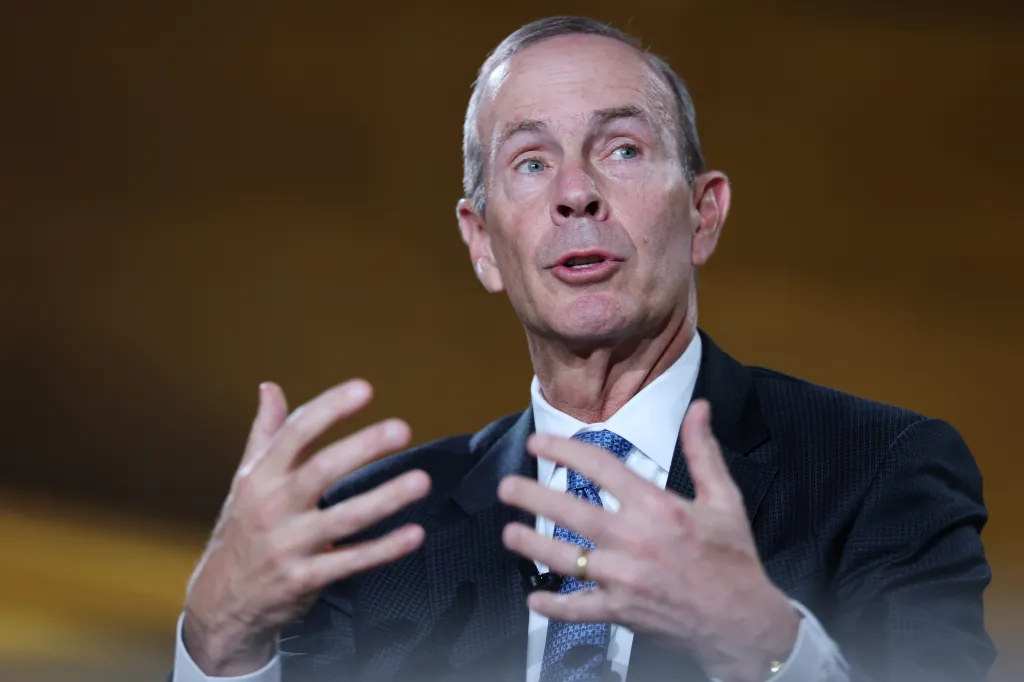
Speaking at the CERAWeek by S&P Global conference, Chevron Chairman and CEO Mike Wirth cautioned that the “physical manifestations” of the blockade are only beginning to ripple through the global economy. The strait, a critical artery for nearly 20% of the world’s crude oil and liquefied natural gas (LNG), remains effectively shuttered, creating a deficit that experts say will take months to replenish.
“The fundamentals are very tight out there,” Wirth said, noting that Asian nations have already resorted to energy conservation mandates, school closures, and remote work protocols. “Physical supply changes don’t respond immediately. Even when the strait reopens, it will take time.”
The geopolitical fallout has escalated into what Sultan Ahmed Al Jaber, CEO of ADNOC and UAE Minister of Industry, characterized as “economic terrorism.” In a video address, Al Jaber accused Iran of “choking the throat” of the global economy by weaponizing the waterway.
The regional impact is already severe:
- The UAE has slashed oil production by over 50% this month.
- Iraq and Kuwait have implemented even deeper cuts.
- Supply chains for essential commodities, including fertilizer and semiconductor-grade helium, have been severed.
In an effort to stabilize the market, the International Energy Agency (IEA) authorized the release of 400 million barrels of oil from emergency storage. U.S. Energy Secretary Chris Wright confirmed the U.S. began withdrawing from the Strategic Petroleum Reserve (SPR) on March 20, committing to a release of 1 million barrels per day.
However, the numbers tell a grim story. While the total global release provides roughly 3 million barrels daily, it fails to offset the 11 million barrels currently offline.
Market uncertainty peaked following President Donald Trump’s decision to delay retaliatory strikes on Iranian energy infrastructure to allow for negotiations. While the five-day reprieve caused a temporary dip in prices, Tehran has dismissed the move as “fake news” intended to manipulate markets, maintaining threats to attack neighboring Gulf facilities if the U.S. intervenes.
As the standoff continues, the message from Houston is clear: the era of cheap, accessible energy has met its most significant challenge yet. “No oil, no modern world,” Secretary Wright warned.