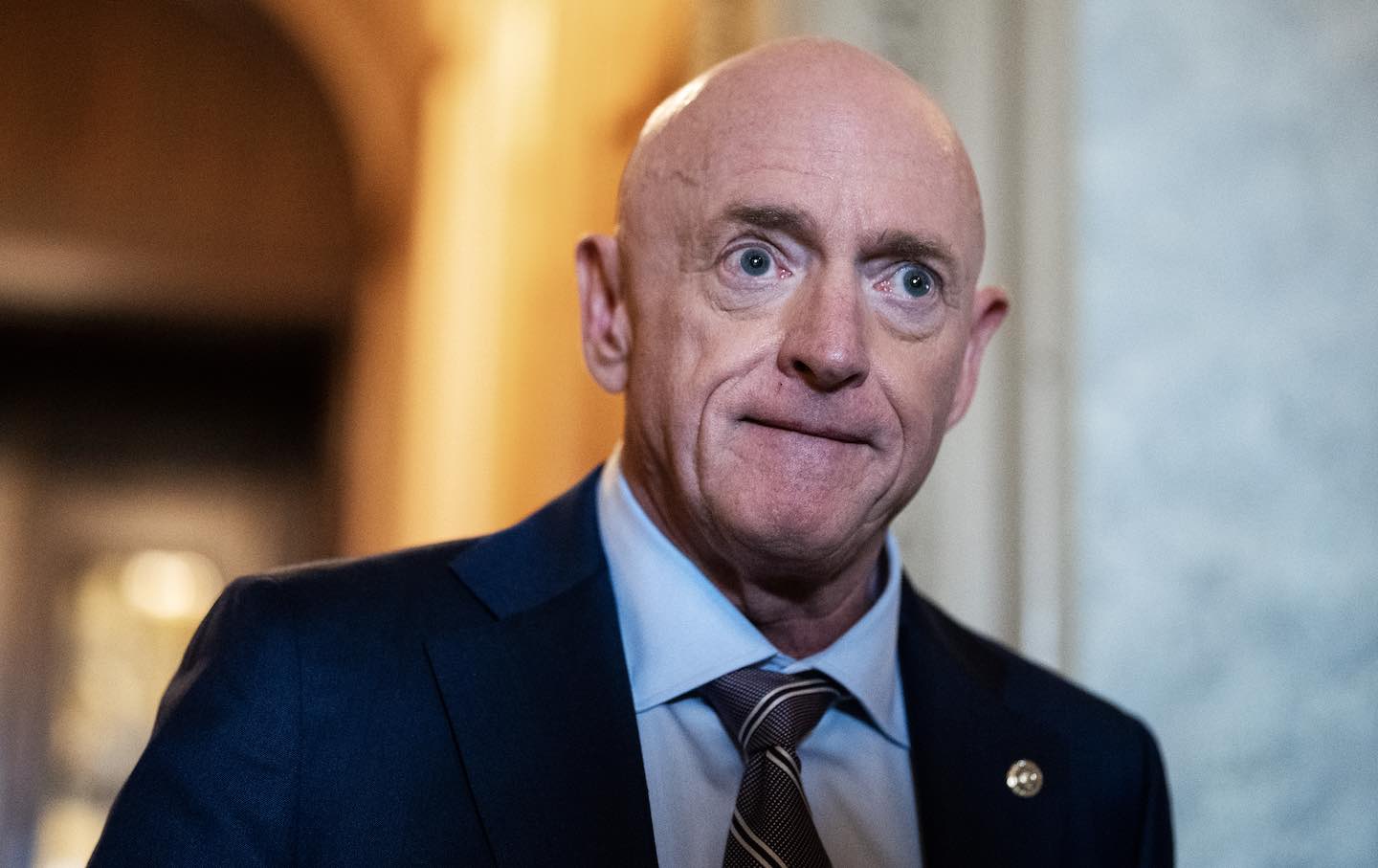

Senator Mark Kelly issued a pointed criticism of the current U.S. administration after attending the Munich Security Conference, arguing that long-standing international alliances have been significantly weakened in a short period under President Donald Trump. Following meetings with global leaders in Munich, Kelly cautioned that declining confidence in U.S. partnerships could carry serious consequences for both national security and economic stability.
“It took a world war and eight decades to build the strongest alliance system the world had ever seen,” Kelly said. “It took less than a year to practically dismantle it.” He referenced remarks by Secretary Marco Rubio, who described the “old world order” as finished, suggesting that recent U.S. policies and rhetoric have accelerated tensions within established diplomatic frameworks. While acknowledging that alliances have always faced challenges, Kelly argued that current strategies have intensified uncertainty rather than resolving underlying issues.
According to Kelly, discussions with foreign officials revealed growing unease about America’s reliability. He pointed to strained relations with Denmark and Greenland as examples of deteriorating trust and cited polling data indicating a notable decline in U.S. favorability in Poland. Such shifts, he warned, could encourage countries to pursue alternative trade and security partnerships, potentially reducing U.S. influence on the global stage.
Kelly framed these concerns within a broader geopolitical landscape marked by China’s expanding global presence and the ongoing war in Ukraine. Rebuilding trust with allies, he said, is essential to maintaining collective security, strengthening economic cooperation, and effectively countering strategic competitors. He emphasized that dependable alliances remain critical in an era increasingly defined by technological competition and evolving security threats.
The alliance network Kelly referenced has its roots in the post–World War II period, particularly with the formation of the North Atlantic Treaty Organization (NATO) in 1949. These partnerships were designed to promote collective defense, foster political cooperation, and sustain economic integration across the transatlantic region. Over decades, the United States positioned these alliances as central pillars of its foreign policy and global leadership.
Kelly’s remarks reflect broader debates about the direction of U.S. foreign policy and its impact on international relationships. He stressed that restoring confidence among partners would require renewed commitment, consistency, and diplomatic engagement. Once trust erodes, he noted, rebuilding credibility can be both complex and time-consuming.
Concluding his observations, Kelly highlighted what he described as a stark contrast between discussions among Western leaders in Munich and the reactions of geopolitical rivals. He suggested that perceived divisions among allies may present opportunities for competitors such as Beijing and Moscow. Moving forward, Kelly argued, a more stable path will depend on reinforcing partnerships and demonstrating sustained strategic cooperation.