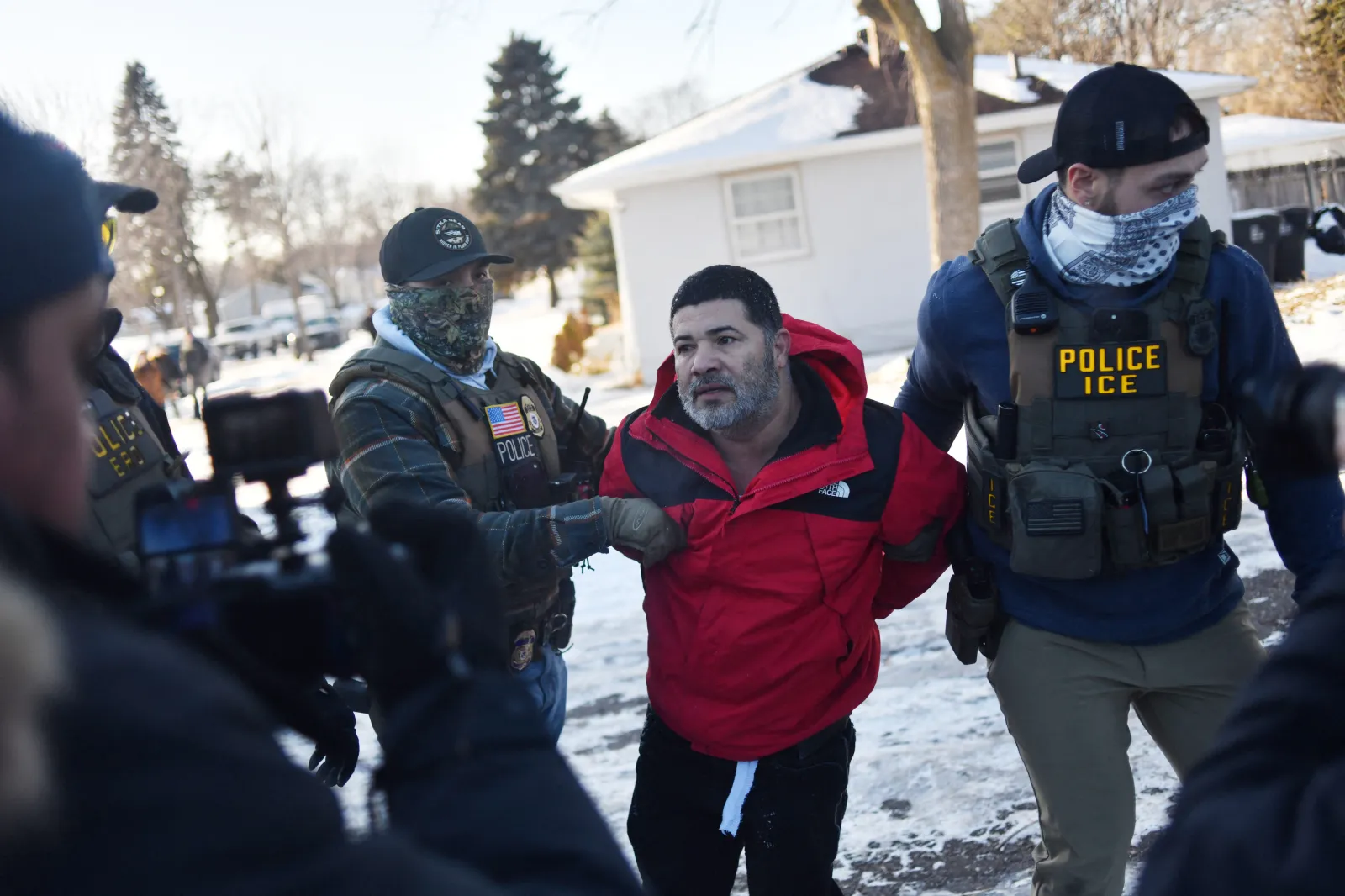

As fallout grows from two deadly immigration enforcement encounters in Minneapolis this month, a retired senior Immigration and Customs Enforcement official is warning the agency could be forced to undergo a sweeping overhaul—or cease to exist in its current form.
“This was poorly planned from day one,” Darius Reeves, a longtime ICE field office director who served under four presidents, told Newsweek’s Carlo Versano on The 1600 podcast. “There’s no coming back from this.”
Reeves spoke out just days after the killing of Alex Pretti, a 37-year-old nurse and U.S. citizen who was shot by federal agents during an immigration operation in Minneapolis. His death followed the fatal shooting of Renée Good by immigration officials earlier this month in the same city—two incidents that have triggered protests, political backlash, and renewed scrutiny of the Trump administration’s enforcement strategy.
When asked why the Minneapolis operation spiraled so quickly, Reeves focused on the use of Customs and Border Protection personnel far from the border.
“Anytime you involve the Border Patrol into the interior of the United States, the wheels are going to fall off,” Reeves said. “Their training, their mindset, their mission—it’s different.”
He said interior enforcement carries constitutional constraints that don’t apply in the same way at the border—and warned that mixing missions creates predictable consequences.
“When you bring that type of mentality and training into the interior of the United States,” Reeves said, “you’re going to have the issues that we’re seeing play out before us.”
Masks, Militarization, and Fear
Reeves argued that earlier administrations carried out enforcement actions with more discretion and preparation—avoiding the kind of public eruption now engulfing Minneapolis.
“We took great pride in being known as the silent service,” he said of enforcement work during the Obama years. “You had targets. You did your homework. You planned every possible scenario.”
He said the Minneapolis effort broke sharply from that approach.
“You don’t flood neighborhoods,” Reeves said. “You don’t antagonize people. This is not how things are supposed to go.”
Reeves also criticized agents operating in masks and tactical gear without clear identification, saying it has damaged public trust and raised the risks for everyone involved.
He said masks were once limited to protecting undercover personnel from exposure—particularly when other federal agencies were brought in for support—but were never intended to become routine.
“All of this was poorly planned from day one,” Reeves said.
Numbers That Don’t Add Up
Pressed on the administration’s push for mass deportations—up to one million removals a year—Reeves blamed political leadership for imposing targets he called operationally impossible.
“You’re not going to repatriate a million people a year,” he said. “It’s never going to happen.”
He argued that ICE lacks the detention capacity, transportation resources, diplomatic coordination, and staffing infrastructure needed for removals at that scale.
“Political appointees need to stop,” Reeves said. “They need to listen to the career professionals.”
Reeves also warned that pressure to expand the workforce quickly is undermining internal standards.
“You cannot water down standards,” he said. “This job is too serious for that.”
“There Will Be a Reckoning”
After President Donald Trump appeared to signal a de-escalation of federal immigration operations in Minneapolis amid mounting backlash, attention has shifted from the immediate crisis to what comes next for the agency at the center of it.
Asked whether ICE can survive this moment intact, Reeves didn’t hesitate.
“No,” he said. “There will be a reckoning.”
While Border Patrol personnel will eventually return to the border, Reeves predicted ICE’s enforcement and removal divisions will carry the long-term institutional damage from the Minneapolis shootings.
“You’re going to have to rebuild it brick by brick, layer by layer,” he said. “But you can’t function under ICE after this.”
For Reeves, the deaths represent more than a tactical failure or political controversy. He described them as a turning point—one that may leave the agency permanently altered.
“There’s no coming back from this,” he said.