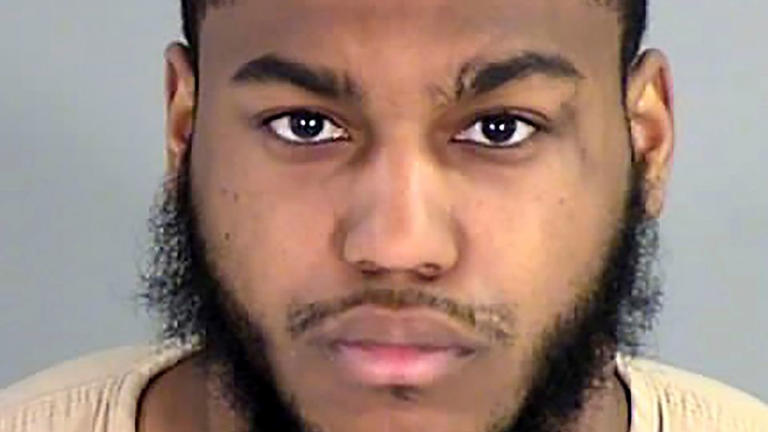

A former University of Virginia student was sentenced Friday to life in prison for the 2022 shootings that killed three football players and injured two other students on campus.
Albemarle County Circuit Court Judge Cheryl Higgins imposed the maximum penalty after five days of testimony. Christopher Darnell Jones Jr., a onetime member of the football program, pleaded guilty last year. The sentence includes five life terms: one each for the deaths of Devin Chandler, Lavel Davis Jr., and D’Sean Perry, and for the aggravated malicious wounding of Michael Hollins and Marlee Morgan, according to local reports.
Prosecutors said Jones opened fire on a charter bus returning to Charlottesville after a group outing to Washington, D.C., where students had attended a play and dinner together. The attack began near a campus parking garage and triggered a 12-hour lockdown as authorities searched for the gunman. Students and staff sheltered in dorm rooms and academic buildings until Jones was taken into custody.
Investigators said Jones did not overlap on the team with the players he shot, and there was no evidence of a prior relationship beyond a brief interaction earlier that night.
Under Virginia law, Jones will be eligible to apply for parole when he turns 60.
In delivering the sentence, Higgins said there was no indication anyone was bullying or threatening Jones at the time of the attack. She described the punishment as a reasoned response to the facts, not an act of vengeance. While Jones showed “distortions in his perception” of reality, Higgins said he understood what he was doing. She noted that he texted others beforehand that he expected either to “go to hell or spend 100-plus years in jail.” Afterward, he discarded clothing and the gun and lied to an officer he encountered minutes later, she said.
Days after the shootings, university leaders commissioned an outside review of safety policies, the school’s response, and earlier efforts to evaluate Jones as a potential threat. Administrators acknowledged he had previously drawn the attention of the university’s threat-assessment team.
Last year, the university agreed to a $9 million settlement with victims and their families. Their attorney argued that Jones should have been removed from campus before the attack, citing reports of erratic and unstable behavior and other warning signs.
During sentencing, Jones spoke for about 15 minutes, apologizing through tears for what he did and for the pain he caused “everyone on that bus.” Some relatives of the victims left the courtroom as he addressed them.
“I’m so sorry,” he said. “I caused so much pain.” Turning to the families, he added that he had not known their sons and wished he had.
Hollins, who survived the shooting, told reporters afterward that the sentence brought a measure of justice.
“No amount of time in jail can repay or bring those lives back,” he said, “but there’s a little peace in knowing the man who did this won’t hurt anyone else.”