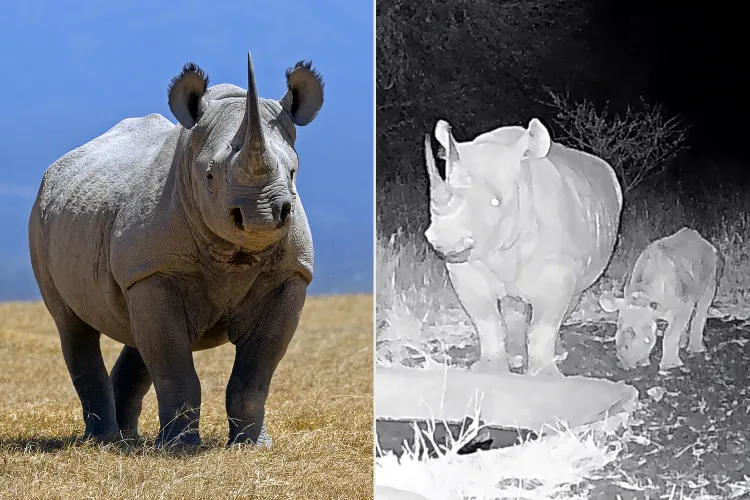

A rare and uplifting milestone has emerged in Kenya’s Chyulu Hills: the arrival of a wild eastern black rhinoceros calf, a critically endangered species, as confirmed by wildlife researchers via ABC News. This calf marks the second birth within this small rhino population in just two years — a positive sign for ongoing conservation work in the region supported by the Big Life Foundation.
The International Union for Conservation of Nature estimates that only about 583 mature eastern black rhinos remain in the wild. Each birth is therefore crucial to the future of the species.
Researchers believe the newborn is around six months old, though its sex has not yet been determined. With this addition, the Chyulu Hills rhino population now totals nine individuals, according to Big Life.
In its announcement, the organization highlighted how essential the subpopulation is to preserving the genetic heritage of a group that once ranged widely across the hills and represented one of East Africa’s densest concentrations of black rhinos.
:max_bytes(150000):strip_icc():focal(749x0:751x2):format(webp)/Conservationists-Confirm-Birth-of-Critically-Endangered-Black-Rhino-111225-1-9105f29caeff4e96ba1776f2213ca4a3.jpg)
Earlier this year, rangers surveying the area spotted distinctive small rhino footprints trailing behind a larger set, prompting early suspicion of a new calf. They soon considered that the mother might be Namunyak, a 14-year-old female known to regularly appear on camera traps — until recent months when she disappeared from view, hinting she could be caring for a newborn.
Those suspicions were later confirmed when Namunyak reappeared on camera, a calf following closely behind her. Conservationists believe the father is a male rhino named Chester.
According to Big Life, the organization delayed publicly sharing the news to give the calf critical time to build strength. Now at six months old, the young rhino has a steadily improving chance of survival. If protected and healthy, the calf could live into 2065.
:max_bytes(150000):strip_icc():focal(749x0:751x2):format(webp)/Black-Rhino-111225-d1d2572bde99455eb821d199c1c759a2.jpg)
Decades ago, intense poaching in the region — largely driven by demand for rhino horn — caused a devastating population collapse. By the late 1990s, many experts feared the eastern black rhino had vanished entirely from the area. It wasn’t until rangers uncovered a hidden group isolated from human activity that hope for the species’ recovery was reignited.
Today, with every successful birth, that hope continues to grow.